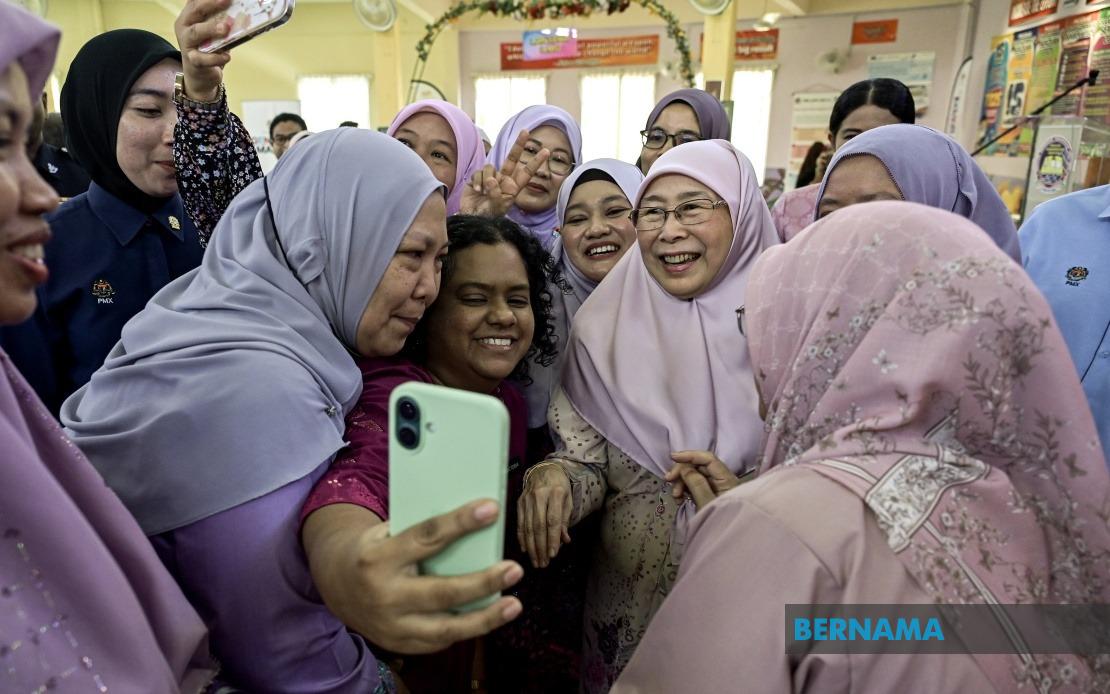
A secondary school in Kuala Lumpur is set to undergo its most significant facility overhaul in more than two decades after receiving RM300,000 in parliamentary funding, with particular emphasis on protecting student welfare through the installation of safety infrastructure. Bandar Tun Razak Member of Parliament Datuk Seri Dr Wan Azizah Wan Ismail announced the allocation during SMK Seri Mulia's Academic Excellence Awards ceremony, marking a major investment in the institution which has not experienced comprehensive renovation since 2001.
The funding allocation reflects growing institutional focus on student protection and mental health awareness in Malaysian schools. Dr Wan Azizah underscored that child safety constitutes the paramount consideration guiding the deployment of these resources, with deliberate prioritisation given to psychological wellbeing alongside physical security. The installation of safety grills—measures aimed at preventing self-harm and ensuring secure premises—received special mention as a critical component requiring substantial budgetary commitment, with all relevant applications having already received approval for implementation.
SMK Seri Mulia's situation exemplifies a broader challenge affecting older educational infrastructure across the country. The institution's two-decade absence of major upgrades had created an accumulated backlog of maintenance requirements and safety deficiencies that demanded urgent remediation. The RM300,000 grant enables the school management to address these longstanding gaps through systematic facility enhancement, spanning structural repairs, safety installations, and general modernisation efforts that will benefit the student population and teaching staff alike.
The emphasis on mental health represents a noteworthy shift in how Malaysian educational authorities approach student welfare. Beyond traditional security measures, the decision to allocate substantial portions of the fund toward psychological protection mechanisms demonstrates recognition that contemporary school safety extends beyond physical infrastructure to encompass preventative measures for mental health crises. This comprehensive approach aligns with international best practices and reflects Malaysia's evolving understanding of holistic student protection frameworks.
The Academic Excellence Awards ceremony itself served a dual purpose—celebrating student achievement whilst simultaneously drawing attention to the resource constraints affecting the institution. By honouring academic excellence and disciplinary commitment among the student body during the facility announcement, authorities reinforced the connection between adequate school infrastructure and student capacity to thrive academically. The symbolic timing suggested that facility improvements would enable rather than replace the academic endeavours already being pursued by SMK Seri Mulia's student population.
Parliamentary allocation systems in Malaysia typically channel developmental funds through MPs to constituencies requiring targeted intervention. The Bandar Tun Razak allocation demonstrates how such mechanisms can address specific institutional needs when properly directed. This approach permits decentralised decision-making regarding local priorities whilst maintaining accountability through parliamentary oversight and constituency representation, allowing communities to advocate for facilities most critical to their constituents.
The presence of senior government officials, including Prime Minister's political secretary Datuk Azman Abidin and Federal Territory Education Department leadership, underscored the political significance attached to the announcement. High-level attendance at school funding ceremonies typically signals government commitment to education infrastructure and provides platforms for demonstrating responsiveness to community needs during election cycles and governance periods. Such visibility also ensures media coverage reaches broader audiences concerned with educational standards and public spending priorities.
For Malaysian parents and education stakeholders, SMK Seri Mulia's funding announcement carries implications regarding government resource distribution across aging educational infrastructure. Schools operating with minimal upgrades over extended periods face compounding challenges affecting learning environments, student safety, and staff morale. Systematic renewal programmes addressing these backlogs represent investments in human capital and national development, as improved facilities correlate with enhanced educational outcomes and student wellbeing metrics across comparable systems internationally.
The comprehensive nature of the allocated funding—encompassing maintenance, safety installations, and unspecified facility improvements—suggests flexibility in implementation allowing school management to respond to urgent needs as they emerge during renovation phases. This adaptive approach proves particularly valuable in older institutions where initial assessments frequently uncover hidden structural issues requiring unexpected expenditure. The approval of all safety grill applications prior to announcement indicates thorough planning and bureaucratic coordination preceding the fund release.
Looking forward, SMK Seri Mulia's transformation may serve as a template for addressing similar challenges affecting other aging schools throughout Kuala Lumpur and beyond. The balanced prioritisation of academic recognition alongside infrastructure investment models a holistic approach to educational development that treats facility improvement as enabler rather than substitute for academic excellence. Other constituencies may reference this allocation as precedent when advocating for comparable support for their own ageing educational institutions requiring urgent attention.

