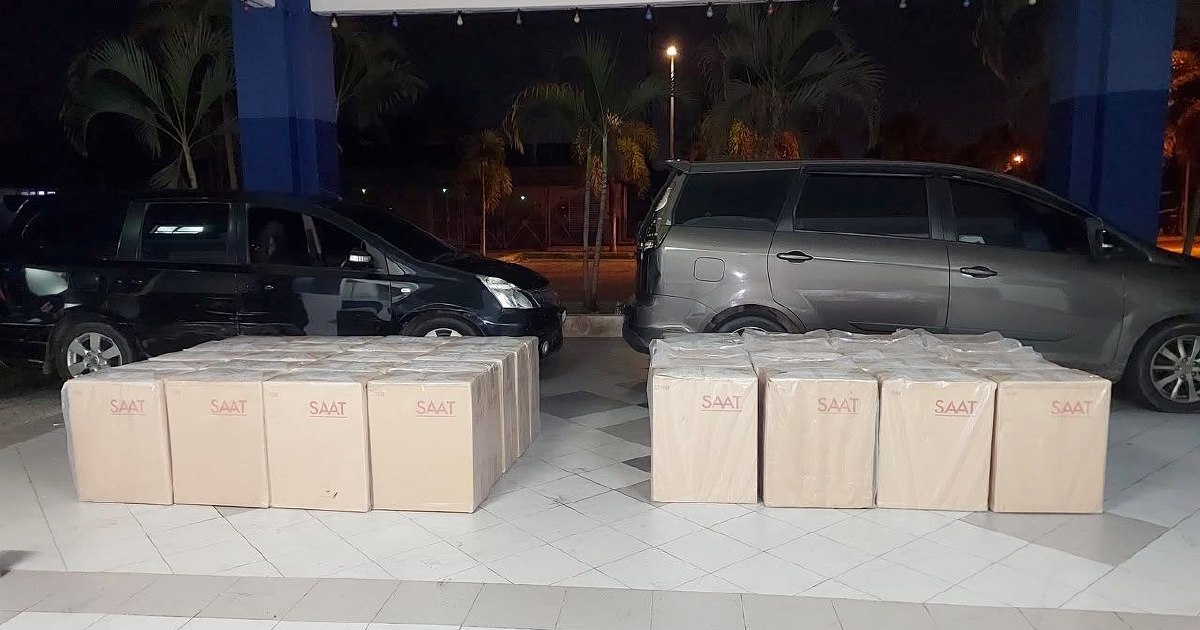
A 29-year-old man is now in custody after enforcement officers tracked him down to Kampung Pulau Panjang near Kota Baru last night, culminating in the discovery of a massive haul of smuggled cigarettes. The seizure of approximately 400,000 cigarette sticks, valued at RM813,000, represents another significant blow against the illegal tobacco trade that continues to plague Malaysia's east coast regions.
The arrest underscores the persistent challenge authorities face in combating cigarette smuggling, an enterprise that siphons away government excise revenues while enabling criminal networks to operate with impunity. The eastern states, particularly Kelantan and Terengganu, have become notorious transit points for contraband tobacco destined for Malaysian markets. These routes exploit the region's proximity to Thailand and porous inland boundaries, creating a complex enforcement environment.
The Government of Kelantan (GOK) enforcement team's successful interception demonstrates the importance of sustained surveillance and rapid response capabilities in disrupting smuggling supply chains. The evening pursuit shows that authorities are increasingly adopting mobile enforcement strategies to intercept contraband before it reaches distribution networks in major population centres. Such operations require considerable coordination between federal and state-level agencies, as well as intelligence gathering to identify trafficking patterns.
Smuggled cigarette operations cause widespread economic damage across multiple sectors. Every pack of contraband tobacco that enters Malaysia represents lost excise duties—a revenue stream that governments depend upon for public health programmes and general services. The RM813,000 seizure alone suggests what significant portions of the black market trade could potentially contribute to legitimate government coffers if the smuggling networks were dismantled entirely.
The scale of this particular operation—400,000 sticks—indicates a sophisticated distribution apparatus rather than opportunistic small-scale activity. Such volumes require warehousing, transport logistics, and well-established retail connections. The arrest of this single individual likely represents just one node in a larger trafficking network, with multiple parties involved in procurement, movement, and sale of the contraband goods.
For Malaysian consumers, cigarette smuggling distorts market dynamics and enables cheaper illegal products that undermine legitimate retailers and tobacco companies operating within the regulatory framework. Counterfeit and inferior smuggled products may pose additional health risks, as they lack quality controls and proper manufacturing oversight. The proliferation of cheap contraband also potentially undermines tobacco control efforts by making smoking more accessible and affordable, contradicting public health policy objectives.
The Kota Baru seizure reflects broader enforcement challenges throughout Southeast Asia, where transnational smuggling operations exploit varying tax rates and regulatory standards across borders. Differences in excise taxation between Malaysia and neighbouring countries create profitable arbitrage opportunities for criminal gangs. Thai-Malaysia routes have proven particularly lucrative, with the price differential between regulated domestic tobacco and smuggled imports providing substantial margins for trafficking networks.
Successful interdictions like this one depend heavily on intelligence-driven operations and community cooperation. Enforcement agencies increasingly rely on tipoffs and information from transport workers, warehouse staff, and retail partners who observe suspicious activities. The geographical nature of Kampung Pulau Panjang, situated in Kelantan's interior regions, suggests that enforcement officers had likely received credible information about smuggling activity in that specific location.
Authorities continue to enhance interdiction capabilities through technology and training investments. Real-time communication networks, GPS tracking systems, and coordination protocols enable faster response times to suspected trafficking activities. The successful chase operation indicates that enforcement personnel maintain readiness for mobile interceptions even during evening hours when smuggling operations typically accelerate.
The implications of persistent cigarette smuggling extend beyond taxation issues. These operations provide funding streams for organised crime syndicates that frequently engage in other illicit activities including drug trafficking, money laundering, and weapons smuggling. Disrupting cigarette smuggling networks thus contributes to broader law enforcement objectives against organised crime on the peninsula's east coast.
Looking forward, sustained enforcement pressure remains essential to maintain the deterrent effect against smuggling activities. Single operations, while valuable, achieve temporary disruptions rather than permanent market changes. Only through consistent interdiction, prosecution, and asset seizures can authorities gradually shift the risk-reward calculation that currently favours smuggling enterprises. The Kota Baru case demonstrates that enforcement capacity exists; the challenge now involves maintaining momentum and coordination across state boundaries to achieve systematic disruption of these trafficking networks.

