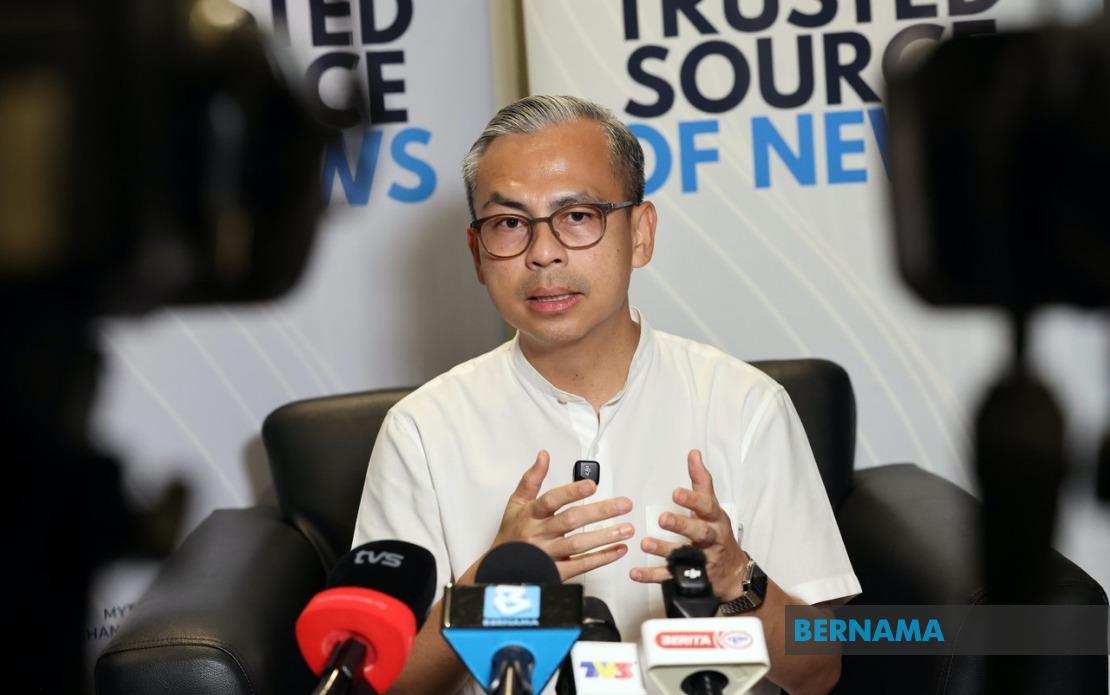
Communications Minister Datuk Fahmi Fadzil has issued a pointed warning to social media platform operators, demanding they take a more aggressive stance in preventing the spread of false information surrounding the 16th Johor state election. Speaking after a visit to the Malaysian National News Agency's operations centre in Johor Bahru on July 7, Fahmi emphasised that while these platforms maintain policies ostensibly prohibiting misinformation, the real test lies in their willingness and capacity to enforce such measures rigorously, particularly during the critical period when results begin circulating.
The minister identified polling night as a moment of acute vulnerability for the electoral process. False claims about results or individual seat victories, if left unchecked, could sow widespread confusion among voters and potentially undermine confidence in the legitimacy of the electoral outcome. This concern is not merely theoretical—election-related disinformation has become a persistent challenge across the region, with social media's algorithmic amplification mechanisms often ensuring that misleading content reaches far more people than corrections or factual reporting ever will.
Fahmi highlighted a critical distinction in the landscape of electoral misinformation that often gets overlooked in policy discussions. One category involves the misuse of official media logos and institutional branding to fabricate news graphics that appear to come from legitimate sources—a tactic that exploits visual literacy assumptions and trust in established outlets. The Malaysian Communications and Multimedia Commission and Malaysian Media Council have both signalled their readiness to assist in combating this form of deliberate impersonation. However, the minister acknowledged that this addresses only half the challenge.
The second, more insidious category encompasses user-generated content that spreads across social networks in various forms—whether as images, text posts, or shared commentary. These items may contain false assertions about voting procedures, candidate credentials, policy positions, or election mechanics, yet they originate from ordinary citizens rather than coordinated campaigns. This decentralised nature makes detection and removal exponentially more difficult, as content multiplies across networks faster than verification processes can operate. Platform providers face a genuine operational puzzle in how to scale human review while respecting legitimate speech and maintaining user trust.
The minister's call for enhanced cooperation between platform operators and the MCMC reflects recognition that no single stakeholder can effectively address misinformation in isolation. Platforms possess the technical infrastructure and data access to identify and remove problematic content at scale; regulatory agencies bring legal authority and coordination capacity; and civil society organisations can contribute monitoring and fact-checking expertise. In theory, such a tripartite approach could establish sufficient friction to slow misinformation's spread during critical electoral moments.
As of Fahmi's statement, the MCMC had received no formal complaints regarding campaign misconduct on social media platforms, though this apparent silence likely reflects the compressed timeframe of the reporting period rather than an absence of problematic content. Election cycles compress rapidly, and what might be identified as concerning during the full campaign period becomes urgently actionable only as polling day approaches. The final week before voting therefore represents both the highest-stakes moment for electoral integrity and, paradoxically, often the most chaotic period for content moderation efforts.
Beyond the immediate question of misinformation management, Fahmi's remarks also reflected the Pakatan Harapan coalition's campaign strategy in Johor's closing phase. The government has pivoted toward mobilising outstation voters—those working or studying outside the state—as a crucial demographic for the coming Saturday poll. This focus carries clear electoral logic, as Johor hosts significant migrant worker populations and many young Malaysians pursue opportunities across the nation. Messaging has centred on encouraging these voters to return home and fulfil their civic obligations, framed both as individual responsibility and collective contribution to Johor's future direction.
The coalition has worked to facilitate voter participation through practical measures, including coordination with public transport operators offering special packages and arrangements with institutions like the Youth and Sports Skills Training Institute to grant leave. The government has simultaneously appealed to the private sector—particularly retail and food and beverage businesses that typically operate with minimal staffing flexibility—to permit employees time off to vote. These efforts acknowledge that structural barriers to participation, while sometimes overstated, remain real constraints for many Malaysians, particularly lower-income workers and those with inflexible employment terms.
Fahmi's call for voter turnout exceeding 60 per cent represents an ambitious target that hinges significantly on these outstation mobilisation efforts succeeding. Higher turnout typically benefits whichever coalition manages to motivate its supporters more effectively, though this varies depending on electoral geography and demographic composition. The minister's public articulation of this target signals confidence in Pakatan Harapan's campaign machinery and perceived strength in generating enthusiasm among the relevant voter cohorts.
The minister's appeal to parents to encourage their children outside Johor to return home for voting deployed persuasive framing beyond mere electoral strategy. He positioned the act of voting not simply as a civic duty but as an expression of Johorean identity—a way for diaspora members to exercise agency in determining their state's direction for the next four to five years. This rhetorical approach attempts to transform voting from an abstract obligation into an emotionally resonant act of connection with home and community, particularly potent messaging for young people navigating the distance between their current lives and origins.
The convergence of misinformation governance, campaign strategy, and voter mobilisation in Fahmi's intervention illustrates how modern elections operate across multiple overlapping systems simultaneously. Election integrity depends not only on the mechanical organisation of polling and counting, but on the information environment surrounding the vote and voters' capacity to participate without structural obstruction. The final week before polling therefore becomes a complex coordination challenge spanning regulatory agencies, technology companies, campaign machinery, and private sector actors, with each stakeholder's effectiveness determining whether the electoral process maintains legitimacy in voters' eyes.

