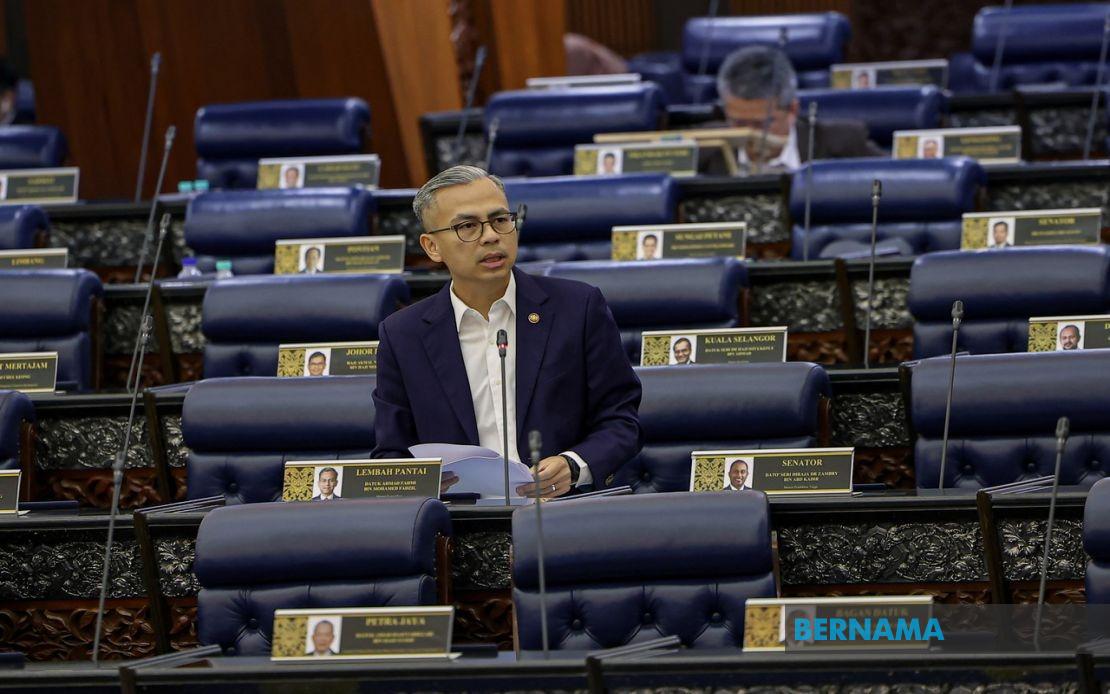
Malaysia's Communications Minister Datuk Fahmi Fadzil has warned social media platforms of severe financial consequences for non-compliance with age-verification mandates, announcing potential penalties reaching RM10 million under the newly enacted Online Safety Act 2025. The enforcement framework represents a significant escalation in the country's regulatory approach to digital safety, with the Malaysian Communications and Multimedia Commission (MCMC) empowered to issue compliance notices to service providers that fail to meet their obligations.
The financial penalties form part of a comprehensive enforcement regime outlined in Section 39 of Act 866, which establishes graduated consequences for violations. Beyond the headline RM10 million maximum fine for general non-compliance with Part III requirements, the legislation includes additional provisions targeting deliberate obstruction. Service providers ignoring written directives from MCMC face fines reaching RM1 million, with compounding daily penalties of RM100,000 accumulating for each day the violation persists following conviction. This tiered penalty structure suggests lawmakers intended to create meaningful financial deterrents while preserving proportionality for lesser infractions.
The age-verification requirements gain additional teeth through MCMC's authority under Section 30 to issue binding written directives. These directives function as enforceable orders rather than advisory guidance, transforming compliance into a legal obligation. The distinction matters significantly for platforms evaluating their regulatory exposure—ignoring a directive constitutes a criminal offence subject to immediate prosecution, whereas general non-compliance may proceed through administrative penalty processes. This dual mechanism allows authorities to respond swiftly to egregious violations while managing routine compliance issues through administrative channels.
Government engagement with major platforms has accelerated through a regulatory sandbox initiative launched in January, providing platforms space to test age-verification mechanisms before full implementation. More than 30 sessions have convened either collectively or individually with participating companies, indicating substantial dialogue efforts prior to enforcement actions. This collaborative foundation appears designed to allow genuine technical discussion around implementation challenges while maintaining regulatory pressure. The sandbox approach acknowledges that different platforms operate distinct technical architectures and business models, yet demands convergence toward consistent age-protection standards.
The Malaysian initiative aligns with broader international trends, as more than 25 countries have already implemented similar age-verification requirements. This global pattern suggests coordinated concern about protecting minors from inappropriate content exposure and predatory behaviour online. For Malaysian platforms, this international context matters considerably—companies operating across multiple jurisdictions increasingly face overlapping or complementary regulatory demands. The Online Safety Act 2025 positions Malaysia within this evolving global framework rather than as an outlier, potentially simplifying compliance for platforms already managing similar requirements elsewhere.
The enforcement regime creates direct incentives for platforms to prioritize age verification over competing operational interests. A RM10 million penalty likely exceeds annual profits for smaller regional operators, concentrating enforcement risk disproportionately on less-capitalized competitors. Larger technology companies already implementing age verification in other markets may absorb compliance costs more easily, potentially reshaping competitive dynamics within Malaysia's social media landscape. This uneven impact raises questions about whether the regulatory framework inadvertently favors dominant incumbents while elevating barriers for emerging competitors.
Part III of the Online Safety Act 2025, which governs age-verification compliance, establishes the substantive requirements that penalties enforce. While the source material does not detail specific age-verification methodologies, the regulatory framework appears technology-neutral, allowing platforms discretion in implementation approaches provided they demonstrably verify user age. This flexibility acknowledges legitimate technical diversity while maintaining outcomes-focused accountability. Platforms might employ document verification, biometric authentication, digital identity systems, or alternative mechanisms meeting verification standards—the law constrains results rather than mandating specific techniques.
The compliance notice procedure creates administrative pathways allowing licensed service providers to contest determinations or negotiate remedies. Upon receiving a non-compliance notice, platforms may either pay the prescribed penalty or submit representations to MCMC for formal review. This administrative recourse preserves procedural fairness while maintaining enforcement credibility. Platforms cannot simply ignore notices; they must affirmatively choose between compliance, penalty payment, or formal dispute resolution. This structure prevents arbitrary enforcement while avoiding the delays inherent in purely judicial processes.
For Malaysian users and digital economy stakeholders, this regulatory escalation carries broad implications. Stronger age verification theoretically protects minors from inappropriate content, predatory contacts, and algorithmic exploitation—harms well-documented in international research. Enhanced protections may require users to provide personal identification information, raising privacy considerations alongside safety benefits. Parents and schools may appreciate stronger technological safeguards, while privacy advocates question whether verification mechanisms create surveillance capabilities extending beyond age assessment. The balance between protection and privacy remains contested within Malaysia's digital rights discourse.
The timing of enforcement remains officially unspecified, though the government's intensive engagement timeline suggests rollout within the current parliamentary calendar. MCMC enforcement actions, once initiated, will likely target major platforms first, generating high-visibility compliance efforts. Successful enforcement against prominent services could cascade compliance among smaller platforms seeking to avoid similar penalties. Conversely, extended litigation or regulatory delays could create prolonged uncertainty about genuine enforcement credibility. The regulatory credibility question matters significantly—platforms may delay genuine compliance efforts if they assess enforcement as unlikely or protracted.
Regional technology companies and Southeast Asian digital platforms require particular attention to these developments. Many regional social media services operating across multiple Southeast Asian markets will face similar age-verification mandates as neighboring countries adopt comparable legislation. Malaysia's enforcement approach may establish precedents influencing implementation in Thailand, Indonesia, Singapore, and other regional neighbors. The enforcement framework developed here could inform regulatory templates across Southeast Asia, making Malaysia's implementation choices consequential beyond its borders.
The legislative framework also establishes Malaysia's institutional capacity for digital platform regulation. MCMC's expanded authority under the Online Safety Act 2025 positions the commission as a significant enforcement actor, requiring expanded compliance monitoring capabilities and technical expertise. Building institutional competence to evaluate complex age-verification claims, assess technical implementations, and conduct proportionate enforcement represents a substantial capability development. The agency's success managing this expanded mandate will influence confidence in regulatory frameworks and investor perceptions of Malaysia's digital governance environment.

