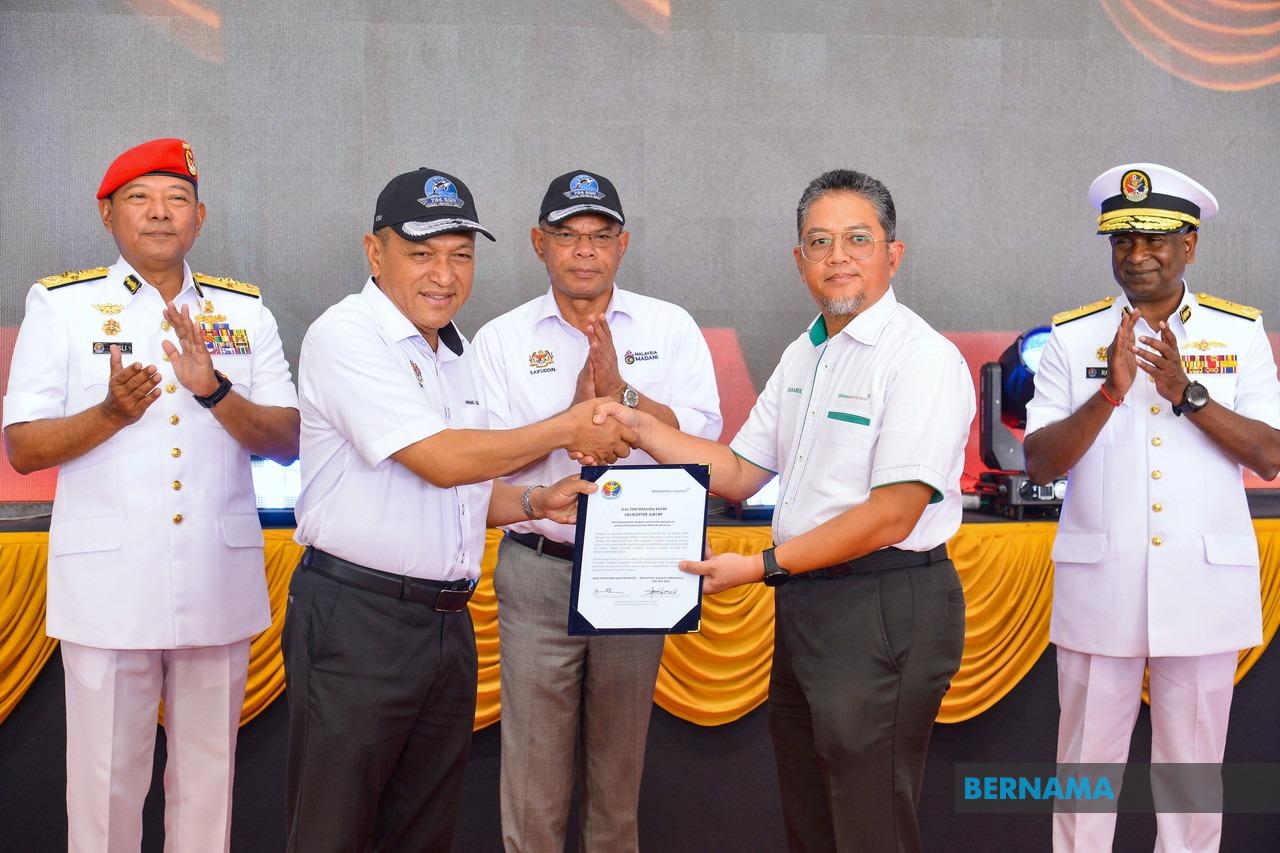
Home Minister Datuk Seri Saifuddin Nasution Ismail has signalled the need for a thorough examination of Malaysia's security legislation and refugee management framework, calling for policies that adapt to evolving circumstances rather than remain static. Speaking after chairing discussions on both matters, Saifuddin stressed that neither issue should be examined in isolation but rather evaluated through a multifaceted lens that incorporates recent developments, operational realities, and future-oriented approaches.
The minister's remarks underscore growing recognition within government circles that blanket approaches to national security and humanitarian concerns increasingly fall short of practical effectiveness. By convening structured dialogue on these two critical areas simultaneously, the Home Ministry signals an understanding that security imperatives and humanitarian obligations need not operate in opposition, though balancing them remains a persistent challenge for policymakers across the region.
SOSMA, enacted in 2012 as a replacement for the now-repealed Internal Security Act 1960, grants authorities enhanced investigative and detention powers to combat security threats. The legislation has proven contentious since its introduction, with human rights groups, legal scholars, and civil society organisations repeatedly raising concerns about its scope, implementation safeguards, and potential for overreach. The absence of sunset provisions and the broad discretion granted to enforcement agencies have been particular points of contention, with critics arguing that special measures risk becoming permanent features of the legal landscape.
Recent years have witnessed sustained pressure for either substantial revision or complete repeal of SOSMA, driven by documentation of cases where provisions have been applied in ways that activists and legal professionals consider disproportionate. The security landscape has evolved considerably since 2012, with evolving threat typologies—including financing of extremism, online radicalisation, and transnational criminal networks—requiring legislative frameworks that are sufficiently precise to address genuine dangers without creating opportunities for arbitrary enforcement.
Simultaneously, Malaysia faces mounting complexity around refugee and asylum-seeker populations, particularly following the Myanmar military coup and ensuing internal conflict that has displaced hundreds of thousands. The influx of Myanmar nationals seeking refuge has strained resources, heightened public concern about security vetting and integration capacity, and exposed gaps in Malaysia's refugee management infrastructure. Unlike signatories to the 1951 Refugee Convention, Malaysia operates without a comprehensive legal framework specifically governing refugee status determination and protection obligations.
The intersection of security concerns and humanitarian imperatives has become increasingly fraught, with some policymakers treating refugee management primarily through a security lens. This approach risks conflating vulnerable populations with genuine threat actors, potentially driving policies that compromise both effective security and humanitarian credibility. The minister's insistence that these issues warrant multidimensional assessment suggests recognition that sustainable solutions require nuance that purely security-focused frameworks cannot provide.
Saifuddin's emphasis on ensuring that government measures are "practical, well-founded and suited to current circumstances" points toward a philosophy of adaptive governance rather than rigid adherence to existing legislation. This approach acknowledges that laws drafted over a decade ago may contain provisions or mechanisms that no longer serve their intended purpose efficiently, or that may have unintended consequences that warrant recalibration. Such reassessment is particularly important for security legislation, where the stakes of both excessive caution and insufficient rigour are substantial.
For Malaysian readers and policymakers, the broader significance lies in recognising that security and humanitarian considerations can be integrated into coherent policy frameworks. Neighbouring countries including Indonesia and Thailand have grappled with similar tensions, often with outcomes that pleased neither security advocates nor human rights proponents. Malaysia has an opportunity to develop approaches that address legitimate security imperatives while maintaining international credibility on human rights and humanitarian grounds.
The discussion platform mechanism Saifuddin highlighted—bringing together relevant stakeholders to examine policy questions—represents a relatively inclusive governance model that moves beyond purely technocratic or top-down policymaking. The effectiveness of such platforms depends heavily on genuine openness to evidence and diverse perspectives, and whether resulting recommendations find their way into concrete legislative or administrative changes.
The road ahead for both SOSMA and refugee policy remains uncertain, dependent on whether this stated commitment to comprehensive scrutiny translates into substantive policy modifications. For a nation that serves as a regional hub and hosts significant migrant and refugee populations, establishing clearer, more balanced governance frameworks carries implications extending well beyond Malaysia's borders. How these issues are ultimately addressed will signal Malaysia's position on balancing security sovereignty with international humanitarian obligations—a question of considerable importance to the wider Southeast Asian region.

