South Africa has escalated its legal battle at the International Court of Justice, submitting a detailed filing that accuses Israel of violating binding court orders designed to protect Palestinians. The submission, made under Article 11 of the ICJ's procedural rules, represents Pretoria's effort to enforce compliance with provisional measures that have been issued three times since the genocide case commenced in late 2023.
The South African Department of International Relations and Cooperation emphasised in its filing that the measures ordered by the ICJ carry full legal weight and carry consequences for non-compliance. This strategic move underscores growing frustration among the case's advocates that court orders alone have not altered on-the-ground conditions in Gaza, where humanitarian circumstances have continued to deteriorate despite the judicial interventions.
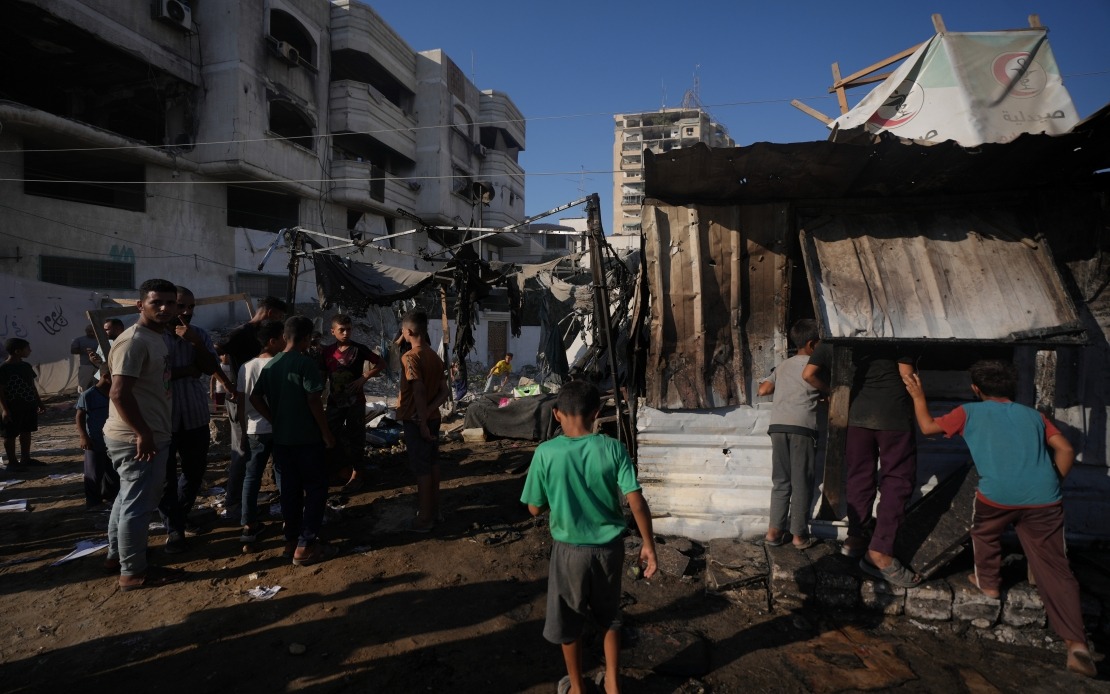
According to South Africa's characterisation, Palestinian survivors in the Gaza Strip remain trapped in worsening conditions, confined to shrinking territory and unable to access adequate resources for survival. The filing paints a bleak picture of persistent trauma inflicted on civilian populations who the country argues deserve protection under international law specifically designed to prevent genocide.
Since a ceasefire agreement took effect on October 10, 2025, South Africa contends that Israeli military action has nonetheless resulted in more than 1,300 Palestinian deaths and over 4,330 wounded individuals. Search and rescue operations have additionally uncovered hundreds of bodies in the rubble of destroyed structures, adding to the documentation of casualties that South Africa is presenting to support its compliance claims.
The provisional measures themselves, which the ICJ issued in January, March, and May 2024, directed Israel to implement all necessary precautions to prevent acts prohibited by the 1948 Genocide Convention. These orders were framed as temporary safeguards to prevent irreparable harm to Palestinian rights while the court deliberates on the substance of South Africa's broader allegations.
South Africa initiated its case on December 29, 2023, charging that Israel's military operations constitute violations of the United Nations Convention on the Prevention and Punishment of the Crime of Genocide. The case has become one of the most scrutinised proceedings in the ICJ's recent history, drawing international attention and spawning detailed debate about the legal definition of genocide and state responsibility.
The filing strategy reflects a shift toward enforcement and accountability mechanisms within the existing ICJ framework rather than seeking new interim orders. By highlighting alleged violations of existing provisional measures, South Africa aims to establish a record of non-compliance that could influence the court's final judgment and potentially carry weight in future enforcement proceedings.
For Southeast Asian observers, this case carries significance as a test of whether international law mechanisms can meaningfully constrain powerful states during conflicts. The proceeding also demonstrates how nations outside the immediate conflict zone can utilise global legal institutions to challenge military actions and hold governments accountable for humanitarian concerns.
South Africa's persistence in pursuing this case, despite the complexities of proving causality between court orders and on-the-ground outcomes, signals that member states view the ICJ as a legitimate forum for raising genocide allegations even against militarily stronger opponents. The decision to submit detailed compliance documentation suggests Pretoria is constructing an evidentiary foundation that could support future advocacy for enforcement mechanisms or political action through other international bodies.
Palestinian health authorities, in separate documentation, have recorded 73,438 deaths and 174,447 wounded since October 7, 2023, when the broader conflict began. These figures, cited alongside other evidence, form the empirical backdrop for South Africa's allegations and underscore the humanitarian scale of the dispute before the court.
The South African government has reaffirmed its commitment to pursuing all available channels to compel Israel's compliance with the ICJ's orders. This determination suggests the country intends to remain engaged in the case through its scheduled final deliberations, with South Africa potentially preparing additional filings as circumstances develop.
The compliance filing occurs within a broader context of international legal proceedings and accountability mechanisms relating to Gaza. Other jurisdictions and institutions have undertaken parallel investigations, though the ICJ case remains the most formal and institutionally significant forum where genocide allegations are being systematically examined under international law.

