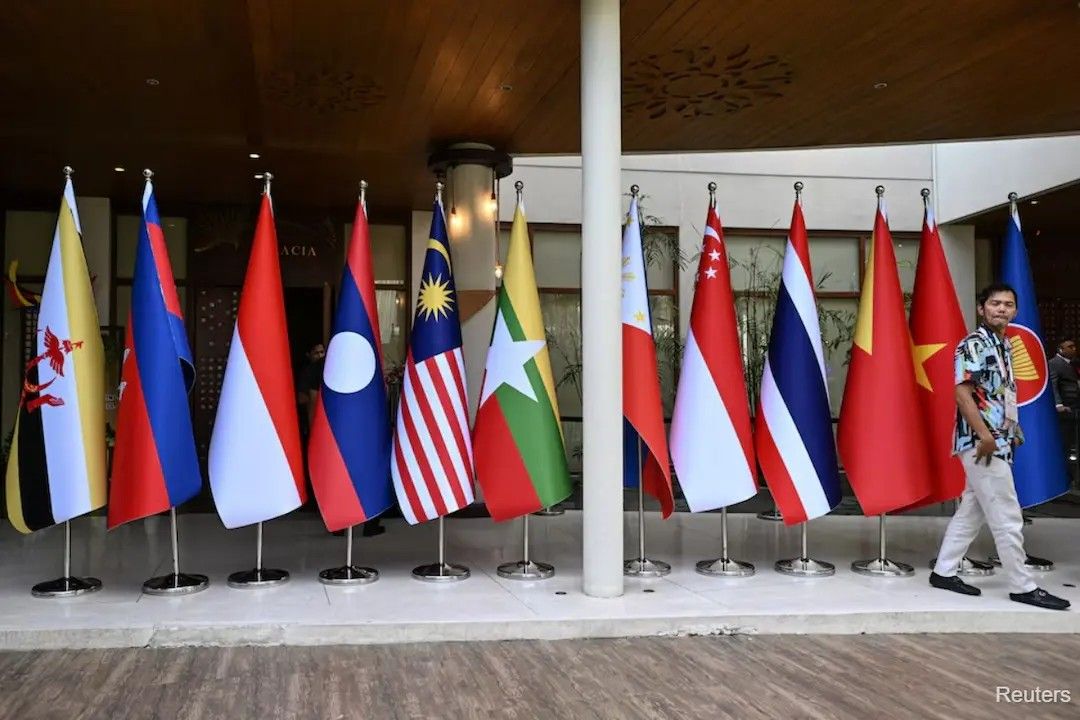
The gathering of Southeast Asian foreign ministers in Manila this week arrives at a critical juncture, with mounting geopolitical pressures threatening to fracture the bloc's carefully calibrated unity. The arrival of US Secretary of State Marco Rubio has intensified focus on the South China Sea dispute, where rising military tensions now risk overshadowing substantive discussions on regional security, energy cooperation, and the intractable Myanmar crisis that has plagued ASEAN cohesion since 2021.
Rubio's presence in the Philippines carries symbolic weight beyond diplomatic pleasantries. In an opinion piece published on the eve of the meeting, he articulated Washington's strategic vision for Southeast Asia, framing the US commitment to maritime freedom as essential protection against hegemonic control of vital trade routes. His argument carries particular resonance in the region, where billions of dollars in annual commerce depend on unimpeded passage through contested waters. The implicit warning to China—that allowing any single power to monopolize these seas would fundamentally reshape the economic and security landscape—reflects deepening American anxiety about its influence in the Indo-Pacific at a moment when strategic competition with Beijing has intensified considerably.
The timing of Rubio's deployment proves especially sensitive given recent confrontations on the water. Just hours before his arrival, Philippine and Chinese personnel clashed at Second Thomas Shoal, marking the most serious maritime incident in months. Manila's account alleges that Chinese Coast Guard officers physically assaulted Filipino sailors aboard a beached vessel serving as a military garrison, while Beijing counters that the Philippines provoked the encounter by dispatching small boats toward Chinese vessels. These competing narratives underscore the volatility inherent in South China Sea operations, where military and civilian maritime actors operate in close proximity with minimal coordination mechanisms to prevent escalation. For Malaysia, which maintains its own territorial claims and faces increasing operational pressure in adjacent waters, such incidents foreshadow the instability that could eventually threaten regional commerce and maritime safety more broadly.
China's territorial maximalism—claiming virtually the entire South China Sea despite the 2016 international arbitration ruling that invalidated its historical claims—remains the fundamental source of regional friction. Beijing has never accepted the legal basis of that decision, treating it as an illegitimate intrusion into its sovereign prerogatives. This intransigence has consistently complicated efforts to craft a binding Code of Conduct that would establish rules of engagement and dispute resolution mechanisms. As analysts have long cautioned, the protracted negotiation between ASEAN and China appears unlikely to produce anything more than a cosmetic framework, lacking genuine enforcement capacity or consequences for violations. For smaller Southeast Asian states lacking military parity with Beijing, this dynamic creates a strategic dilemma: maintaining solidarity with fellow ASEAN members while avoiding confrontation with a neighbour whose economic and military capabilities dwarf their own.
Rubio's openness to a sideline meeting with China's top diplomat Wang Yi, also attending the Manila gathering, hints at broader diplomatic possibilities despite rhetorical combat. Such engagement, conducted away from the main conference, might allow both powers to explore whether tactical accommodations remain possible even as strategic rivalry deepens. The United States and China have developed a pattern of compartmentalizing high-stakes military and economic competition through carefully managed diplomatic channels, a practice that could extend to maritime affairs if sufficient political will materializes. Yet current trajectories suggest such willingness remains limited, with each side increasingly willing to risk incident and confrontation to signal resolve on contested territorial claims.
Beyond the South China Sea, the regional energy crisis compounds the meeting's complexity. The Philippines declared a national energy emergency in March following renewed tensions in the Strait of Hormuz, forcing Manila to diversify fuel procurement in directions that would have been unthinkable before the Ukraine conflict. Russian oil imports now figure in Philippine energy calculations, a geopolitical shift that complicates traditional alliance relationships and reflects how maritime instability in one strategic zone reverberates across others. The arrival of Russian Foreign Minister Sergei Lavrov in Manila adds another layer of great power competition to the gathering, with Moscow evidently seeking to leverage energy cooperation as a pathway to greater influence in a region where it has historically occupied only peripheral strategic importance.
Recognizing these vulnerabilities, ASEAN states are pushing renewed efforts toward collective energy security, particularly through advancing the Framework Agreement on Petroleum Security. This fuel-sharing mechanism represents one of the bloc's few institutional responses to commodity supply shocks, yet implementation remains incomplete and hampered by the same coordination challenges that plague other ASEAN initiatives. For Malaysia, historically a significant energy producer, these discussions touch on longstanding questions about how regional wealth should be mobilized for collective benefit versus national advantage, tensions that multilateral agreements rarely resolve satisfactorily.
Myanmar's pariah status dominates the underlying tensions threatening to fracture ASEAN unity even more deeply than maritime disputes. The military junta's consolidation of power following the February 2021 coup has created the bloc's most profound test of its foundational principle of non-interference. Thailand, sharing an extensive border with Myanmar and hosting approximately 2.4 million refugees, has championed reintegration, with Thai Foreign Minister Sihasak Phuangketkeow recently signalling that Myanmar's leader Min Aung Hlaing would visit Bangkok in August. This represents a significant diplomatic opening, with Sihasak arguing that five years of exclusion have proven counterproductive and that dialogue rather than isolation offers better prospects for eventual political resolution.
Yet this position generates fierce resistance from states that view engagement with the junta as moral capitulation. Malaysia's Foreign Minister Mohamad Hasan explicitly rejected high-level talks while "oppression is still taking place," articulating the humanitarian concerns that make Myanmar reintegration contentious within ASEAN. The May summit in Cebu saw Philippine President Ferdinand Marcos call for "fine-tuning" of the five-point peace plan, diplomatic language that masks fundamental disagreement about strategy. Without consensus on Myanmar, ASEAN's ability to project collective authority on other issues—including maritime disputes—diminishes accordingly, as fractious internal divisions limit the bloc's capacity for coherent action.
The convergence of these pressures in Manila this week tests whether ASEAN can maintain its institutional coherence amid competing geopolitical demands. The bloc's influence as an imagined counterweight to great power hegemony has always depended on perceived neutrality and internal unity, yet both conditions are increasingly difficult to sustain. Smaller members fear abandonment if they resist Chinese pressure, while larger states struggle to balance growing strategic alignment with Washington against economic interdependence with Beijing. As Rubio emphasizes sovereign autonomy and Myanmar members insist on humanitarian standards, the gap between ASEAN's aspirations and its practical capabilities threatens to widen further, potentially rendering the organization less relevant to the very regional security challenges it ostensibly exists to address.

