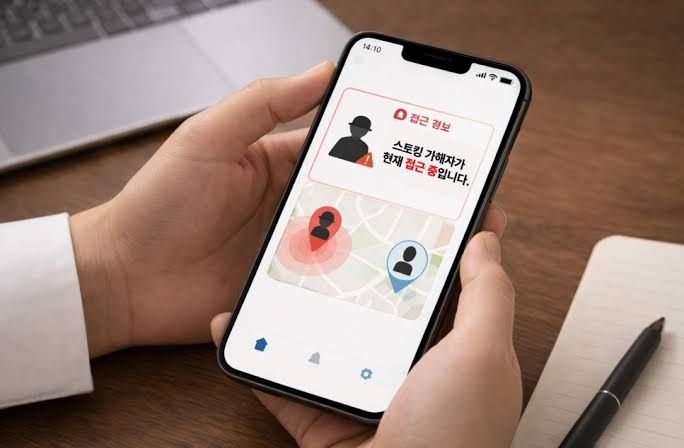
South Korea has taken a significant step towards improving victim safety by launching a sophisticated mobile application on June 24 that grants stalking victims direct access to the real-time movements of individuals wearing electronic monitoring devices. The initiative, administered by the Ministry of Justice, represents a substantial shift in how the country approaches the protection of vulnerable persons targeted by persistent harassment and threats. The application provides victims with detailed information including current location coordinates and the direction of travel of suspected stalkers, fundamentally transforming the relationship between victims and law enforcement surveillance systems.
The development of this technology reflects growing frustration with existing protective measures that observers and officials have deemed inadequate. Prior to this announcement, South Korea had relied primarily on smartwatch-style emergency alert devices provided to victims over several years, allowing individuals to trigger alerts when they felt threatened. However, this reactive approach proved insufficient in numerous cases. Statistics presented by Representative Lee Gwang-hee of the ruling Democratic Party of Korea underscore the gravity of the situation: between 2021 and August 2025, twenty-three individuals who held emergency alert devices were either murdered or survived attempted murder by their stalkers. These figures demonstrate a critical gap between having technical tools and achieving meaningful deterrence or prevention.
Recognizing the limitations of passive alert systems, South Korea introduced electronic monitoring of high-risk stalking suspects through court-mandated ankle monitors beginning in 2024. This escalation proved more proactive than previous mechanisms, allowing authorities to track perpetrators rather than solely empowering victims to call for help during incidents. The new application takes this framework further by extending access to location data directly to victims themselves, eliminating the intermediary delay of having to contact police while a threat is unfolding. This architectural choice reflects a philosophical commitment to victim empowerment and real-time situational awareness.
Implementing such a system inevitably raises serious concerns regarding personal privacy and data protection, even for individuals accused of crimes. South Korea has not overlooked these considerations. In December 2025, the Ministry of Justice revised the regulatory framework governing electronic monitoring to balance victim protection with suspects' constitutional rights. These revisions presumably establish clear parameters for data access, retention, and use, ensuring that location information serves its intended protective purpose without creating opportunities for unauthorized surveillance or data misuse. The regulatory adjustment demonstrates governmental recognition that technological advancement must proceed within clearly defined legal boundaries.
The broader context for this initiative extends beyond individual cases to encompass a persistent societal challenge. Stalking-related violence has emerged as a significant public safety concern across East Asia, including South Korea, where cultural attitudes, relationship dynamics, and technological accessibility have combined to create particular vulnerabilities. The problem gained prominence in public discourse following several high-profile incidents, prompting policy responses across multiple government departments. South Korea's approach—layering electronic monitoring, victim access, and enhanced legal processes—suggests an evolving recognition that no single mechanism can adequately address such a complex phenomenon.
For Malaysian observers and policymakers, South Korea's experience offers valuable insights. Malaysia similarly grapples with stalking and harassment concerns, though the domestic legal framework and victim support infrastructure differ substantially from Seoul's approach. South Korea's willingness to deploy technological solutions, combined with careful regulatory oversight, provides a model worth studying as Malaysia considers strengthening its own victim protection mechanisms. The effectiveness of real-time location access in preventing harm—rather than merely responding to emergencies—could inform discussions around legal reform and technology deployment in Southeast Asia.
Looking forward, South Korea is implementing additional structural reforms to enhance victim agency within the justice system. Scheduled for April 2027, a new framework will permit stalking victims to petition courts directly for restraining orders, bypassing the requirement to work through law enforcement agencies. This change addresses a significant barrier that has historically delayed protective measures and placed victims in the uncomfortable position of depending on police discretion and capacity. Direct victim petition rights represent a meaningful shift toward what advocates describe as victim-centered justice, where individuals obtain protective orders based on their own assessment of threat rather than waiting for official investigation and prosecution processes to reach conclusions.
The cumulative effect of these measures—real-time location tracking, regulatory protections, and enhanced legal petition rights—suggests a comprehensive reimagining of how governments can support stalking victims while maintaining rule of law. However, implementation challenges remain significant. Technology alone cannot guarantee safety; adequate police response capacity, victim education about system use, and cultural shifts regarding accountability for stalking behavior will determine whether these tools achieve their intended impact. South Korea's timeline for full implementation, extending into 2027, suggests recognition that sustainable protection requires phased rollout and continuous refinement based on operational experience.
Comparison with regional approaches reveals that South Korea stands among the more technologically aggressive actors in victim protection. While Singapore and Japan have explored electronic monitoring, few Southeast Asian jurisdictions have yet deployed consumer-facing applications granting direct victim access to suspect location data. This gap likely reflects differing legal traditions, privacy frameworks, and technological infrastructure across the region. Yet as digital capabilities expand and victim advocacy intensifies, similar systems may gain traction elsewhere, making South Korea's experience—including both successes and regulatory adjustments—increasingly relevant to neighboring economies seeking to modernize their protective frameworks.

