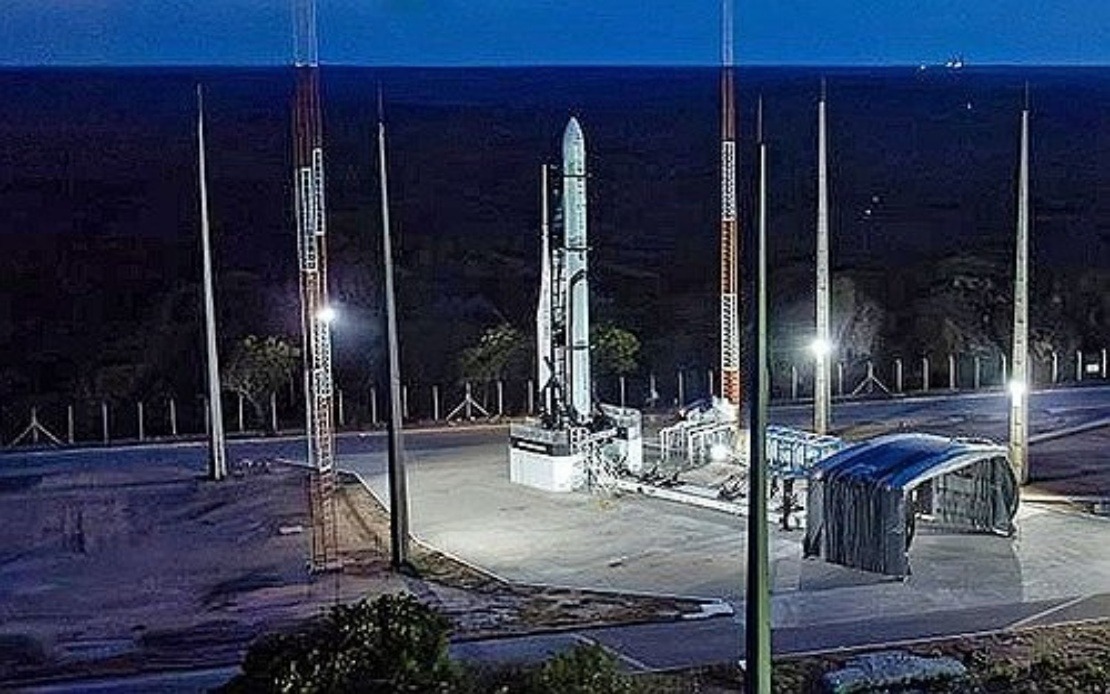
South Korea's defence ministry announced on Tuesday that it was deferring the launch of its Mir solid-fuel space rocket, marking a setback for the country's ambitious domestically-developed space programme. The vehicle, which would have represented the first test of a fully assembled four-stage configuration, had been scheduled to lift off at 2 pm from a sea-based platform off the southern coast of Jeju Island. The postponement followed the identification of technical issues during final launch preparations, prompting officials to shelve the attempt indefinitely pending further investigation and remedial work.
The timing of the delay is significant, as it comes nearly a year after South Korea successfully demonstrated its ability to launch military reconnaissance satellites using commercial American rockets. The country's defence establishment has long pursued the goal of reducing dependency on foreign launch providers, particularly for the sensitive intelligence-gathering missions that form a cornerstone of its security strategy. The Mir programme represents a critical step toward that objective by developing an indigenous, solid-propellant launch vehicle capable of placing observation satellites into low-Earth orbit at altitudes below 500 kilometres.
Solid-fuel rockets offer distinct advantages over their liquid-fuelled counterparts, particularly from a military perspective. These vehicles are simpler in construction, require minimal pre-launch preparation, and can remain fuelled and ready for extended periods without degradation. This capacity for rapid deployment makes them especially attractive to defence planners who must contend with unpredictable security circumstances. For South Korea, facing a sophisticated adversary directly across the demilitarized zone, such capability translates into strategic flexibility and enhanced operational responsiveness.
The development of the Mir vehicle began in 2021 with the explicit goal of establishing independent satellite reconnaissance capabilities. South Korea's military has already successfully deployed five larger reconnaissance satellites into orbit aboard SpaceX's Falcon 9 rockets, as of November of the previous year. However, these launches depended on American commercial providers, a dependency that limits Seoul's strategic autonomy during potential crises. The Mir programme was designed to complement and eventually supplement this existing constellation by enabling the deployment of smaller, more numerous satellites that could collectively maintain comprehensive surveillance coverage.
The programme's ultimate ambition is remarkably expansive: to populate low-Earth orbit with up to 60 small spy satellites by 2030. This constellation would create a densely-woven intelligence network capable of monitoring adversarial military movements with unprecedented frequency and detail. By distributing surveillance responsibilities across numerous smaller platforms rather than relying on a handful of large satellites, South Korea would gain significant advantages in coverage persistence and resilience. Even if individual satellites were disabled or destroyed, the overall system would remain operational.
Previous development phases of the Mir rocket focused on validating specific components through partial three-stage test configurations conducted in 2022 and 2023. These incremental trials allowed engineers to progressively validate the vehicle's performance characteristics and identify potential problem areas before attempting a full four-stage launch. The decision to postpone Tuesday's launch, despite reaching the final countdown phase, underscores the unforgiving nature of spaceflight testing. Even minor technical anomalies detected moments before ignition can necessitate complete postponement rather than risk catastrophic failure.
For the region, South Korea's progress in developing indigenous space launch capabilities carries broader implications. As the geopolitical importance of space-based intelligence and communications grows throughout Asia, nations increasingly recognise the vulnerability inherent in relying on foreign launch providers or satellite operators. South Korea's efforts to achieve technological independence in this domain will likely inspire similar programmes across Southeast Asia and elsewhere, even as it simultaneously demonstrates the substantial technical and financial hurdles involved.
The setback also illuminates the complexity of modern military space operations. The integration of a fully assembled four-stage vehicle involves thousands of components and systems that must function in perfect coordination. Manufacturing tolerances measured in fractions of millimetres, material properties that vary with temperature, and environmental factors create endless potential points of failure. The detection of problems during final preparations, rather than during flight, represents a vindication of South Korea's rigorous ground testing protocols.
Industry observers note that such delays, while frustrating, are entirely routine in developmental spaceflight programmes. Both American and European space agencies have experienced similar postponements during early stages of launching new vehicle types. The critical factor is that South Korea's engineers identified the issues before rather than after ignition. The ministry has committed to announcing a rescheduled launch date once technical investigations are complete and corrective measures have been verified through additional testing. The programme remains on track toward its longer-term objectives, notwithstanding this temporary disruption.

