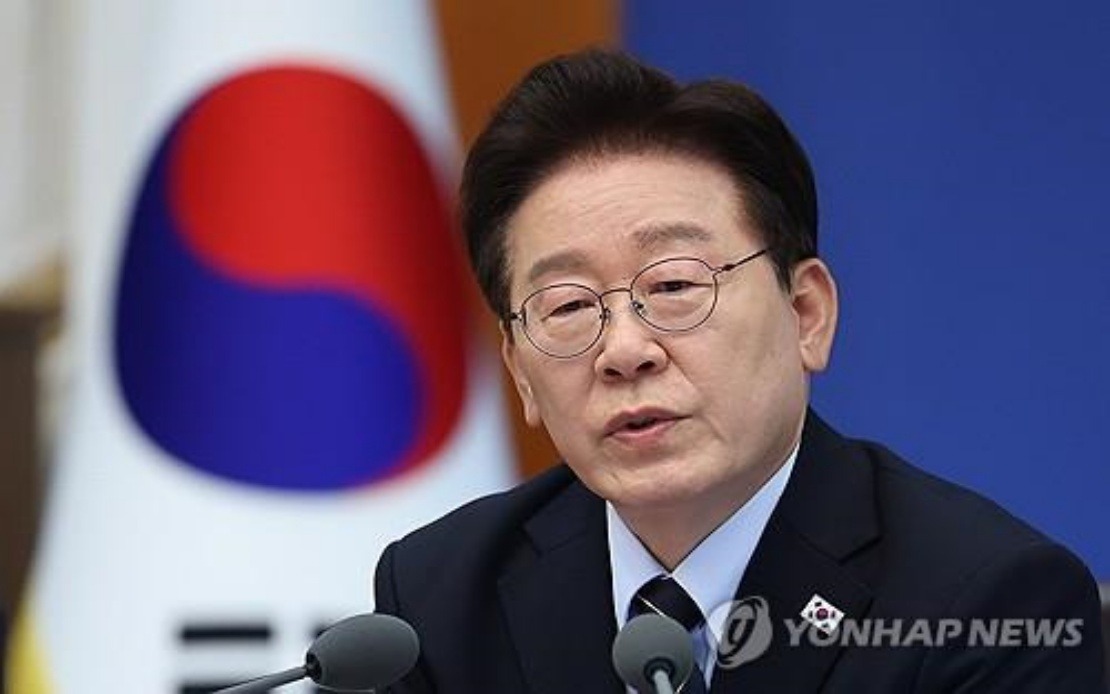
South Korea is undertaking a substantial rethinking of its defence posture, with President Lee Jae Myung directing senior government officials to accelerate military reforms grounded in technological advancement and a departure from the country's long-established universal conscription model. The strategic shift, communicated during a presidential meeting at Cheong Wa Dae on Thursday, represents an acknowledgment that demographic realities demand a fundamental restructuring of how the nation organises its security apparatus.
The cornerstone of Lee's proposed reforms is the transition toward what Seoul terms a "smart" military—one built on cutting-edge equipment and technological capabilities rather than traditional reliance on large personnel numbers and infantry-heavy deployments. This represents a significant departure from South Korea's historical defence doctrine, which has historically emphasised manpower density as a counterbalance to North Korea's numerically superior forces. The strategic pivot reflects broader global trends where advanced nations increasingly prioritise technological sophistication and precision over mass mobilisation.
Understanding the urgency driving these reforms requires examining South Korea's demographic trajectory. The nation faces one of the world's lowest birth rates, a reality that fundamentally undermines the sustainability of a conscription system designed to feed a constantly rotating stream of young men into military service. Lee explicitly linked this demographic challenge to the necessity for reform, noting that the existing structure proves both impractical and undesirable given the shrinking pool of eligible conscripts. The current system mandates at least 18 months of military service for all able-bodied males, a requirement that consumes a substantial portion of a young man's productive years during a critical period for education and career development.
The proposal to introduce selective conscription marks a particularly significant departure. Rather than maintaining universal mandatory service, Seoul would transition toward a system where only designated individuals serve, presumably based on strategic military requirements and individual circumstances. This approach would allow the majority of the youth population to pursue uninterrupted educational and professional trajectories while the military maintains operational strength through a smaller, more highly trained, and better-equipped force.
Crucially, Lee's reform agenda encompasses not merely military restructuring but a comprehensive reimagining of the social contract surrounding military service. The president emphasised that government policy must ensure military service becomes a pathway to enhanced employment prospects and educational advancement rather than perceived as lost time in a young person's life trajectory. This recognition reflects mounting public sentiment in South Korea where conscription, while accepted as a necessary national obligation, is increasingly viewed with ambivalence by younger generations who see service years as detrimental to career momentum and earning potential.
Lee articulated this concern with notable candour, stating that the government bears significant responsibility for ensuring citizens do not regard military service as a waste of their lives or a personal sacrifice. This framing represents an important acknowledgment that perpetuating the existing system requires not just demographic sustainability but genuine social buy-in and perception management. The administration proposes implementing policies that tie military service to subsequent job placement, educational opportunities, and wealth-building mechanisms, essentially transforming service into an investment in individual futures rather than a societal extraction.
The timing of these defence reform initiatives intersects with another major policy priority occupying Lee's attention: addressing South Korea's acute housing shortage. During the same meeting, the president allocated significant focus to real estate policy, reflecting the political urgency surrounding housing affordability. The government unveiled plans to add over 230,000 residential units in the Seoul metropolitan region through accelerated development of public land, selective degreening of protected areas, and incentives for private sector construction projects.
Lee characterised the housing supply situation as critical, tracing the current shortfall to 2022 when government policy began constraining permits and construction approvals. This tightening, intended to moderate property price inflation, inadvertently created what the president termed a "supply cliff," necessitating aggressive compensatory measures. The administration proposes streamlining permit procedures and, where necessary, revising relevant legislation to expedite land acquisition and development projects. This dual policy focus—simultaneously pursuing defence modernisation and housing expansion—reflects how Seoul must navigate interconnected challenges of national security, demographic sustainability, and quality of life for younger populations.
For Malaysia and other Southeast Asian nations, South Korea's defence reforms offer instructive lessons regarding managing military capabilities under demographic constraints. While Malaysia's demographic profile differs substantially from South Korea's, the strategic principle underlying Seoul's approach—prioritising technological sophistication and operational efficiency over manpower quantity—holds relevance for regional defence planning. As birth rates moderate across much of Asia, countries may increasingly adopt similar models emphasising smaller, more technically advanced forces.
The emphasis on making military service attractive rather than burdensome also resonates regionally. Nations with conscription systems or substantial volunteer militaries face comparable challenges in attracting and retaining quality personnel amid economic development and rising educational aspirations. South Korea's proposed linkage between military service and subsequent career advancement represents an innovative approach to this persistent recruitment challenge.
Additionally, the broader context of technological military transformation carries implications beyond conscription policy. South Korea's determination to build a "smart" military equipped with advanced technologies reflects the regional strategic environment where technological superiority increasingly matters in military calculations. For neighbours including Malaysia, Singapore, and Vietnam, Seoul's defence modernisation trajectory warrants monitoring as it may reshape regional military balances and technological standards.
The reform agenda also underscores how demographic challenges intersect with geopolitical realities. South Korea cannot simply abandon military readiness despite demographic headwinds; instead, it must innovate within constraints. This balancing act—maintaining security capabilities while adapting to demographic realities—exemplifies challenges facing multiple Asian nations where birth rates have fallen below replacement levels. The solutions Seoul develops may influence how other countries approach similar intersections of demographic necessity and strategic imperative.

