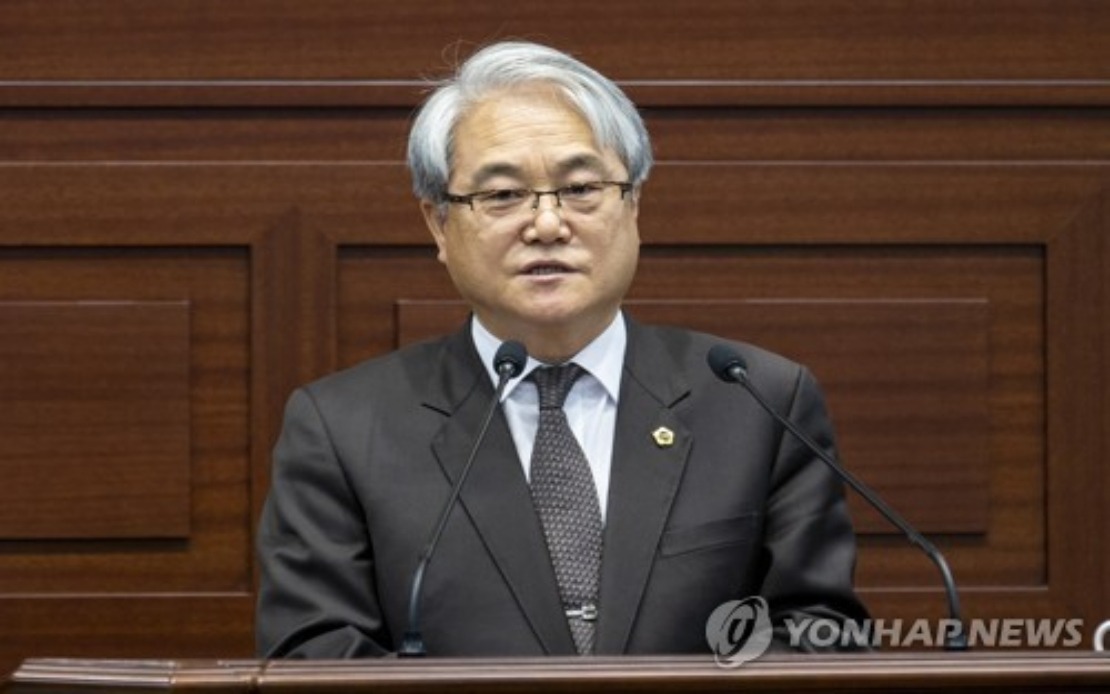
The death of Kim Ha-soo, who recently served as chief of Cheongdo county in South Korea's southeastern region, has cast a shadow over the nation's ongoing efforts to combat public sector corruption. The former administrator was discovered deceased on a mountain early Monday morning by rescue workers, who also recovered what appeared to be a personal note at the scene, according to police statements reported by Yonhap News Agency.
Kim's death emerged amid multiple legal troubles that had mounted against him in the months following his departure from office earlier this year. The circumstances surrounding his demise come at a time when South Korea continues to grapple with systemic corruption within its government institutions, a persistent challenge that has prompted repeated calls for administrative reform and greater accountability among public officials.
The most serious allegation against Kim involved his alleged acceptance of illicit payments during his tenure in office from 2022 onwards. He had been formally charged with receiving improper funds from a government official who sought career advancement in return, a transaction that clearly violated ethics regulations governing public employment and promotion decisions. Such quid pro quo arrangements represent a fundamental abuse of administrative authority and undermine merit-based advancement within civil service systems.
The web of misconduct extended beyond straightforward bribery. Authorities had referred Kim to prosecutors for investigation into an alleged home invasion that occurred in January, targeting the director of a nursing home. The incident suggested a pattern of behaviour raising questions about the former official's judgment and conduct outside formal governmental channels.
Notably, the investigation had already claimed a second life before Kim's death. A man suspected of delivering bribes on behalf of the public servant implicated in the promotion scheme had previously died, adding another layer of complexity to the case. The circumstances surrounding his death and whether it related to the investigation remain unclear, but the succession of deaths has intensified scrutiny of how such high-profile corruption cases unfold in South Korea.
For Malaysian observers, the Cheongdo case exemplifies challenges confronting modern democracies across Asia as they attempt to professionalise public administration while reducing opportunities for graft. South Korea has implemented comprehensive anti-corruption frameworks and established dedicated investigative bodies, yet individual officials continue to exploit their positions for personal gain, demonstrating that institutional design alone cannot eliminate misconduct.
The pattern of Kim's alleged offences—leveraging official position to extract bribes, targeting vulnerable sectors like nursing home management, and the apparent violence suggested by the home invasion allegation—illustrates how corruption often extends into multiple criminal domains. Officials who compromise their integrity in one area frequently demonstrate willingness to transgress in others, creating cascading institutional damage.
South Korea's approach to investigating public corruption has become increasingly robust over recent decades, partly driven by high-profile scandals that mobilised public opinion. The nation established the Anti-Corruption and Civil Rights Commission and implemented mandatory reporting mechanisms designed to surface violations earlier. However, cases like Kim's demonstrate that detection remains incomplete and that the investigative process itself can create intense personal pressure on accused officials.
The broader implications for regional governance are significant. Southeast Asian nations including Malaysia continue developing their own anti-corruption mechanisms, and South Korea's experiences—both successes in creating institutional frameworks and failures to prevent individual violations—offer instructive lessons. The challenge of balancing thorough investigation with protection of due process, maintaining public confidence in institutions while ensuring fairness to the accused, remains delicate across all democracies.
Kim's death during an active investigation prevents completion of legal proceedings and eliminates opportunity for full public disclosure of evidence. This outcome, however it occurred, leaves questions unanswered about the full scope of potential misconduct and whether other officials or institutions were implicated in the scheme. Such unresolved cases inevitably fuel public cynicism about corruption investigations and their outcomes.
Moving forward, South Korean authorities will likely intensify scrutiny of the intersection between high-pressure investigations and individual welfare, examining whether existing support systems adequately assist officials facing allegations. Simultaneously, the case reinforces the importance of transparent investigative processes that maintain public confidence in the system's integrity while safeguarding the rights of those accused.

