A high-profile Michelin-starred chef in Seoul has become embroiled in a food safety scandal that exposes tensions between culinary innovation and strict regulatory oversight in South Korea. Prosecutors are pursuing a one-year prison sentence against the restaurant owner, whose establishment holds two coveted Michelin stars, for incorporating black ants into a palate-cleansing sorbet without approval from food authorities. The case underscores how even celebrated chefs operating at the highest levels of the culinary world remain subject to rigid compliance frameworks governing ingredient sourcing and food preparation.
The Seoul prosecutors made their case at a Monday court hearing, alleging that the chef used the insects as a garnish specifically to impart a sour flavour to the frozen dessert. This particular culinary technique, while creative, ran afoul of South Korea's carefully calibrated regulations on insect consumption. The nation maintains a whitelist of exactly ten insect species deemed safe for human consumption, which includes grasshoppers and brown mealworm larvae, categories that reflect years of food safety research and risk assessment. The black ants in question fell outside this approved spectrum, making their use not merely an unconventional choice but a clear regulatory violation.
Investigations by South Korean food safety authorities revealed that the restaurant sourced the forbidden insects from international suppliers, with shipments originating from Thailand and the United States. This transnational supply chain dimension complicates the matter further, raising questions about customs oversight and import protocols. The probe began last year when food ministry officials discovered evidence of the practice and commenced their examination of the establishment's records and operational procedures. Documentation showed that the chef had incorporated three to five ants atop each sorbet served to customers over an extended period.
Financial records paint a picture of systematic operation rather than isolated experimentation. Between the introduction of the ant-garnished sorbet and January 2025, the restaurant logged approximately 12,000 sales of the item, generating revenue approaching 120 million won—equivalent to roughly US$81,000. This substantial transaction volume demonstrates that the practice was not a one-off creative flourish but rather a deliberate menu component maintained across nearly four years. The financial dimension strengthens prosecutors' position that this represented knowing and sustained non-compliance rather than inadvertent error.
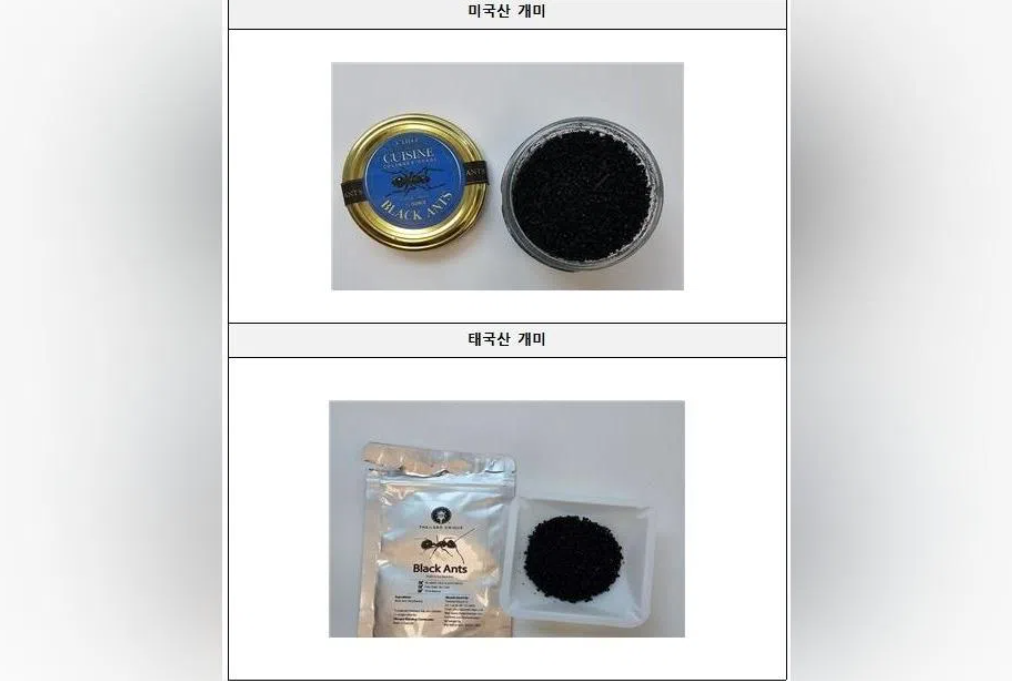
Physical evidence presented by the food ministry included a tin container clearly labelled "Cuisine Black Ants," establishing a clear documentary trail of the ingredient's deliberate procurement and use. Such tangible proof removes ambiguity from the allegations and demonstrates that authorities possess concrete support for their claims. The existence of branded packaging designed specifically for culinary use suggests that the chef either sourced the ants through specialty suppliers catering to experimental chefs or obtained them through channels not subject to South Korea's standard food safety inspection regime.
The defendant's legal team attempted to mitigate culpability by arguing that customers receiving the ant-topped confections had provided informed consent beforehand. This consent-based defence represents an intriguing jurisprudential angle, suggesting that if patrons knowingly accepted the risk and violation, perhaps the severity warranted reconsideration. However, South Korean food safety law appears structured to prevent such individual waivers from overriding public health protections, regardless of consumer awareness or acceptance. The regulatory framework prioritises categorical prohibition over voluntary assumption of risk, reflecting a protective approach to food standards.
In his closing statement, the defendant expressed remorse, stating: "I apologise for this incident, which arose from my failure to fully understand the relevant regulations." This acknowledgment suggests either genuine misunderstanding of the regulatory landscape or a strategic legal positioning acknowledging wrongdoing while claiming innocent intent. The assertion rings somewhat hollow given the documented sourcing practices and the duration of the activity, though it may influence sentencing considerations if the court weighs intent alongside conduct.
Prosecutors have requested not only the one-year imprisonment but also a 20 million won monetary fine, according to reporting by Newsis news agency. This dual penalty approach seeks both custodial consequences and financial restitution, potentially signalling prosecutors' assessment of the seriousness with which South Korean authorities view food safety violations even at elite culinary establishments. The fine amount represents a meaningful but not catastrophic sanction relative to the revenue generated through the practice.
The Seoul Western District Court is scheduled to deliver its judgment in early September, with the outcome likely to reverberate through South Korea's fine dining sector. The case raises broader questions about how strictly regulatory authorities should police innovative culinary practices, particularly when chefs argue that controlled, informed consumption differs fundamentally from public health risks. For Malaysian readers and Southeast Asian food industry professionals, this case illustrates how neighbouring jurisdictions maintain rigorous food safety enforcement and how even prestigious establishments cannot claim exemption from compliance standards.
The timing of this prosecution coincides with increasing global scrutiny of food authenticity and safety standards, particularly as molecular gastronomy and experimental cuisine expand ingredient categories beyond conventional sources. South Korea's approach demonstrates that permissive culinary innovation does not extend to ingredients explicitly restricted by national law, regardless of international culinary prestige or consumer demand. This case may prompt other chefs throughout the region to conduct compliance audits of their own menus and sourcing practices, particularly those utilising non-traditional or foraged ingredients.
The incident also reflects broader regulatory philosophies distinguishing South Korea's approach to food governance. Rather than adopting a principle permitting all substances unless specifically banned, South Korea maintains positive lists of approved ingredients and categories. This whitelist methodology places the burden on food producers and chefs to verify compliance rather than on regulators to identify dangerous substances. For Southeast Asian regulatory bodies considering their own food safety frameworks, South Korea's enforcement pattern provides instructive precedent about maintaining categorical restrictions.
Beyond the immediate legal consequences, this case carries reputational implications for Michelin-starred establishments. The association with food safety violations, regardless of the relative obscurity of the infraction, potentially undermines the credibility and prestige these establishments cultivate. While the restaurant's Michelin status is not explicitly addressed in the prosecution, such recognition typically depends partly on regulatory compliance and consumer safety records. The case demonstrates that culinary excellence and technical achievement do not constitute defences against food law violations, a principle likely to resonate throughout Asia's competitive fine dining sector.

