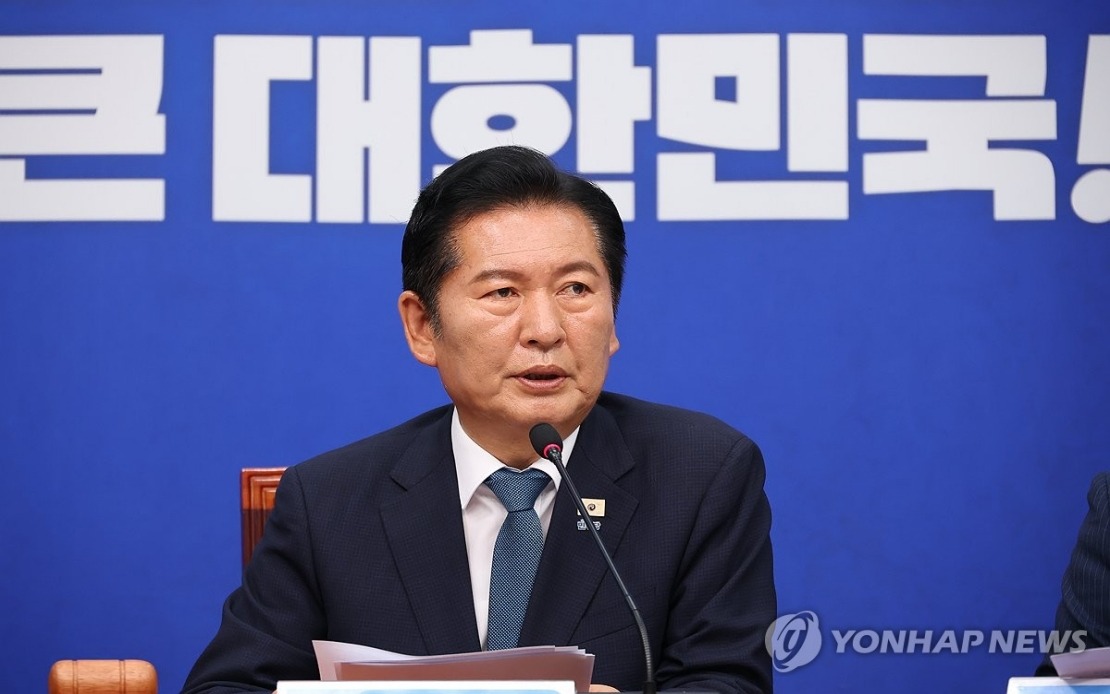
South Korean Democratic Party chairman Jung Chung-rae formally stepped down from his post on Wednesday, a strategic move widely interpreted as preparation for his candidacy in the party's upcoming national convention scheduled for August 17. The announcement came during a meeting of the party's supreme council at the National Assembly in Seoul, marking a significant shift in the leadership landscape of the ruling coalition as it navigates challenges both internally and in its governance agenda.
In his resignation statement, Jung reflected on the difficulties of his tenure, describing a period of personal introspection regarding his political trajectory and performance. He characterised his time in the position as demanding and emotionally taxing, citing the constant pressure and resistance he encountered from various quarters within and outside the party structure. Despite these obstacles, Jung emphasised his unwavering commitment to his duties, projecting an image of perseverance and dedication to his political responsibilities throughout his chairmanship.
Jung's tenure has been marked by considerable tension within the Democratic Party, particularly regarding his leadership approach and alignment with President Lee Jae Myung's administration. Critics, especially among pro-Lee factions, contend that his stewardship has been tilted towards placating hardline party elements rather than maintaining harmonious collaboration with the president on crucial policy matters. This internal friction reflects deeper ideological and strategic divisions that have characterised South Korean politics in recent years, where factional loyalty and presidential support have historically determined party dynamics.
The forthcoming convention is shaping up as a competitive three-way contest that will determine the party's direction over the next leadership cycle. Beyond Jung, two other prominent political figures have positioned themselves as candidates: Prime Minister Kim Min-seok, who enjoys strong backing from President Lee as a trusted political ally, and Song Young-gil, a former Democratic Party leader attempting a political comeback. The composition of this leadership race underscores the fractured nature of South Korea's dominant political party and the competing visions its senior members hold for the organisation's future.
Song Young-gil's entry into the race introduces an interesting dynamic, as he has reportedly indicated to President Lee his intention to contest the leadership position. According to Democratic Party lawmaker Park Jie-won in an interview with radio broadcaster CBS, Song has also suggested the possibility of consolidating his candidacy with Kim Min-seok's campaign, potentially creating a unified ticket. Such a manoeuvre would substantially alter the electoral mathematics of the convention and could signal attempts by certain factions to present a united front against Jung's political ambitions.
The interim leadership arrangement places Han Byung-do, the party's floor leader, in the acting chairman role until the convention concludes. This transition mechanism allows the party to maintain continuity in its parliamentary operations and day-to-day governance while the broader political machinery gears up for the August contest. Han's appointment as interim leader is a standard procedural step, though his tenure will occur against the backdrop of active campaigning and internal positioning among the three declared candidates.
From a regional perspective, developments within South Korea's ruling party carry significance beyond its borders. The Democratic Party's internal struggles and the nature of its leadership transition can influence Seoul's policy priorities, particularly regarding inter-Korean relations, economic management, and international alignment. For Southeast Asian nations including Malaysia, a stable and cohesive South Korean government is advantageous for predictable diplomatic relations and sustained economic engagement. Conversely, prolonged internal party turmoil could create uncertainty in policy continuity.
The convention scheduled for August 17 will provide Democratic Party members with an opportunity to reset their leadership and potentially heal some of the factional divisions that have plagued the organisation. The choice between Jung, Kim, and Song represents a choice between different visions for party governance: Jung represents continuity with recent stewardship, Kim embodies the presidential faction's preferred continuity, while Song's candidacy offers a possible alternative that could bridge divides or alternatively deepen them depending on electoral outcomes and post-convention developments.
Jung's resignation follows a pattern in South Korean politics where party leaders have strategically stepped down before leadership elections to signal renewal and rebuild credibility before campaigning for re-election. By resigning now rather than remaining in the chairman position while campaigning, Jung positions himself as someone willing to relinquish power temporarily, a gesture that can resonate with party members fatigued by intra-party conflicts. This tactical withdrawal allows him to reset his political narrative and present himself afresh to delegates at the August convention.
The Democratic Party's internal competition must be viewed against the broader context of South Korean presidential politics, where ruling party leadership has traditionally served as either a springboard for future presidential ambitions or a consolidation of power by presidential factions. The stakes of the August convention thus extend beyond mere organisational leadership, potentially influencing the trajectory of South Korean national politics in subsequent years. How the party resolves this leadership question will reverberate through its parliamentary operations, policy formulation, and preparation for future electoral cycles.

