The final transformation of South Korea's relationship with dog meat consumption is unfolding quietly across the nation's farm towns and restaurant alleyways. In February 2027, a legislative milestone will cement what once seemed unthinkable in a country where the practice dates back centuries: the complete prohibition of breeding, slaughtering, and selling dogs for human consumption. This landmark shift represents not merely a dietary change but a profound cultural realignment, one that reflects evolving animal welfare values competing against deeply entrenched traditions and the livelihoods of thousands who have built their careers around the trade.
The journey toward this ban has been neither swift nor simple. South Korea's parliament passed the historic legislation in January 2024 after decades of sometimes fractious debate, offering affected farmers a three-year grace period to wind down operations and transition to alternative livelihoods. This measured approach was designed to avoid economic catastrophe for rural communities dependent on dog farming. The strategy appears to be working: according to data from South Korea's Ministry of Agriculture, Food and Rural Affairs, more than 80 per cent of the approximately 1,500 known dog meat farms had ceased operations by May 2026, leaving fewer than 300 still functioning. The government has supported this transition through financial incentives including compensation of up to 600,000 won (US$426) per dog, coupled with low-interest loans and comprehensive re-employment counselling programmes.
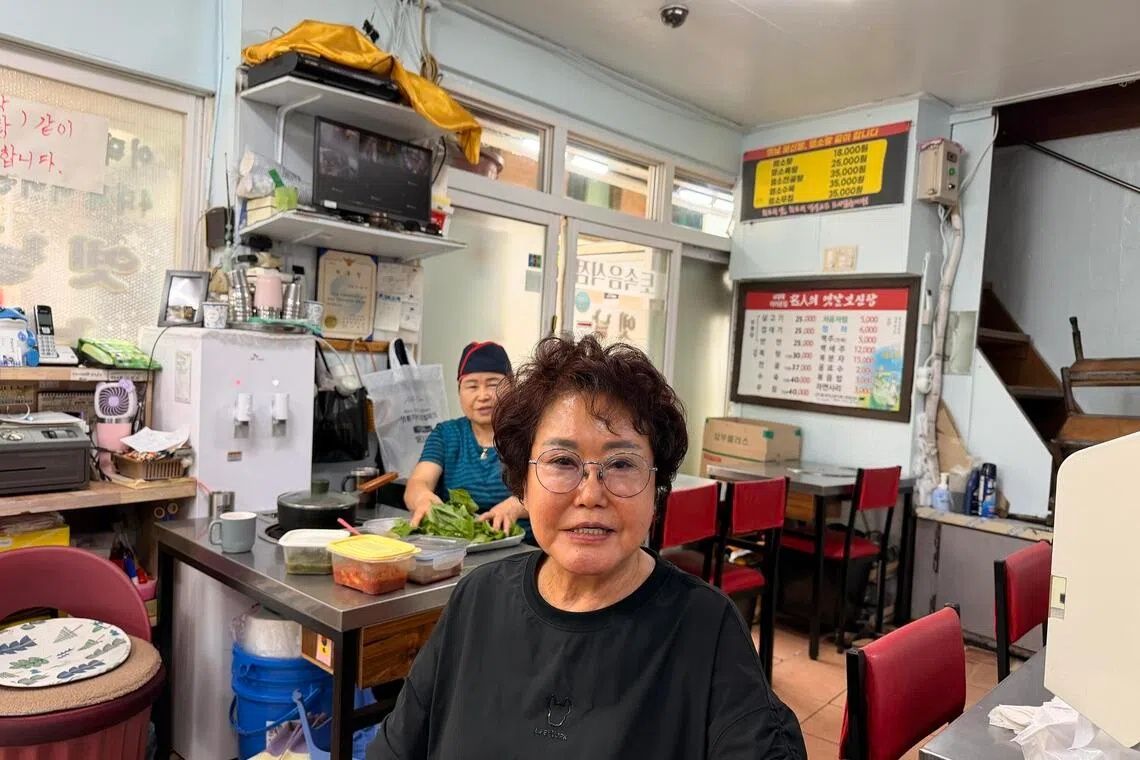
Yet behind these aggregate statistics lies genuine human hardship. Lee Deok-sung, who has operated a dog meat stew restaurant near Seoul's Dongdaemun Market for 45 years, describes this summer as a commercial disaster. The traditional consumption of boshintang—a stew believed to restore energy during the sweltering boknal, or "dog days" of summer—once generated reliable seasonal revenue. This year's three hottest days fell on July 15, July 25, and August 14, marking what may be the final such occasions before the ban takes effect. Yet Lee has been forced to raise prices from 16,000 won to 25,000 won per bowl due to soaring input costs, while demand simultaneously contracts. She finds herself in an impossible bind: moving unsold inventory before dinner service to break even represents mere survival, not prosperity. "I am barely making ends meet now," she confessed, her anxiety palpable as she contemplates the looming legislative deadline.
Across the narrow alley from Lee's establishment sits Lee Kyung-ja's boshintang restaurant, an equally venerable institution operating for more than four decades. The 75-year-old owner has attempted adaptation by introducing black goat stew, marketed as a textural and flavour equivalent to dog meat. However, this pivot has encountered unexpected resistance from the restaurant's traditional clientele. Regulars who continue patronising the establishment have largely rejected goat as an acceptable substitute, insisting that dog meat possessed superior taste and cultural resonance. Some customers have mentioned that traditional Korean medicine practitioners continue recommending dog meat for individuals recovering from serious illnesses, suggesting that health rationales persist alongside gustatory preferences. Lee Kyung-ja faces a particularly acute dilemma: rebuilding a customer base from scratch at 75 years old feels overwhelming, and she contemplates closure if business deteriorates further following the ban's implementation.
The resilience of these traditional practises reflects deep historical roots extending far beyond contemporary commerce. Records suggest dog meat consumption in Korea dates back at least to the Joseon Dynasty, with perhaps the most prominent historical reference appearing in the Donguibogam, a 17th-century medical treatise compiled by royal physician Heo Jun. This authoritative text characterised dog meat as a warming food capable of replenishing energy and vitality—a classification that provided medicinal legitimacy to the practise. Consumption became significantly more widespread during Japan's colonial occupation from 1910 to 1945 and in the immediate aftermath of the three-year Korean War, when poverty and catastrophic food shortages forced millions to seek inexpensive protein sources. What began as survival necessity gradually became normalised cultural tradition.
The ban's implementation will inevitably reshape Seoul's remaining dog meat markets. At Gyeongdong Market, one of the few locations where dog meat remains openly available, vendors report that prices have tripled from approximately 20,000 won per kilogramme in 2024 to 60,000 won currently. One vendor, declining to elaborate further, cited the topic's extreme sensitivity—a telling indicator of how the practise has become increasingly contentious within South Korean society itself. This price escalation reflects not only reduced supply from closed farms but also the speculative behaviour of remaining vendors aware that their time in the market is strictly limited. The narrowing window creates perverse economic incentives: maximising revenue before the prohibition becomes paramount, potentially accelerating price increases that further suppress demand.
Personal narratives underscore the human complexity underlying the statistical transition. Annie Ko, a 45-year-old musician, had never owned a pet before adopting DeeJay, a Labrador puppy rescued from a dog meat farm in Wonju, approximately two hours from Seoul. DeeJay had spent his first three months confined in a cramped cage alongside six siblings before rescue. Ko worked with Humane World for Animals, a non-profit organisation that has facilitated the rescue and overseas adoption of approximately 2,800 dogs to destinations including the United States, Britain, and Canada. DeeJay represents the sole surviving member of his litter who remained in South Korea for adoption; his siblings almost certainly would have faced slaughter absent intervention. The trembling puppy's immediate acceptance of Ko's home—snuggling beside her that first night as though he had always belonged there—powerfully illustrates the capacity for domesticated dogs to bond with human caregivers regardless of their background.
The legislative framework supporting this transformation has been deliberately constructed to balance competing concerns. The three-year grace period reflected recognition that immediate prohibition would devastate farming communities without allowing time for economic adjustment. Government compensation schemes and job transition assistance programmes acknowledge that individuals who have spent decades in the industry merit support rather than abandonment. Yet the adequacy of these measures remains debatable. While 600,000 won per dog represents meaningful compensation, it falls short of covering total sunk capital invested in farm infrastructure, equipment, and accumulated expertise. Low-interest loans and re-employment counselling are valuable but cannot fully offset the loss of specialised livelihoods in rural economies where alternative employment opportunities remain limited.
Southeast Asian readers observing this Korean transformation should recognise several relevant patterns. The ban reflects a broader regional shift toward Western-influenced animal welfare standards, a tension increasingly visible throughout Asia as economic development correlates with changing attitudes toward animal consumption. Malaysia and other ASEAN nations maintain their own contentious practises regarding animals raised for food, from live animal transport to slaughterhouse conditions. South Korea's experience demonstrates that legislative prohibition, when implemented with sufficient lead time and economic support, can successfully transition entire industries while maintaining social cohesion. However, the resistance from remaining consumers and practitioners also illustrates the durability of culturally embedded food traditions; legislation alone cannot erase centuries of normalised practise or the genuine beliefs, both medical and cultural, that sustain consumption patterns.
The February 2027 deadline represents a definitive breaking point, yet the transition will likely remain incomplete in practical terms. Historical records suggest that prohibition rarely eliminates practises entirely; instead, they push activities underground or toward margins. Some consumers may seek black market sources, particularly if traditional Korean medicine practitioners continue recommending dog meat for therapeutic purposes. The psychological and cultural adjustment required for consumers, vendors, and farmers extends far beyond the legislative timeline. Lee Kyung-ja's contemplation of retirement and the struggling circumstances of established restaurant operators illustrate how the ban, however ethically justified, imposes genuine costs on individuals whose choices were shaped by different historical circumstances and cultural contexts.
This transformation also raises broader questions about cultural sovereignty and globalisation. The dog meat ban emerged partly from international pressure and changing cosmopolitan values regarding animal welfare. Yet South Koreans increasingly share these values themselves, reflecting generational shifts and the rise of domestic animal welfare advocacy. The debate has thus become authentically Korean rather than merely a matter of external imposition. This evolution—where societies gradually adopt new standards through internal deliberation rather than coercive external pressure—may offer lessons for other contentious practises facing scrutiny across Asia. The emphasis on transitional support, economic compensation, and gradual implementation suggests an alternative to sudden prohibition that acknowledges both ethical imperatives and human dignity.

