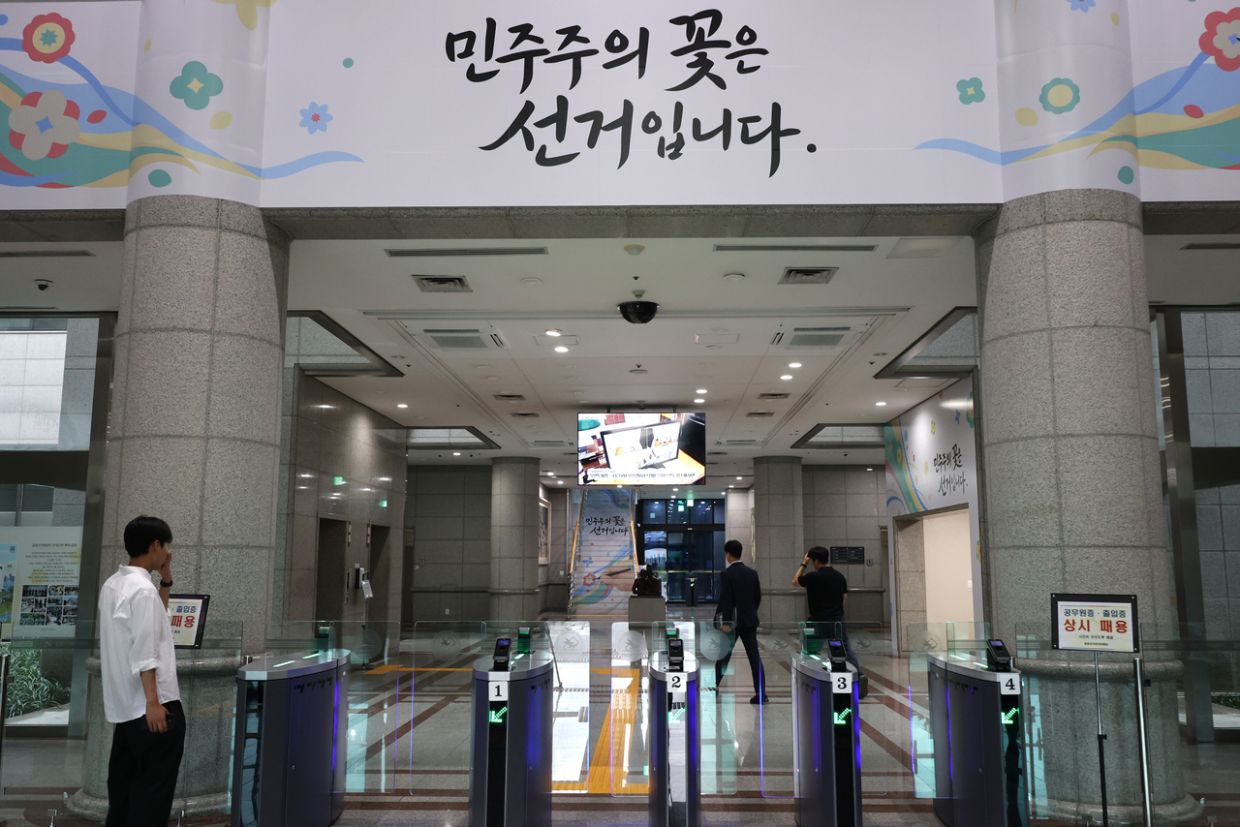
South Korean prosecutors and police have escalated their investigation into irregularities surrounding the June 3 local elections by conducting a search of the National Election Commission's offices in Gwacheon, a suburb south of Seoul. The coordinated raid, executed by a joint task force combining both prosecution and police resources, marks a significant development in what has become an increasingly contentious probe into the integrity of the electoral process. Investigators are seeking physical and digital evidence that could substantiate allegations of deliberate data tampering within the election authority's own systems.
According to legal sources familiar with the inquiry, the focus of the investigation centres on accusations that employees within the National Election Commission deliberately altered statistical records stored in their computer infrastructure. These alleged manipulations appear designed to obscure and ultimately conceal discrepancies in voter registration numbers that occurred during the electoral process. The decision to pursue such intrusive investigative measures suggests prosecutors have accumulated sufficient preliminary evidence to warrant concern about systematic irregularities at the institutional level.
The underlying scandal emerged from significant disruptions that occurred at numerous polling stations on election day. Multiple locations reported critical shortages of ballots, creating a chaotic situation where eligible voters arrived to participate in the democratic process only to discover they could not cast their votes. The inability of citizens to exercise their fundamental right to vote represents a serious failure of electoral administration and has generated considerable public concern about the competence and reliability of the election management system.
Voters who encountered these ballot shortages faced a frustrating predicament: they had fulfilled their civic duty by appearing at their designated polling stations, yet found themselves unable to complete the voting process due to administrative failures. Many voters left without casting ballots, effectively disenfranchising themselves through circumstances beyond their control. The scale and visibility of these incidents during a nationwide local election have made the situation impossible to ignore or dismiss as isolated incidents at individual polling stations.
The allegation of data manipulation within the National Election Commission itself adds a deeply troubling dimension to the narrative. Rather than merely representing administrative incompetence or logistical miscalculation, the investigation suggests the possibility of a deliberate cover-up. If employees systematically altered records to mask the true extent of voter number errors, this would indicate an intentional effort to conceal institutional failures from public and official scrutiny. Such behaviour would undermine confidence in the electoral administration's integrity and independence.
For Malaysian observers and Southeast Asian democracies more broadly, this South Korean case serves as a cautionary example of vulnerabilities within electoral systems, even in established democracies. While Malaysia has its own election management infrastructure through the Election Commission, the Korean situation illustrates how important it is to maintain transparency, systematic oversight, and accountability mechanisms within electoral bodies. The involvement of joint prosecution-police task forces demonstrates South Korea's approach to maintaining institutional checks and balances when official bodies face serious allegations.
The joint investigation approach itself reflects institutional safeguards built into South Korea's governance structure. By combining prosecutorial expertise with police investigative capabilities, authorities reduce the risk that any single institution might suppress findings or moderate investigations according to political considerations. This collaborative model, while resource-intensive, aims to ensure that electoral integrity concerns receive thorough, impartial examination from multiple institutional perspectives.
The timing of the investigation relative to the election itself deserves attention. The June 3 local elections were already contentious and newsworthy events within South Korea's political landscape. The subsequent discovery of ballot shortages and the even later revelation of alleged data manipulation means that confidence in the electoral process has faced multiple erosions in public perception. Each new development in the investigation potentially extends the reputational damage to the National Election Commission and raises questions about the reliability of election outcomes.
The broader implications extend beyond the technical question of whether ballots were counted accurately. When citizens lose confidence that electoral systems function properly and that official data accurately reflects what actually occurred during elections, democratic legitimacy itself comes into question. The National Election Commission's primary mission is to serve as a neutral, trustworthy arbiter of the electoral process—a position that cannot be maintained if the institution itself becomes the subject of criminal investigation for evidence tampering.
For the investigation to ultimately serve democratic purposes, its findings must be made public and its conclusions must demonstrably shape institutional reform. South Korean authorities face the challenge of not only determining what occurred and who bears responsibility, but also of rebuilding public trust in electoral administration. This requires transparency throughout the investigative process and substantial institutional reforms that address not only individual wrongdoing but also systemic weaknesses that allowed such manipulation to occur.
The National Election Commission now faces a pivotal moment in its institutional history. How it responds to these allegations, cooperates with investigators, and subsequently reforms its practices will significantly influence future public confidence in South Korean elections. The stakes extend beyond one election cycle or one institution—they touch on the fundamental health of South Korean democracy itself.

