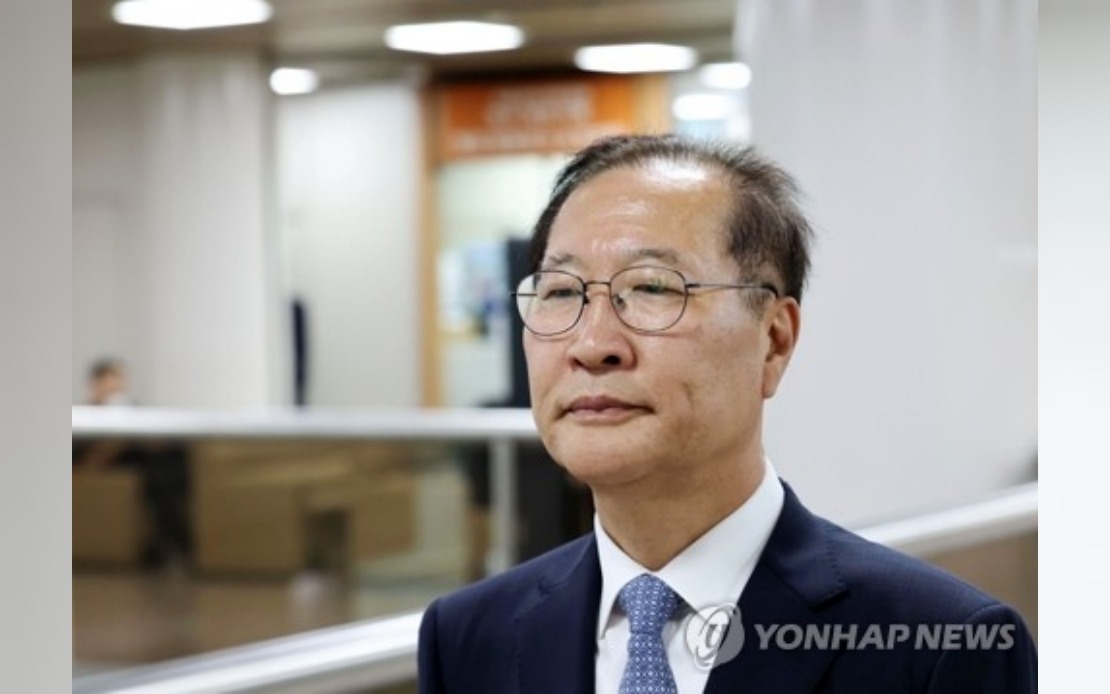
South Korea's judicial system has handed down a lengthy 25-year prison sentence to former Justice Minister Park Sung-jae, marking a pivotal moment in the country's reckoning with the tumultuous martial law episode of December 2024. The Seoul Central District Court delivered its verdict on Monday, finding the senior government official guilty of playing a central role in an insurrection by actively supporting former President Yoon Suk Yeol's ill-fated attempt to impose military rule. The sentence exceeds the 20-year term initially recommended by prosecutors, underscoring the court's assessment of Park's culpability in the constitutional crisis that gripped the nation.
The special counsel's investigation into the martial law declaration revealed a calculated effort to mobilise government machinery in support of Yoon's authoritarian move. Park, as Justice Minister, stood accused of convening senior officials from his ministry specifically to coordinate logistical preparations for what prosecutors characterised as an insurrection. The court's examination of these actions disclosed that Park ordered reviews of prosecutor dispatch procedures, assessed the capacity of correctional facilities ostensibly for detaining opposition politicians and prominent figures expected to face arrest under martial rule, and directed officials responsible for travel restrictions to report for duty. These concrete steps demonstrated that Park had moved beyond passive acquiescence, actively facilitating the infrastructure necessary for systematic detention of political opponents.
The court's judgment articulated a fundamental principle about ministerial responsibility in democratic governance. In its written decision, the bench stated that Park had consciously abandoned his constitutional duty to defend the nation's legal order, instead calculating that the insurrection possessed a reasonable chance of success and choosing to participate accordingly. This reasoning suggests that the court viewed Park's actions not as bureaucratic compliance with a superior's orders, but as a deliberate choice to betray his oath of office. The conviction on both charges—playing a key role in insurrection and abuse of power—reflected the prosecution's successful argument that Park's conduct transcended mere administrative compliance.
Parallel proceedings have ensnared other members of Yoon's cabinet in similar convictions. Former Prime Minister Han Duck-soo and former Defence Minister Kim Yong-hyun have likewise been found guilty of central roles in the insurrection, creating a pattern of institutional complicity that extends across multiple agencies. This collective accountability suggests that the martial law attempt was not merely the impulse of a single authoritarian figure, but rather involved coordinated action among senior government officials who calculated political advantage in supporting the move. The breadth of convictions across cabinet-level officials demonstrates how thoroughly the attempted seizure of power penetrated the executive machinery.
At the apex of this governmental crisis stands Yoon himself, who received a life sentence in February for orchestrating the martial law declaration that precipitated the constitutional breakdown. Yoon has since appealed his conviction, leaving the outcome of the highest-level accountability still in judicial limbo. The fact that multiple subordinates face lengthy prison terms while the principal actor pursues appeals underscores the protracted nature of South Korea's legal reckoning with this episode. The staggered convictions and ongoing appeals suggest that the full legal resolution of the martial law crisis may occupy the country's courts for years to come.
Parк's legal team responded immediately to the verdict by announcing plans to appeal, characterising the sentence as lacking foundation in factual evidence or legal principle. This contestation reflects the polarised political environment that continues to divide South Korean society regarding the martial law episode. Defence arguments advancing technical legal objections contrast sharply with the prosecution's overarching constitutional narrative about the duty of senior officials to prevent illegal seizures of governmental power. The appeal process will likely rehearse these competing visions of institutional responsibility and democratic governance.
The prosecution's decision not to appeal the sentence carries its own significance. Special counsel Cho Eun-suk's team indicated that the court's articulation of the Justice Minister's duty to prevent unconstitutional martial law and preserve constitutional order sufficiently vindicated their prosecutorial theory. This prosecutorial restraint suggests confidence that the ruling establishes the desired legal precedent: that senior government officials bear personal criminal responsibility for facilitating anticonstitutional power seizures, regardless of hierarchical pressures or calculations about political viability.
The court notably dismissed separate charges related to anti-corruption law violations, ruling that these allegations fell outside the special counsel's investigative purview. These charges stemmed from Park's alleged provision of inappropriate orders to subordinates following a request from Yoon's wife, Kim Keon Hee, seeking prosecution investigation into corruption allegations against her. The dismissal of these charges on jurisdictional grounds rather than substantive grounds leaves open the possibility that additional proceedings might later address this conduct, though such prosecutions would require fresh investigation and indictment.
For Malaysian and Southeast Asian observers, the South Korean case study carries instructive implications about institutional resilience and the rule of law. The willingness of the Seoul Central District Court to convict and impose substantial sentences on cabinet-level officials, even in a period of intense political polarisation, demonstrates how judicial independence can function as a check on governmental excess. South Korea's experience shows that democratic recovery from authoritarian impulses requires sustained institutional commitment to constitutional principles, particularly among those officials entrusted with prosecutorial and custodial functions. The case illustrates how quickly formal constitutional structures can be breached when senior officials collectively abandon their institutional loyalties in pursuit of perceived political advantage.
The international dimensions of this crisis also merit attention for the broader region. South Korea's handling of the martial law attempt through established legal processes, despite the extraordinary constitutional challenge it represented, contrasts with alternative historical trajectories where such crises have resulted in prolonged instability or complete institutional breakdown. The fact that the crisis resulted in convictions and continued appellate processes rather than political retaliation or counter-coups reflects institutional depth that regional democracies continue to develop and strengthen. For Southeast Asian nations engaged in similar struggles to consolidate democratic practice and strengthen rule-of-law institutions, the South Korean experience provides both cautionary and hopeful examples.
The immediate custody order placed on Park following sentencing reflects judicial concerns about evidence destruction, indicating that the court regarded him as a flight or obstruction risk despite his senior position. This decision demonstrates judicial confidence in exercising custodial authority over prominent political figures, a power that remains contested or insufficiently developed in some regional jurisdictions. The combination of substantial sentencing with immediate incarceration sends an unambiguous message about the consequences of governmental betrayal of constitutional duty, potentially influencing calculations among other officials facing temptation to abandon institutional constraints in pursuit of short-term political advantage.
The path forward for South Korea's institutional recovery remains complex. Additional appeals will extend judicial proceedings into the coming years, while broader societal reconciliation regarding the martial law episode requires processes that extend beyond courtroom verdicts. Nevertheless, the accumulating convictions of multiple cabinet officials, including the president himself, demonstrate that democratic systems can mobilise their institutional resources to hold even the most powerful actors accountable for constitutional violations. For the region more broadly, South Korea's experience underscores both the fragility of constitutional government and the possibility that robust institutions, when functioning as designed, can ultimately prevail against threats from within.

