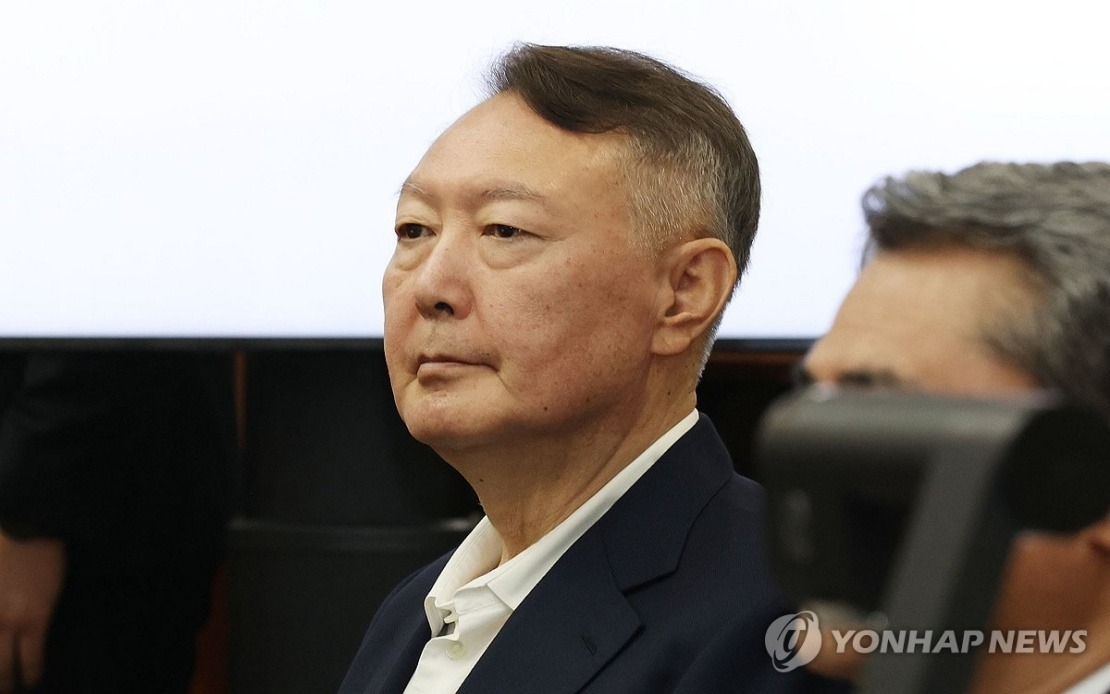
Former South Korean President Yoon Suk Yeol has been handed a two-year prison sentence by the Seoul Central District Court after being found partially guilty of accepting illicit political funds disguised as complimentary opinion polls from a self-styled power broker. The conviction, handed down in mid-July, marks another significant legal blow for the ousted leader, who faces multiple concurrent criminal proceedings stemming from a controversial and short-lived martial law declaration in December 2024.
The court determined that Yoon received 14 of the free opinion polls from Myung Tae-kyun, the power broker at the centre of the case, between April 2021 and March 2022. Prosecutors had alleged a broader conspiracy involving Yoon's wife, former first lady Kim Keon Hee, whereby the couple supposedly obtained 58 polls valued at approximately 270 million won—roughly US$180,100—from Myung during this period. In addition to the prison term, the court ordered Yoon to forfeit 13.96 million won derived from the arrangement, holding that the opinion polls constituted prohibited campaign contributions under South Korean electoral law.
Central to the prosecution's case was evidence suggesting Yoon had leveraged his political influence to benefit Myung in exchange for the surveys. Specifically, prosecutors demonstrated that Yoon had promised backing for former lawmaker Kim Young-sun's nomination as a candidate for the governing People Power Party in parliamentary by-elections scheduled for June 2022. This quid pro quo arrangement—campaign assistance in return for the polls—provided the legal foundation for the Political Funds Act violation charges. The court accepted the special counsel's characterization of this transaction as an improper exchange of political favours for material benefits, distinguishing Yoon's conduct as culpable even if the precise monetary value of the polls remained debatable.
Myung Tae-kyun himself received an 18-month prison sentence on related charges, though this fell short of the three-year term prosecutors had sought. The special counsel team, led by Min Joong-ki, had pursued more aggressive penalties across the board, having originally requested a four-year sentence for Yoon. The court's decision to impose lighter terms than requested underscores the judicial complexity surrounding the case and suggests some judicial scepticism about certain elements of the prosecution's narrative, even as guilt was established on core charges.
The conviction carries additional weight because it diverges sharply from a parallel case involving Yoon's wife. In April, an appellate court had acquitted Kim Keon Hee of similar charges, reasoning that the couple could not be deemed to have profited improperly from the opinion polls since Myung had distributed them to other recipients as well. That logic—that widespread distribution negated the appearance of impropriety—did not persuade the district court in Yoon's trial, highlighting the contentious interpretive questions surrounding political funds law in South Korea. The special counsel's office has signalled its intention to appeal the acquittal of the former first lady, suggesting prosecutors believe the appellate reasoning was legally flawed.
For Malaysian and Southeast Asian observers, Yoon's predicament illustrates the institutional vulnerabilities of presidential systems in the region when checks and balances are strained by political polarization. South Korea's multiple simultaneous trials—including a separate conviction to life imprisonment for his martial law scheme—demonstrate how fragile executive authority can become once the apparatus of state justice is mobilized against a sitting or former leader. The opinion polls case, while seemingly narrow in scope, exemplifies how political systems can weaponize technical violations of campaign finance regulations to pursue broader disqualification of rivals.
The case also underscores the evolving definition of political corruption across developed democracies. What constitutes an illegal "contribution" or "benefit" in the context of polling and political intelligence has become increasingly contested. Polling data itself occupies an ambiguous zone—it is simultaneously a commodity with commercial value and a form of political communication that parties routinely exchange. South Korea's courts have had to navigate whether providing free polls to a politician constitutes a transfer of value equivalent to money, and if so, whether all such transfers violate electoral law or only those accompanied by explicit quid pro quo arrangements. Yoon's partial conviction suggests the courts recognize both dimensions of the problem.
The broader political context makes Yoon's conviction particularly significant. His December 2024 martial law declaration—ostensibly triggered by parliamentary gridlock—prompted an institutional crisis that mobilized both the military and the judiciary. The subsequent life sentence for insurrection marked the most severe punishment for a sitting or former president in South Korea's modern democratic history. The opinion polls conviction, coming against this backdrop, feeds a narrative of comprehensive legal reckoning for Yoon's political career. Whether intentional or not, the cascade of convictions raises questions about the degree to which South Korea's criminal justice system has become entangled with partisan political conflict.
Looking ahead, the divergent outcomes between Yoon and his wife's trials may spark further legal appeals and constitutional scrutiny. If the special counsel successfully overturns Kim's acquittal, it could reopen questions about joint and several liability for political couples, a doctrine with potentially far-reaching implications. Additionally, Yoon's two-year sentence will likely be appealed, and higher courts may revise both the factual findings and legal conclusions. South Korea's appellate processes tend to be deliberative, meaning final resolution of these cases could extend over years rather than months. For regional observers watching South Korea's democratic institutions under strain, the trajectory of these trials will offer crucial insights into whether courts can maintain independence and legitimacy when adjudicating cases of profound political significance.

