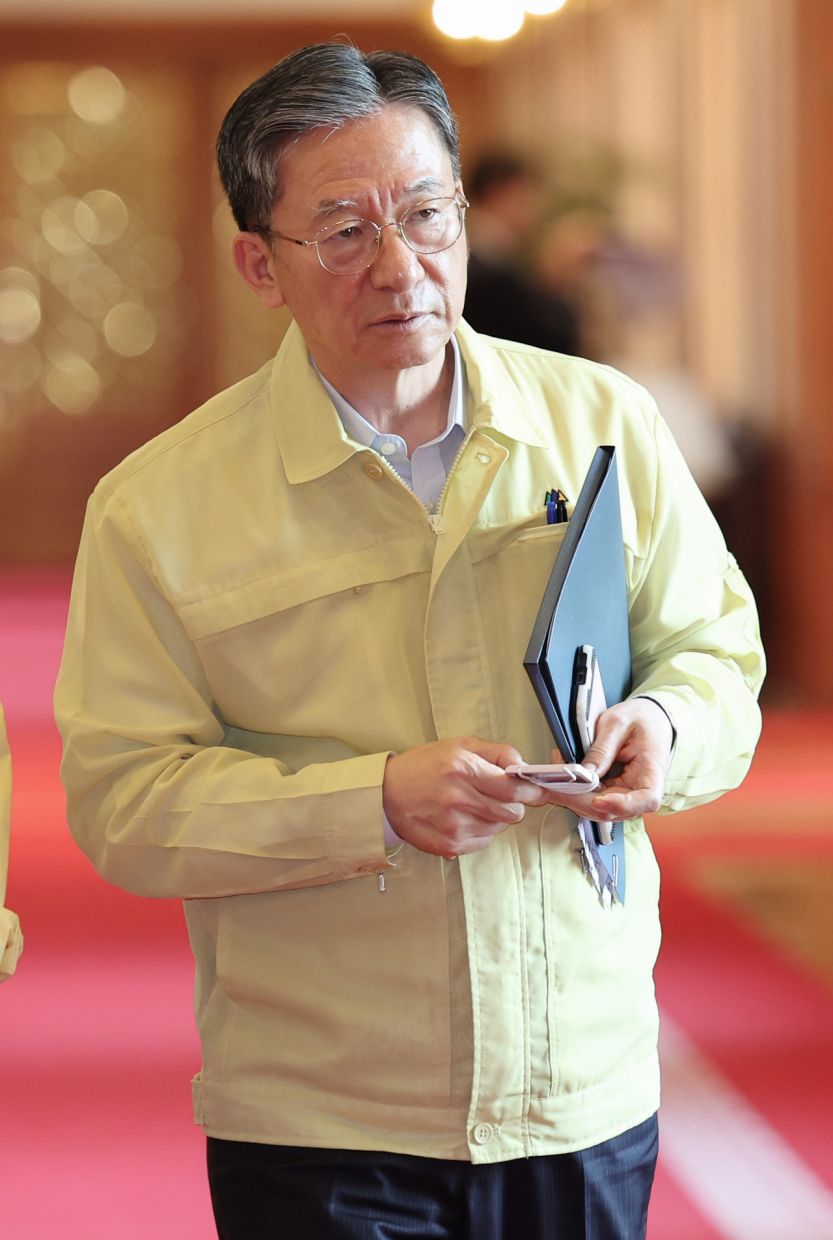
South Korea's Justice Minister Jung Sung-ho stepped down on Tuesday after a public rift emerged between his ministry and the ruling Democratic Party concerning the scope of prosecutorial authority. The resignation marks a significant moment in an ongoing structural debate about how criminal investigations should be conducted in Asia's fourth-largest economy, with implications that extend beyond Seoul's immediate political circles.
The core dispute centres on whether prosecutors should retain the power to conduct supplementary investigations—a function they currently exercise when they determine that police investigative work is incomplete or inadequate. Jung had voiced reservations about eliminating this authority entirely, positioning himself at odds with his own government's legislative agenda. The Democratic Party, however, has pursued an ambitious reform aimed at creating a cleaner separation between investigative and prosecutorial roles, viewing the current system as prone to concentrating excessive power within the prosecution.
This structural debate reflects a broader tension within South Korea's criminal justice apparatus that has been simmering for years. The ability of prosecutors to redirect investigations and uncover additional evidence has historically allowed the prosecution to exercise considerable influence over case outcomes. By requiring prosecutors to accept police investigative results as final and limiting their role to deciding whether charges are warranted, reformers argue the new system will introduce more checks and balances. The distinction between investigation and prosecution—keeping these functions separate—is considered a cornerstone of modern criminal justice systems elsewhere, though implementation remains contentious.
When the revised Criminal Procedure Act formally takes effect on October 2, the landscape will shift markedly. Prosecutors will no longer have independent investigative capacity in supplementary cases. Instead, their mandate will narrow to evaluating whatever investigative materials police present, making prosecutorial charging decisions based on available evidence, and ultimately representing cases in court. This represents a fundamental rebalancing of institutional power that reduces prosecutorial discretion significantly.
In announcing his departure, Jung cited personal health considerations, a reason often deployed in Korean politics when resignations carry political weight. However, accompanying statements attributed to him suggested a deeper rationale: that completing implementation of the new criminal justice system would be better served under fresh leadership untethered to the previous policy positions. This framing implies that Jung saw an irreconcilable gap between his reservations and the government's reform trajectory.
The timing proves particularly significant given the imminent implementation date in October. Rather than remain as a potential impediment to systemic transition, Jung's exit clears the path for unified governmental commitment to the overhaul. Vice Justice Minister Lee Jin-soo will assume acting responsibilities, positioning him to guide the ministry through this transformative period. Lee's background and positioning within the party structure will likely determine how seamlessly the transition occurs.
For Malaysian observers, this episode offers instructive lessons about prosecutorial reform. Southeast Asia has long grappled with questions about prosecutorial independence and the concentration of investigative power within prosecutors' offices. Singapore, Thailand, and Indonesia have each wrestled with similar tensions between maintaining prosecutorial effectiveness and preventing abuse through overreach. South Korea's deliberate effort to separate these functions—through legislation rather than institutional practice—represents one developed democracy's solution to these enduring questions.
The reform also reflects increasing international pressure and comparative legal thinking about optimal criminal justice architecture. Many Commonwealth jurisdictions, including Malaysia, maintain systems where police conduct primary investigations while prosecutors decide on charging. South Korea's formal codification of this separation through legislation represents an institutional acknowledgement that even mature democracies benefit from structural guardrails against prosecutorial overreach.
Within South Korea itself, the change carries implications for how high-profile cases may unfold going forward. Without supplementary investigative powers, prosecutors may find themselves constrained when police investigations appear incomplete or when new leads emerge during the prosecutorial review phase. This could alter case outcomes in white-collar crime, corruption investigations, and other complex matters where prosecutors have traditionally played an active investigative role. The prosecution's institutional culture—one accustomed to active case building—will require significant recalibration.
The Democratic Party's push for this reform also reflects broader governance narratives about preventing executive and institutional overreach. In recent years, questions about prosecutorial independence and political weaponisation of investigation powers have periodically surfaced in South Korea, prompting civil society demands for structural limits on prosecutorial discretion. The ruling party's commitment to this reform can be read partly as a response to these legitimacy concerns.
Lee Jin-soo's assumption of acting duties will test whether the ministry can maintain focus on implementation while navigating the delicate politics surrounding such fundamental institutional change. The period between now and October 2 will involve extensive guidance development, staff retraining, and coordination with police agencies to ensure the new system functions smoothly. Any stumbles during this transition period could generate criticism that the reforms were hastily conceived.
Looking ahead, South Korea's criminal justice system will operate under a markedly different equilibrium. The removal of supplementary investigative authority from prosecutors represents a deliberate policy choice to prioritise separation of powers over prosecutorial convenience. Whether this yields more equitable outcomes and reduced abuse of prosecutorial discretion will become apparent only as cases proceed under the new framework. For regional jurisdictions considering similar reforms, the South Korean experience will offer valuable data about implementation challenges and systemic effects.

