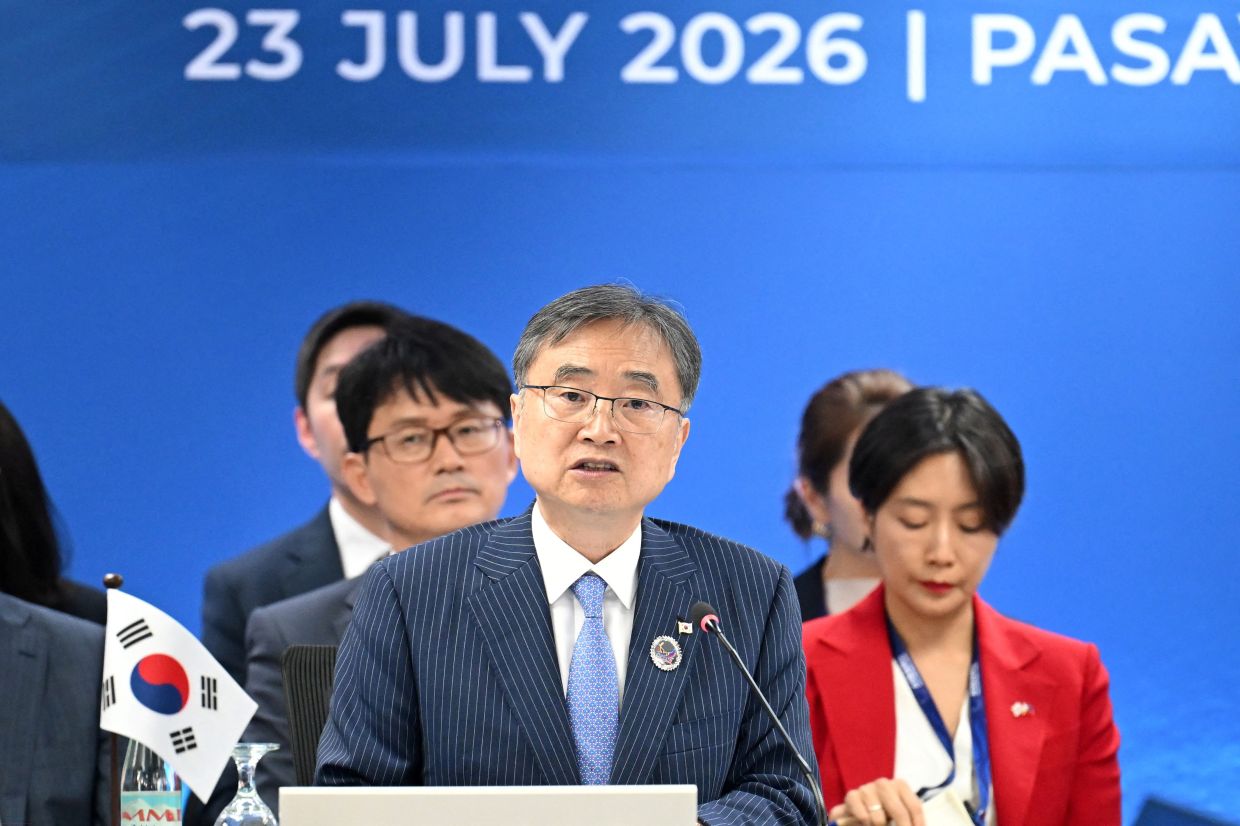
A significant policy rift has emerged within South Korea's government over how to approach North Korea, with senior ministers offering starkly contrasting visions during a high-level meeting with President Lee Jae Myung this week. The public disagreement between Foreign Minister Cho Hyun and Unification Minister Chung Dong-young has laid bare the tensions between different factions within the Blue House, undermining the administration's carefully calibrated effort to restart communication with Pyongyang after years of deteriorating relations.
During a Wednesday policy discussion, Chung Dong-young presented an ambitious framework for engagement that would include launching four-party talks involving South Korea, North Korea, the United States, and China as a cornerstone initiative for the remainder of the year. The proposal reflected an optimistic assessment of diplomatic possibilities and a belief that creative, forward-looking initiatives could break through the current diplomatic impasse. However, Cho Hyun's immediate response signalled skepticism about the proposals, characterizing Chung's ideas as overly "idealistic" and questioning whether they had been properly vetted across relevant government agencies. Cho's criticism suggested that the Foreign Ministry had not been adequately consulted in the formulation of these proposals and that they lacked the institutional consensus necessary to guide actual policy implementation.
The disagreement escalated when Chung responded to Cho's public critique, defending the value of idealistic thinking in addressing entrenched problems. Speaking to local media, Chung argued that ambitious vision was essential for catalyzing meaningful change in inter-Korean relations, implying that Cho's cautious, consensus-building approach might perpetuate stagnation. This exchange highlighted a fundamental philosophical divide within the Lee administration: whether the path to engagement required careful, incremental steps built on departmental agreement, or whether transformative progress demanded bolder initiatives that could inspire political momentum despite institutional reservations.
The Lee government has substantially reoriented its stance toward North Korea since taking office, moving away from the previous administration's "denuclearisation-first" posture toward a "peace-first" framework. This strategic pivot reflects a judgment that prioritizing stability and dialogue might open diplomatic channels that hardline pressure tactics had failed to unlock. Alongside this reframing, the administration has been actively encouraging United States President Donald Trump to seek a direct meeting with North Korean leader Kim Jong Un, signalling Seoul's willingness to facilitate high-level engagement and positioning itself as a constructive partner in efforts to restart communication.
Yet the ministerial clash reveals that this strategic reorientation has not been uniformly embraced across Seoul's bureaucratic apparatus. The Foreign Ministry's more cautious stance may reflect concerns about diplomatic overreach or worries that overstated proposals could damage South Korea's negotiating credibility if they prove unrealistic. There may also be divergent assessments about North Korea's actual willingness to engage, with more skeptical officials doubtful that Pyongyang will meaningfully respond to conciliatory gestures regardless of their scope or sincerity.
Experts have warned that such internal divisions could significantly harm Seoul's diplomatic objectives. Lim Eul-chul, a Korea specialist at Kyungnam University, cautioned that the public exposure of policy disagreements could reinforce North Korea's historical skepticism about South Korean reliability. Pyongyang has repeatedly witnessed political transitions in Seoul that have reversed previous engagement initiatives, and visible internal conflict within the current government may strengthen North Korea's conviction that any agreements reached could be overturned by subsequent administrations or by shifting factional interests within the existing one. This perception undermines the credibility necessary for sustained diplomatic progress.
The backdrop to these disagreements involves a dramatically deteriorated inter-Korean relationship. Since 2024, North Korean leader Kim Jong Un has formally renounced the goal of eventual reunification and has demolished joint inter-Korean projects on North Korean territory, signalling a fundamental hardening of Pyongyang's position. The practical consequences of this deterioration are stark: defections from North Korea have collapsed to just 63 individuals in the first half of 2026, compared with 1,047 in 2019, indicating that the northern border has become increasingly sealed and that North Koreans perceive fewer opportunities to escape southward.
In response to this challenging environment, Seoul has unilaterally suspended several measures it believes Pyongyang perceives as hostile provocations, including anti-North Korea loudspeaker broadcasts that had been deployed along the demilitarized zone. These conciliatory gestures represent a significant departure from previous conservative administrations' more confrontational posture. However, North Korea has largely ignored or dismissed these overtures, showing little reciprocal interest in de-escalation or dialogue, which raises questions about whether such concessions actually advance engagement prospects or simply represent one-sided accommodation.
The shift in Seoul's approach has generated controversy among human rights advocates who worry that the pursuit of diplomatic engagement is coming at the expense of accountability for North Korean abuses. Lee's administration has downgraded human rights concerns relative to engagement priorities, including suspending certain rights-focused reports and broadcasts that his conservative predecessor had maintained as pressure mechanisms. While South Korea did co-sponsor a United Nations resolution on North Korean human rights last year, the overall trajectory suggests a deprioritization of rights advocacy in favour of diplomatic pragmatism.
This recalibration has had concrete consequences for civil society organizations working on North Korean issues. Kim Tae-Hoon, former president of the advocacy group PSCORE, reported to international media in June that the shift away from rights-focused initiatives has substantially reduced donations to his organization, which advocates for human rights protections in North Korea. The funding crisis reflects donor perceptions that the South Korean government's reduced emphasis on rights issues has diminished the importance and urgency of civil society advocacy. For organizations working on these issues, the government's policy reorientation has created significant operational challenges at precisely the moment when North Korea's human rights situation remains dire.
Looking forward, Seoul faces the challenge of reconciling its engagement ambitions with the institutional and philosophical differences that the ministerial clash has exposed. The Foreign and Unification ministries issued a joint statement reaffirming their commitment to policy coordination, but such reassurances may ring hollow given the public disagreement that preceded them. For diplomatic progress to occur, the administration must achieve genuine internal consensus on both the strategic objectives it seeks to accomplish and the specific methods through which it intends to pursue them. Without such alignment, Seoul risks presenting a fractured negotiating position to Pyongyang, exactly the kind of internal division that North Korean decision-makers have historically exploited to their advantage.
The broader regional implications extend beyond Korea itself. Other Southeast Asian nations and the United States are watching closely to understand whether Seoul can successfully navigate these internal tensions while maintaining productive engagement with Washington and others on North Korea policy. The public nature of the disagreement demonstrates that managing alliance relationships and diplomatic coordination with external partners becomes substantially more complicated when a government's own internal consensus on key strategic issues remains contested and uncertain.

