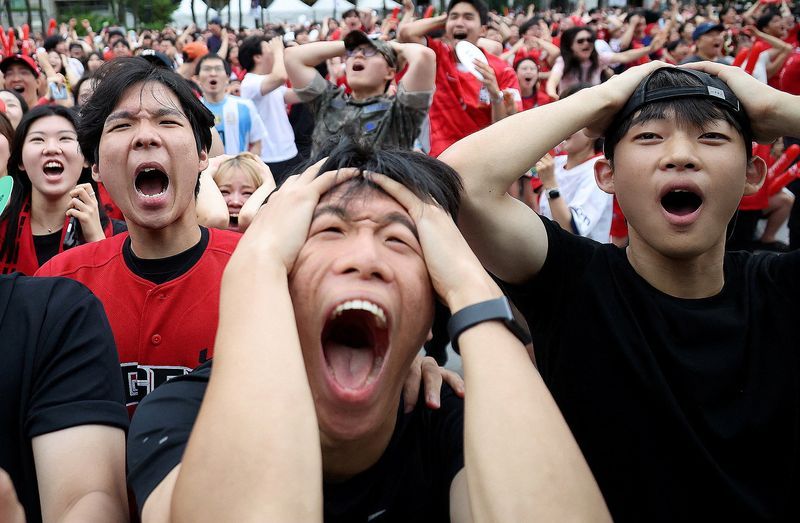
South Korean President Lee Jae Myung has ordered a formal government inquiry into the national football team's premature elimination from the World Cup, directing sharp criticism at the appointment of coach Hong Myung-bo and linking the sporting disaster to broader concerns about merit-based hiring in public institutions. The shock early exit has sparked intense political fallout, with the presidential office treating the incident as symptomatic of systemic governance failures rather than merely a sporting disappointment.
The South Korean team's tournament collapse proved particularly galling given widespread pre-competition expectations of progression. Positioned in what many observers considered a manageable Group A alongside Mexico and South Africa, the squad's successive defeats to both rivals left them finishing third, outside the eight best-performing third-placed teams that would advance to the knockout stage. The result overturned assumptions that the team would navigate the group with relative ease, amplifying the sense of national embarrassment and raising questions about preparation and tactical choices during the competition.
President Lee's response reflected unprecedented frustration with the technical and administrative dimensions of the loss. In a statement posted to X on Sunday, he expressed bewilderment at the outcome while explicitly linking it to what he characterised as nepotism and political favouritism in the appointment process. "Once again, it has been proven that personnel decisions are everything," Lee wrote, suggesting the coaching hire exemplified deeper institutional problems where personal connections supersede professional qualifications. His intervention marked a notable instance of direct presidential commentary on specific sports management decisions, elevating the dispute beyond typical sporting debate into questions of government accountability and institutional integrity.
Hong Myung-bo's reappointment as national team manager in 2024 had already attracted considerable scrutiny and media allegations of preferential treatment and a lack of transparency in the hiring process. The football coach had consistently denied these accusations, maintaining that his selection followed proper procedures. However, the World Cup disappointment appeared to validate critics' concerns, transforming the initial appointment controversy into a referendum on the decision itself. The mounting pressure on Hong intensified when a petition calling for his dismissal posted on South Korea's national assembly website rapidly accumulated sufficient signatures to trigger an official preliminary review, signalling serious parliamentary interest in the matter.
The political dimensions of the dispute extended into civil society. Social media circulated images of South Korean shops displaying notices explicitly banning Hong from their premises, a pointed form of public protest that reflected genuine anger among ordinary citizens. This grassroots hostility underscored how the coaching appointment and subsequent tournament exit had evolved into a test case for South Korean attitudes toward meritocracy and institutional corruption, transcending sport to become embedded in broader national conversations about governance.
President Lee's critique centred on systemic failures in how leadership positions are allocated across public organisations and state-affiliated bodies. He contended that distinguishing between personal advantage and the public interest had become compromised, enabling the appointment of inadequately qualified individuals to significant roles. His concern extended beyond Hong's specific case to encompass what he portrayed as endemic structural weaknesses permitting such decisions to proceed without adequate oversight or accountability mechanisms. Lee argued that monitoring and holding accountable those wielding appointment authority remained challenging or inadequate, allowing poor decisions to persist without sufficient consequences.
The Ministry of Culture, Sports and Tourism received explicit presidential instruction to conduct a comprehensive investigation into the team's elimination, examining circumstances surrounding the campaign, identifying underlying causes, and recommending preventative measures for future improvement. This administrative directive signalled that Seoul intended to approach the matter with formal governmental rigour rather than dismiss it as a temporary setback in athletic competition. The ministry's investigation would need to examine not only tactical and preparation decisions during the tournament but also the broader appointment and management structures governing the national team programme.
For Malaysian and broader Southeast Asian observers, the South Korean situation provides instructive parallels regarding governance challenges within national sporting bodies. Many countries in the region grapple with similar tensions between appointing qualified professionals versus rewarding political allies or favoured individuals to leadership positions in national teams. South Korea's public confrontation with these questions offers a case study in how unmeritorious appointments can erode institutional credibility and national sporting performance simultaneously, generating political consequences that extend beyond athletics into public confidence in governance itself.
The incident also reflects how modern digital connectivity amplifies sporting disappointments into opportunities for broader social commentary. President Lee's public statements and the viral social media responses transformed a World Cup elimination into a platform for discussing institutional reform, transparency, and accountability. For South Koreans, the debate encapsulated frustrations with perceived nepotism across public life, with the national football team's failure serving as a visible, concrete manifestation of these deeper systemic concerns. The World Cup exit thus became symbolically important not for its sporting implications alone but for validating public suspicions about how South Korean institutions allocate positions and resources.
The fallout surrounding Hong Myung-bo and the national team's early exit will likely shape South Korean sports administration for years ahead, potentially prompting reforms to coaching appointment procedures, governance frameworks, and accountability mechanisms. Whether the promised ministry investigation ultimately vindicates or contradicts allegations of favouritism will carry significant implications for how South Korea structures leadership selection across state institutions. For now, the convergence of sporting disappointment, political intervention, and institutional questioning has ensured that the team's World Cup exit transcends football to become a defining moment in broader South Korean governance debate.

