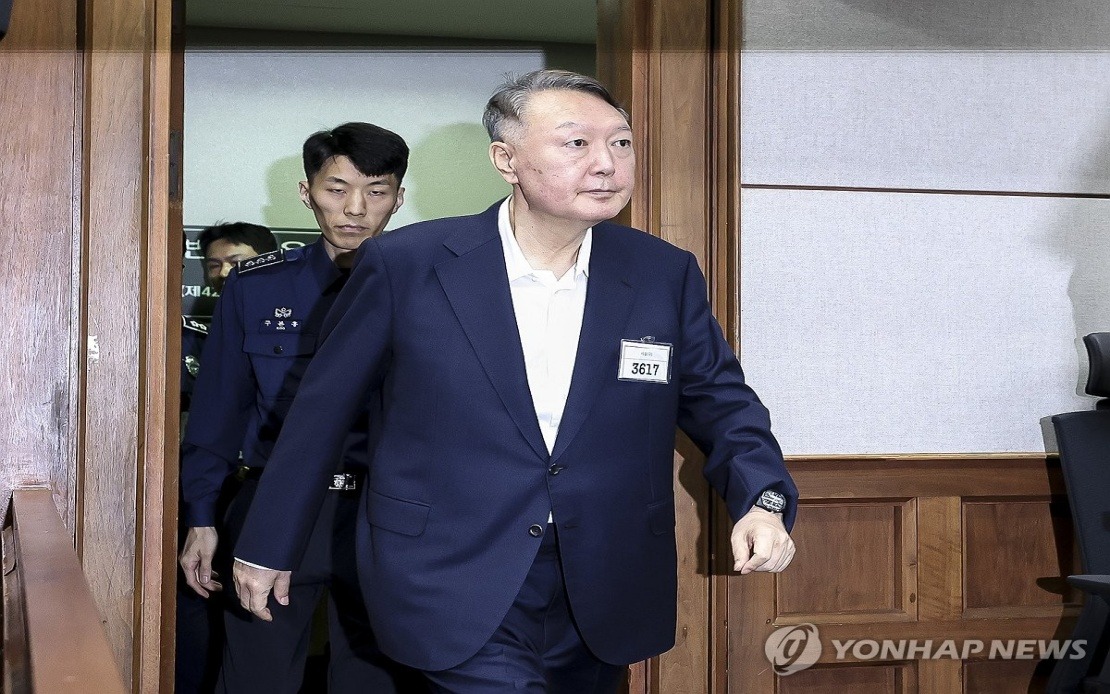
South Korea's Supreme Court has cleared the way for live television coverage of its verdict in the obstruction of justice case against former President Yoon Suk Yeol, despite strenuous objections from his defence. The ruling will be delivered Thursday at 2 pm, marking the nation's top judicial body's first formal decision on charges directly tied to Yoon's abortive martial law proclamation in December 2024. The decision represents a significant moment in what has become one of the most politically consequential judicial proceedings in recent South Korean history.
Special counsel Cho Eun-suk's investigative team initiated the request for public broadcast transmission last Friday, seeking to ensure transparency in a high-profile case that has captivated the country. Yoon's legal representatives mounted a vigorous counter-argument, contending that permitting live coverage would inflict irreversible damage to his entitlement to an impartial trial, alongside potential harm to his personal dignity and public standing. The Supreme Court rejected these contentions outright, indicating its commitment to judicial transparency over concerns about the defendant's reputational interests.
The court's broadcasting mechanism will employ its own camera equipment to capture courtroom proceedings, with the footage transmitted directly to media outlets and public audiences. This approach balances the desire for openness with maintaining professional standards within the court environment. The decision underscores shifting attitudes toward judicial transparency in South Korea, where high-profile political trials have historically been subjects of intense public scrutiny and competing demands for access.
At the heart of this particular case lies an incident from January 2025, when investigators attempted to execute an arrest warrant against Yoon. He is accused of instructing his security personnel to physically obstruct law enforcement from carrying out the detention order. This obstruction charge represents just one element of an increasingly complex legal battle facing the former president, who has found himself ensnared in multiple prosecutions stemming from his martial law announcement.
Beyond the obstruction allegation, Yoon faces additional serious accusations including violation of constitutional rights involving nine Cabinet members. Prosecutors contend he deliberately excluded these senior officials from a pre-announcement meeting where the martial law strategy would have been discussed and reviewed, thereby denying them due process and consultation rights. He is also charged with fabricating official documents by altering the martial law proclamation after its revocation, allegedly attempting to conceal procedural irregularities embedded within the original decree, and subsequently destroying that revised document.
The trajectory of Yoon's legal fortunes has been decidedly downward through the lower court system. An appellate court delivered a seven-year prison sentence in April after convicting him on the relevant charges, representing a substantial two-year increase from the trial court's initial judgment but still falling short of the ten-year sentence that prosecutors had explicitly recommended. The divergence between the appellate and trial court verdicts reflects ongoing judicial deliberation about the appropriate consequences for Yoon's conduct.
The current obstruction case represents only one dimension of the legal machinery bearing down on the imprisoned former leader. Simultaneously, his primary trial on the more serious charge of attempting to overthrow the constitutional order through his martial law initiative continues in appellate court proceedings. In that separate trial's initial verdict, Yoon received a life sentence, the most severe outcome among all charges he has confronted. That outcome suggests the judicial system views his martial law actions as fundamentally destabilising to democratic governance.
For Southeast Asian observers and Malaysia particularly, this case illuminates broader questions about judicial independence, the limits of executive power, and how democracies navigate crises triggered by elected leaders who exceed their authority. South Korea's willingness to prosecute and convict a former head of state demonstrates institutional resilience, yet the multiple convictions at different levels also raise questions about the consistency and predictability of judicial outcomes under intense political pressure. The live broadcast decision further highlights the tension between protecting fair trial rights and satisfying public demands for transparency in cases involving former leaders.
The implications extend beyond South Korea's borders. As authoritarian pressures mount across Asia and democratic backsliding accelerates in various jurisdictions, other nations watch how established democracies manage the prosecution of powerful former leaders. Malaysia, with its own recent experience of former prime ministerial prosecutions, shares certain structural parallels with South Korea's situation, though the institutional contexts and outcomes have differed significantly. The Supreme Court's decision to permit live broadcasting demonstrates confidence that public visibility enhances rather than compromises judicial legitimacy.
Thursday's verdict will represent a pivotal moment not merely for Yoon's personal circumstances but for broader questions about democratic accountability in South Korea. Whether the Supreme Court upholds, reduces, or alters the appellate court's seven-year sentence will send significant signals about the judiciary's ultimate assessment of the former president's conduct. The live broadcast ensures that millions of South Koreans and international observers will witness firsthand how their top court concludes one chapter in what remains an ongoing legal saga.

