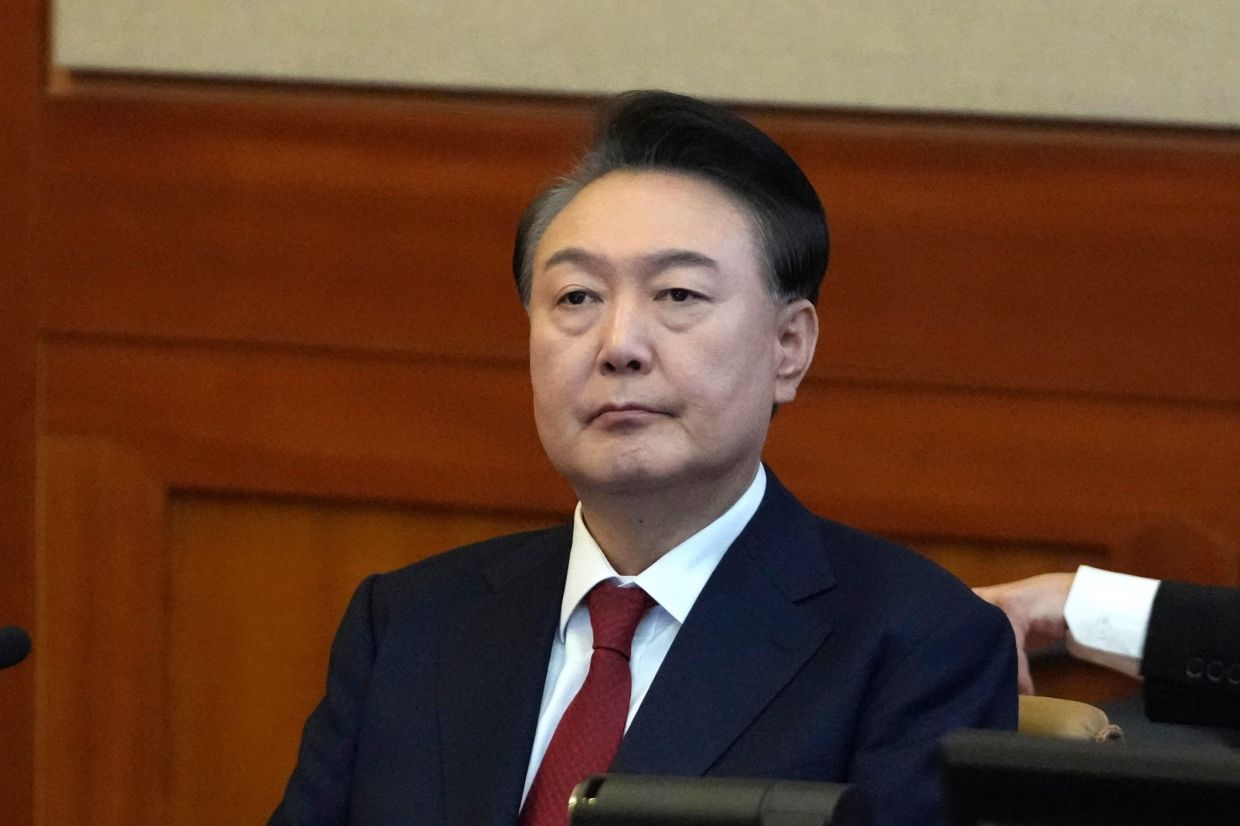
South Korea's highest court has delivered its final verdict on one of the most contentious cases against former president Yoon Suk Yeol, confirming a seven-year prison sentence handed down by lower courts over his involvement in South Korea's most serious political upheaval in decades. The Supreme Court's decision on July 9 brings closure to legal proceedings centred on Yoon's December 2024 martial law declaration and its tumultuous aftermath, a moment that fundamentally shook the nation's democratic institutions and exposed vulnerabilities in the country's constitutional framework.
The charges against Yoon encompassed a range of offences related to how he orchestrated and executed the martial law declaration, which lasted merely six hours before lawmakers convened in emergency session to vote it down. Among the accusations was obstruction of cabinet deliberations, accomplished by summoning only select ministers to a meeting preceding the declaration rather than convening the full cabinet as procedure dictated. Yoon also faced conviction for creating and subsequently destroying a forged martial law decree that bore fraudulent signatures attributed to the prime minister, demonstrating a calculated effort to manufacture legal documentation to support his extraordinary actions.
Beyond the document manipulation, Yoon's conduct during the crisis extended to directing state officials to circulate misleading information to international media outlets, potentially an effort to manage the international response to his unilateral action. His security apparatus allegedly received orders to obstruct his arrest when lawmakers moved to nullify the declaration, creating a secondary constitutional confrontation as presidential security agents physically blocked law enforcement from reaching the ex-president. Additionally, he ordered an army commander to delete records stored on secure military communication devices, suggesting an attempt to eliminate evidence of his military coordination in executing the coup-like manoeuvre.
The Supreme Court's ruling represents a definitive endpoint to this particular legal track, as the justices explicitly stated that "all appeals are dismissed" and that the lower court's judgment "contained no errors". This language signals judicial confidence in the lower courts' factual findings and legal interpretations, effectively shutting the door on further appeals in this case. The prosecution had initially sought a harsher ten-year sentence, but the appeals court's seven-year determination has now been cemented by the nation's highest judicial authority, becoming irreversible under South Korean law.
Yoon's legal team responded to the devastating verdict with expressions of "deep regret", claiming the Supreme Court had reached its conclusion "without sufficient deliberation". His lawyers signalled their intention to challenge the ruling on constitutional grounds and indicated they would pursue a formal complaint, though such avenues represent longshot efforts unlikely to reverse the Supreme Court's final judgment. The defence strategy reflects the ex-president's consistent posture of challenging his conviction rather than accepting responsibility, a stance he has maintained since his arrest.
It is crucial to understand that this seven-year sentence represents merely one chapter in Yoon's sprawling legal troubles. Simultaneously, he faces a separate and far more serious case in which a court imposed a thirty-year prison term for an operation involving drone incursions into North Korean airspace. Yoon's government allegedly orchestrated this provocation to manufacture a crisis atmosphere that would justify and provide context for his subsequent martial law declaration, suggesting a pre-planned manipulation of security circumstances to enable his power grab. Additionally, Yoon carries a pending life sentence conviction related to leading an insurrection through the martial law declaration itself, a charge that strikes at the heart of his actions and their constitutional implications.
The martial law declaration of December 2024 remains without parallel in modern South Korean history. The late-night televised address in which Yoon announced the suspension of civilian rule sent shockwaves through the nation, triggering immediate and sustained protests while simultaneously crashing the stock market. Key international allies, including the United States, expressed surprise and concern at the move, indicating that the action caught even close partners unprepared. The declaration's brief six-hour duration reflected the swift parliamentary response, but the damage to South Korea's political stability and institutional confidence proved substantial and long-lasting.
Yoon's justifications for his martial law declaration have evolved and shifted throughout his legal defence. He initially characterised it as motivated solely by concern for national welfare, later reframing it as a necessary measure to eliminate "anti-state forces" and counter alleged threats originating from North Korea. This rhetorical manoeuvring has failed to convince the courts, which have systematically rejected his rationales and found the evidence of criminal conduct overwhelming. His insistence that the declaration served the public interest has not resonated with judges who view his actions as constituting abuse of presidential power and systematic obstruction of lawful governance.
The political consequences of Yoon's downfall proved swift and consequential. The martial law crisis directly precipitated his removal from office in April 2025, an extraordinary constitutional intervention that reflected parliament's loss of confidence in his fitness to govern. Following his ouster, presidential elections were held, resulting in the ascension of Lee Jae Myung from the centre-left Democratic Party to the nation's highest office. This shift represents not merely a change in personnel but a broader political realignment following the trauma of Yoon's attempted power consolidation and the institutional breakdown it revealed.
For Malaysia and the broader Southeast Asian region, Yoon's case offers sobering lessons about the fragility of democratic institutions even in relatively mature democracies. South Korea's institutions ultimately functioned to restrain executive overreach, with parliament, courts, and security forces eventually refusing to comply with unconstitutional orders. However, the fact that such a crisis could occur at all underscores how quickly political norms can erode and how crucial independent judiciaries and functioning legislatures remain as guardrails against authoritarianism. The region's emerging democracies and those with weaker institutional foundations face magnified risks from similar dynamics.
Moreover, the case demonstrates the importance of accountability mechanisms that persist even after a leader's fall from power. Rather than allowing Yoon to disappear from public life following his removal, South Korean courts have methodically prosecuted and convicted him on numerous charges, signalling that democratic societies can and must hold their former leaders accountable for constitutional violations. This commitment to rule of law, despite the political inconvenience and complexity involved, strengthens democratic legitimacy and discourages future would-be authoritarians from believing they can act with impunity.
The Supreme Court's final ruling on Yoon's seven-year sentence brings legal certainty to one strand of accountability, yet the multiple convictions and sentences he faces suggest that years of litigation and incarceration remain ahead. Whether he ultimately serves these sentences, how they may be commuted or remitted, and whether future amnesty or pardon might intervene remain open questions that will continue to engage South Korean politics and constitutional debate. What is now settled, however, is that the nation's highest court has confirmed that his actions violated the law and warrant substantial punishment.

