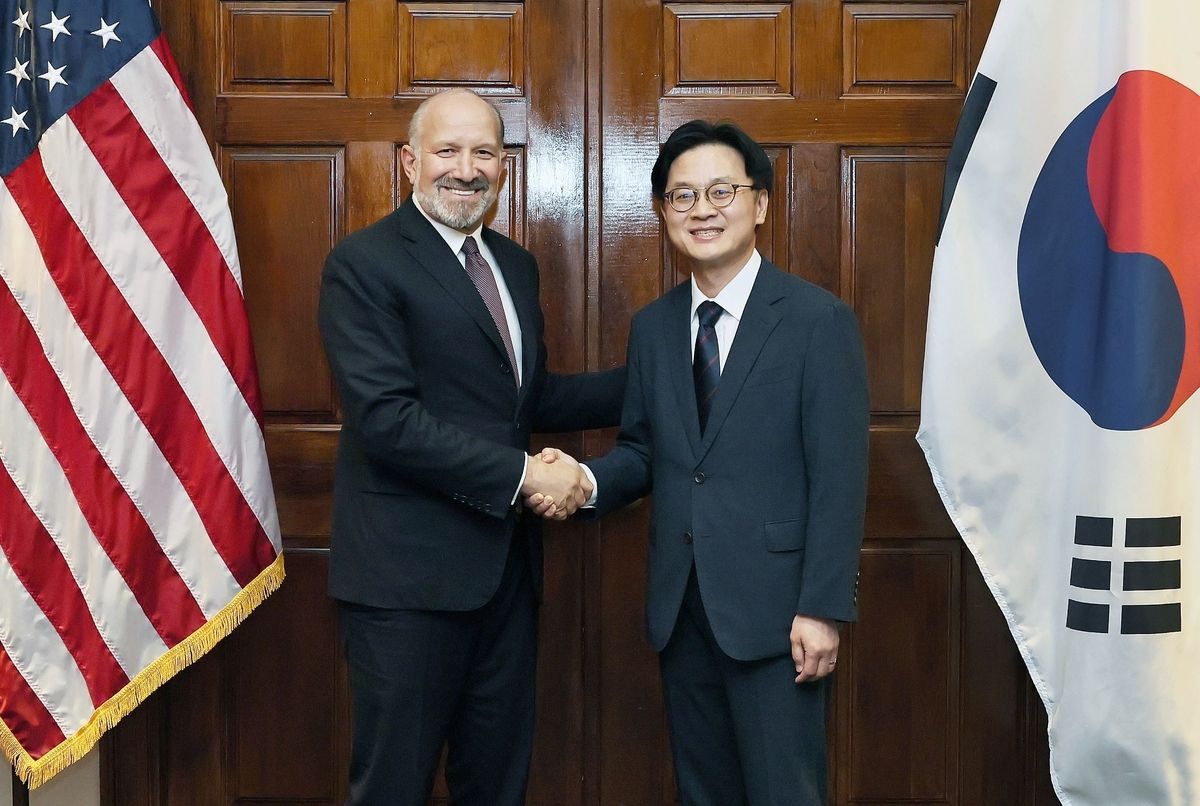
South Korea is mounting a diplomatic push to shield its exporters from potential new American tariffs, with Industry Minister Kim Jung-kwan heading to Washington this week for high-level talks with senior officials. The timing of his visit—preceding a looming US decision on additional duties under Section 301 of the Trade Act—underscores Seoul's anxiety about fresh trade barriers that could threaten one of the region's vital export economies.
The minister's journey reflects a broader pattern of strategic outreach from Seoul whenever Washington signals protectionist moves. South Korea, whose economy relies heavily on exports to America, faces particular vulnerability given its substantial presence in sectors that attract US scrutiny, including semiconductors, steel, and automobiles. An investigation into trade practices allegedly linked to forced labour has become the immediate flashpoint, with local media reporting that new tariff measures could materialise soon and disproportionately burden Korean companies.
Kim's itinerary between July 22 and 25 includes meetings with Commerce Secretary Howard Lutnick, a key figure in shaping Trump administration trade policy, and Energy Secretary Chris Wright. These are not ceremonial encounters but rather intensive negotiating sessions focused on persuading Washington that Korean investment and cooperation serve broader American interests. The minister plans to emphasise Seoul's commitment to strategic investment in the United States, building on a South Korean law enacted in June specifically designed to facilitate such capital flows.
A notable component of Kim's visit is his attendance at the opening ceremony of a South Korea-U.S. Shipbuilding Partnership Center in Washington on Thursday. This initiative, formalised through a May agreement between Seoul's Ministry of Trade, Industry and Resources and the US Commerce Department, aims to create institutional mechanisms for regular coordination between Korean and American shipbuilders. For Seoul, such ventures serve dual purposes: they genuinely foster technological exchange and commercial opportunities while simultaneously demonstrating Korean commitment to bilateral integration in strategically important sectors.
The shipbuilding partnership carries particular significance for the region's geopolitical calculus. South Korean shipyards rank among the world's most advanced and compete fiercely with Chinese and Japanese counterparts. By embedding Korean shipbuilding expertise within American supply chains and defence procurement frameworks, Seoul strengthens economic ties while potentially securing preferential treatment in US trade decisions. This is precisely the kind of sector-specific cooperation that can sometimes shield industries from broader tariff measures, particularly when they align with Washington's strategic objectives.
Beyond the ceremonial aspects, Kim intends to leverage his visit for practical regulatory and investment clarity. The June law establishing support mechanisms for Korean strategic investment in America remains largely unimplemented in concrete terms. The minister's discussions aim to translate this legislative framework into tangible investment projects, clarifying tax treatment, regulatory pathways, and investment incentives that could accelerate Korean capital flows into American manufacturing, semiconductor production, and clean energy sectors. This matters enormously for Malaysia and other Southeast Asian economies because Korean companies operating regionally often coordinate investment strategies across multiple markets.
The forced labour investigation represents the most contentious element driving this diplomatic urgency. Section 301 investigations can result in tariffs of up to 25 percent on targeted goods, and Korean exporters fear that supply chain investigations—particularly those focusing on subcontractor practices in multiple countries—could sweep in Korean companies along with Chinese competitors. For regional manufacturers integrated into Korean supply networks, this uncertainty creates cascading complications. Malaysian component suppliers to Korean manufacturers could face indirect consequences if Korean final exporters absorb tariff costs and demand price reductions from suppliers.
Kim's parliamentary outreach adds another dimension to Seoul's strategy. By meeting with US Congressional members, the minister seeks to build political constituencies sympathetic to Korean interests beyond the executive branch. Congress ultimately controls tariff authority through legislation, and cultivating relationships with key committees and individual lawmakers provides Seoul with alternative channels to influence policy if executive decisions prove unfavourable. This reflects a sophisticated understanding that US trade policy involves complex institutional interactions that cannot be resolved through a single cabinet-level conversation.
Seoul's stated commitment to implementing existing tariff agreements and maintaining bilateral trade stability suggests South Korea accepts some trade friction as inevitable but seeks to prevent escalation. Rather than directly challenging Section 301 measures, the Korean government appears positioned to negotiate their scope and severity, perhaps seeking exemptions for specific sectors or companies demonstrating strategic importance to America. This pragmatic approach acknowledges power asymmetries between the countries while seeking to minimise damage.
For Malaysian policymakers and businesses, Korea's tariff struggles carry instructive lessons. Malaysia's own export dependence on the US market means similar vulnerabilities exist. Korean success—or failure—in negotiating through this crisis will likely influence how Washington approaches trade issues with other Asian exporters. If Seoul's diplomatic efforts succeed in moderating tariff increases, it may establish precedents that benefit Malaysian companies. Conversely, if Washington proceeds with broad tariff measures regardless of Korean cooperation, Malaysia should prepare for similar pressure.
The investment focus of Kim's visit also reflects long-term Korean strategy beyond immediate tariff concerns. By substantially increasing Korean capital in America, Seoul seeks to create stakeholder interests within the US economy that would lobby against tariffs on Korean goods. Korean semiconductor plants, automotive manufacturing, and battery production facilities operating in the United States would become politically difficult to target with tariffs. This represents capital deployment as a form of trade policy insurance—expensive but potentially effective.
The minister's mission ultimately encapsulates the precarious position of advanced manufacturing economies that depend on American market access. South Korea cannot win a trade war with Washington, nor can it afford prolonged tariff escalation. Instead, it must demonstrate sufficient economic integration and strategic utility to justify preferential treatment. How effectively Kim's Washington engagement achieves this objective will significantly influence both Korean economic prospects and the trajectory of regional trade relations throughout Southeast Asia.

