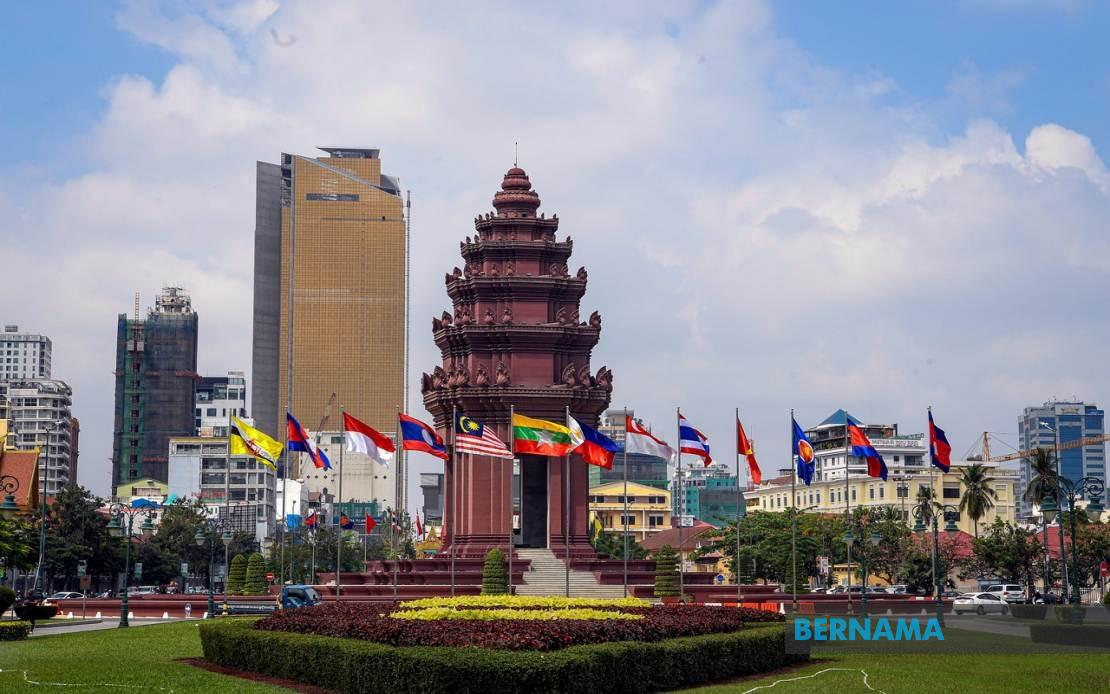
Across Southeast Asia's capital cities this week, policymakers advanced competing priorities ranging from rural economic development to metropolitan infrastructure enhancement, signalling an underlying confidence in regional investment despite persistent governance challenges. In Cambodia, the signing of bilateral memoranda of understanding between New Delhi and Phnom Penh under the Mekong-Ganga Cooperation framework has opened fresh avenues for targeted rural development, with Kratie Province positioned as an immediate beneficiary of this partnership that recognises agriculture and community-based initiatives as foundational to broader regional prosperity.
The Cambodian government simultaneously signalled its commitment to institutional modernisation through ambitious civil service reforms. By pivoting towards professional human capital development and digitisation within the Civil Service Ministry, Phnom Penh is attempting to address a persistent critique facing Southeast Asian bureaucracies: the gap between public expectation and service delivery capacity. These parallel initiatives—international cooperation on rural projects and domestic administrative reform—reflect a dual strategy of attracting external investment while upgrading internal institutional quality, a tension that will define Cambodia's development trajectory over the coming decade.
Indonesia's transportation ambitions took concrete form this week with substantive backing from the central government for Lt. Col. Wisnu Airfield expansion in Bali's northern Buleleng District. Transportation Minister Dudy Purwagandhi's endorsement represents more than symbolic support; it acknowledges the infrastructure bottleneck created by Bali's reliance on the congested Ngurah Rai International Airport. By channelling regional aviation traffic to a secondary hub, Jakarta aims to distribute tourism-driven economic benefits more equitably across the island while reducing operational strain on the primary international gateway. For Malaysian carriers and tourism operators, this development signals emerging capacity and competitive intensity across Bali's travel and hospitality markets.
The darker underbelly of Indonesian governance emerged simultaneously when the National Police formally charged Febrie Adriansyah, a former Junior Attorney General for Special Crimes, with corruption and money laundering offences. The prosecution of high-ranking legal officials on financial crime charges underscores persistent vulnerability within Indonesia's institutional framework, a pattern that Malaysian policy observers would recognise as endemic across Southeast Asian legal systems. That such figures remain vulnerable to investigation despite their proximity to power suggests either genuine institutional checks or alternatively, factional struggles that weaponise anti-corruption mechanisms.
Myanmar's infrastructure programme gained tangible expression through the simultaneous inauguration of two separate projects last week. The Anisakan Airport in Mandalay Region, now operational, directly addresses the logistical constraints facing northern Myanmar's agricultural exporters and provides critical infrastructure to attract foreign investment despite the country's ongoing political instability. Complementing this connectivity investment, the 15-megawatt Shwemyoh solar facility in Naypyidaw represents conscious sectoral diversification away from hydroelectric dependence. Myanmar's announced intention to escalate this renewable capacity to 70 megawatts combined through successive phases indicates strategic recognition that energy reliability underpins industrial competitiveness, a lesson particularly relevant for Southeast Asian manufacturing bases competing globally.
The Philippines proceeded with its high-stakes constitutional drama as the Senate impeachment trial of Vice President Sara Z. Duterte entered substantive argument. Prosecution panellists claimed foundational legal ground was established during opening presentations, positioning the trial as potentially consequential for presidential succession dynamics and the judiciary's oversight role. This proceeding carries broader Southeast Asian significance as parliamentary systems across the region recalibrate institutional relationships and the limits of executive power, particularly concerning second-in-command positions that occupy constitutionally ambiguous space. Simultaneously, the southwest monsoon, or habagat, brought seasonal weather challenges across Luzon and the Visayas archipelago even as Tropical Storm Inday exited Philippine jurisdiction, reminding observers that climate volatility persists as an underlying constraint on Philippine development priorities.
Singapore's regulatory innovation focused on privacy architecture within digital communications. Meta-owned WhatsApp's advance reservation of high-profile usernames—including those belonging to Singapore's government officials and public figures—ahead of its privacy-preserving username feature rollout demonstrates how technology platforms navigate state-citizen communication boundaries. By allowing message exchanges without phone number sharing, this feature responds to legitimate privacy concerns while complicating government surveillance and contact tracing capabilities, a tension particular acute across Southeast Asian democracies. Separately, Singapore's Housing and Development Board reported that 845 executive condominium income ceiling waivers were approved over five years from a pool exceeding 2,500 applications, indicating both demand elasticity within Singapore's middle-income housing market and the persistent tension between affordability targets and market flexibility.
Thailand's law enforcement operations revealed transnational criminal sophistication that stretches across Southeast Asia and beyond. Thai police issued an arrest warrant for a woman allegedly directing a heroin-smuggling network that utilised elephant-print bags as concealment and recruited commercial air hostesses to deliver contraband to Australia. This methodology—employing civilian courier networks and commercial aviation infrastructure for drug distribution—illustrates how organised crime exploits legitimate travel patterns across Southeast Asia. The Department of Special Investigation's concurrent raids across five locations in Surat Thani's island communities, uncovering nominee networks controlling foreign-owned tourism and hospitality enterprises, exposed how anonymous corporate structures facilitate illicit capital concentration while circumventing foreign ownership restrictions. One searched property served as registered address for over 100 separate entities, suggesting sophisticated money laundering architecture operating within plain institutional sight.
These developments across Cambodia, Indonesia, Myanmar, the Philippines, Singapore, and Thailand collectively illustrate Southeast Asia at a pivot point. Infrastructure investment and institutional reform initiatives reflect genuine development ambition, yet simultaneous revelations regarding corruption, organised crime, and governance vulnerabilities suggest that aspirational policy encounters persistent structural impediments. For Malaysian observers, this regional snapshot demonstrates that challenges facing this nation—balancing rural development integration with urban modernisation, managing infrastructure growth, pursuing institutional integrity while confronting organised financial crime—remain broadly shared across the region, though manifesting through locally distinctive institutional frameworks and political configurations.

