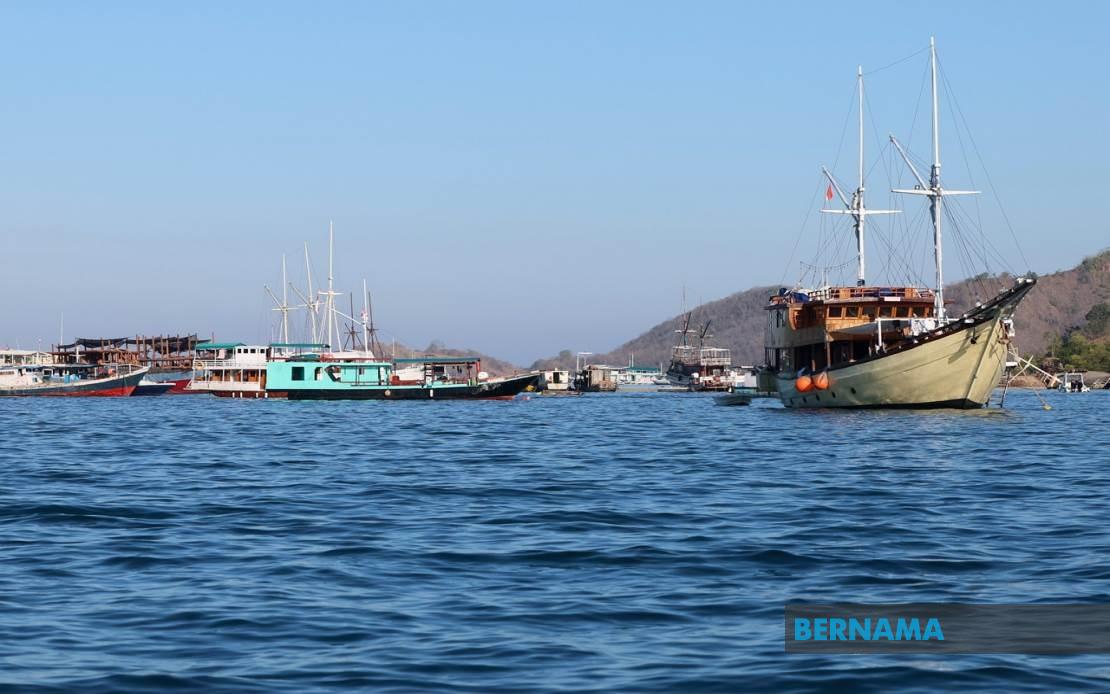
Indonesia's government is taking a major step to restructure its sprawling portfolio of state-owned enterprises, announcing plans to consolidate the sector to between 250 and 300 entities from its current, much larger base. What distinguishes this consolidation effort from previous reform attempts is the government's explicit commitment to protect employment, pledging that workers from dissolved or merged companies will not face redundancy. This promise reflects growing sensitivity to labour concerns in Southeast Asia's largest economy, where unemployment remains a persistent challenge even as growth continues. The consolidation mirrors similar efficiency drives across the region, where bloated state sectors have become fiscal drains and obstacles to agile decision-making.
The streamlining of Indonesia's SOE landscape carries significant implications for Malaysian policymakers watching from neighbouring shores. Both countries maintain extensive state enterprise portfolios serving strategic sectors from energy to telecommunications, and the Indonesian government's approach to rightsizing without triggering mass layoffs could offer a blueprint or cautionary tale for Malaysia's own state sector reviews. The critical test will be whether employment guarantees can actually be honoured when companies merge or dissolve, or whether workers ultimately face voluntary redundancy packages and forced early retirements masquerading as protection.
Meanwhile, Indonesia's commitment to labour protections contrasts sharply with the political tensions simmering beneath the surface. Police in Surabaya have arrested dozens of demonstrators who gathered to protest President Prabowo Subianto's policies, according to human rights monitors. These arrests reveal the delicate balance the government must strike between pursuing structural economic reforms and managing domestic dissent. The protests suggest that not all segments of Indonesian society view the administration's agenda favourably, and the crackdown indicates the government's willingness to use security force to suppress opposition voices. For Malaysia and other ASEAN democracies, such episodes underscore the thin line between legitimate governance and democratic backsliding in the region.
Across the Andaman Sea, Myanmar is demonstrating resilience in the aftermath of natural disaster. Approximately 175 ancient religious structures—pagodas, stupas, and temples—have been fully restored following the devastating earthquake that struck in March 2025. This restoration campaign is noteworthy not only for the scale of rebuilding but also for its cultural significance; Buddhist religious sites represent the spiritual heart of Myanmar society, and their repair holds deep meaning for communities across the country. Against the backdrop of Myanmar's ongoing political instability and humanitarian challenges, the completion of these restoration projects offers a rare positive narrative and suggests some capacity for coordinated national effort on shared priorities.
Yet the broader picture of damage remains sobering. The earthquake damaged nearly 1,800 religious structures in total, meaning that reconstruction efforts will likely continue for years. The pace of repairs on the 175 sites that have been completed likely required significant government resources and international assistance, raising questions about Myanmar's capacity to address the full scope of rebuilding needs across all damaged sites. For Myanmar's neighbours, including Malaysia, this disaster underscores the seismic risks that run through Southeast Asia's geology and the importance of regional cooperation on disaster preparedness and mutual aid.
Myanmar is simultaneously pushing forward with digital modernisation, with the government urging micro, small, and medium enterprises to embrace digital transformation as part of a broader Digital Economy 2030-2031 agenda. This push reflects Myanmar's recognition that technological adoption is essential for economic competitiveness and sustainable development. Small businesses across Southeast Asia, from Myanmar to Malaysia, face mounting pressure to digitise their operations, whether through e-commerce platforms, digital payment systems, or supply-chain digitalisation. Myanmar's formal endorsement of a digital economy strategy signals that even countries facing political and economic headwinds recognise digital transformation as non-negotiable.
The Philippines is reporting encouraging developments on its internal security front. The Southern Luzon Command has announced significant progress in its peace campaign, with the Calabarzon region—comprising Cavite, Laguna, Batangas, Rizal, and Quezon provinces—formally designated as a Stable Internal Peace and Security (SIPS) zone following measurable declines in communist insurgency activities. This designation represents a concrete achievement after decades of counterinsurgency operations and reflects improved security conditions in one of the archipelago's most economically productive regions. For Philippine businesses and investors, the achievement of SIPS status in Calabarzon reduces operational risks and may encourage fresh investment in the industrial and manufacturing sectors concentrated in those provinces.
However, the Philippines continues to grapple with maritime tensions that threaten broader regional stability. Defence Secretary Gilberto Teodoro Jr. has accused China of insincerity and duplicity for rejecting a statement from the Department of Foreign Affairs regarding the 2016 Arbitral Award on the South China Sea dispute. The persistent Chinese rejection of the international tribunal's ruling—which invalidated much of Beijing's historical claims in the sea—represents an ongoing source of friction not only between Manila and Beijing but across the entire ASEAN family. For Malaysian policymakers carefully navigating between great-power competition and ASEAN solidarity, the Philippines' outspoken criticism of Chinese intransigence reflects the growing willingness of some regional governments to challenge Beijing more directly on jurisdictional questions.
Vietnam is taking a different approach to stability, focusing on institutional reform and market transparency in the property sector. A 41-member search-and-rescue team has been deployed to Venezuela to assist with earthquake recovery operations, demonstrating Vietnam's commitment to international humanitarian cooperation even as it manages challenges at home. This deployment reflects the broader regional pattern of Southeast Asian nations engaging in disaster relief missions beyond their immediate borders, strengthening diplomatic ties and projecting soft power through humanitarian action.
On the domestic front, Vietnam is introducing a national property code system beginning July 1, assigning unique identification codes to every property to enhance market transparency and curb real estate speculation. This regulatory initiative addresses a persistent problem across Southeast Asia: real estate markets plagued by opaque ownership structures, speculative bubbles, and insufficient transparency for regulators. Malaysia's own property market, which has experienced several cycles of speculative overheating, might benefit from studying Vietnam's approach to creating a comprehensive property registry. The implementation of such systems represents a significant step toward institutional modernisation and better governance of crucial asset classes.
The initiatives unfolding across Indonesia, Myanmar, the Philippines, and Vietnam reflect a region grappling with multiple simultaneous challenges: the need for economic restructuring and modernisation, the imperative to rebuild infrastructure following disasters, the ongoing struggle against internal security threats, and the tension created by great-power competition over maritime claims and spheres of influence. For Malaysia positioned within this complex landscape, these developments underscore both the opportunities and risks that define contemporary Southeast Asia. Whether Indonesia can truly protect workers while consolidating its state enterprises, whether Myanmar can sustain its development agenda amid political uncertainty, whether the Philippines can maintain security gains while managing external tensions, and whether Vietnam can implement transparent governance reforms will all shape the region's trajectory in the coming years.

