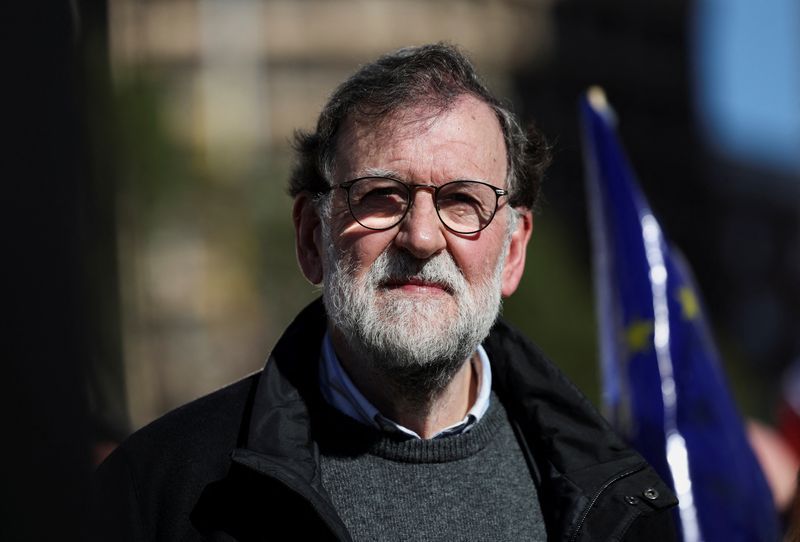
Spain's government moved swiftly to distance itself from inflammatory remarks made by conservative former Prime Minister Mariano Rajoy about France's World Cup football team, with Foreign Minister Jose Manuel Albares issuing an official apology on Tuesday ahead of a crucial semi-final clash between the two nations.
Rajoy, who served as Spain's leader from 2011 to 2018, published a column in the online publication El Debate on Friday that sparked widespread outrage across the Iberian Peninsula and beyond. The piece began by acknowledging France's formidable squad composition, but then pivoted into questioning the national identity of the players themselves, suggesting that France's team lacked genuine French participants. His exact words—"France has a squad of the very highest calibre. Mind you, there are no French players in it"—appeared designed as a provocative jab at the multicultural makeup of the French roster, with the underlying implication referencing the African and Afro-Caribbean heritage of several key team members.
Albares was emphatic in his condemnation, describing Rajoy's language as carrying "the poison of racism and xenophobia" while addressing journalists on Cadena SER radio. The Foreign Minister stressed that such perspectives represented a fringe viewpoint among Spaniards and did not align with mainstream Spanish values. He articulated a fundamental principle in modern democracies: using physical characteristics such as skin colour to determine citizenship eligibility constitutes discrimination of the most egregious kind. His intervention reflected the seriousness with which Madrid's government regarded the controversy, particularly given the diplomatic sensitivity of the moment—Spain and France were scheduled to contest the World Cup semi-finals just hours later.
Spanish Prime Minister Pedro Sanchez, currently in Paris to participate in France's National Day celebrations on July 14, added his voice to the criticism through a post on social media. Sanchez took aim at "those who measure nationality by a person's surname, birthplace or skin colour," directly condemning Rajoy's characterisation as shamefully xenophobic. The timing and location of his statement—made while physically present in France on its most important national holiday—underscored Madrid's intention to signal solidarity with its neighbour and to demonstrate that Spain's elected leadership rejected such divisive rhetoric.
Rajoy's party, the centre-right People's Party (PP), attempted to minimise the controversy through party spokesperson Borja Semper, who characterised the column as written without malicious intent and suggested it was merely sarcastic commentary. This defensive posture failed to gain traction with Spanish or international observers, who recognised the underlying implications of questioning athletes' national credentials based on their ethnic background. The party's attempted rehabilitation of Rajoy's remarks highlighted a broader challenge facing European conservative movements in navigating questions of national identity and multicultural society.
The French response demonstrated rare political unity across ideological divides. Foreign Minister Jean-Noël Barrot dismissed the comments as "pathetic" during an appearance on BFM TV, declaring unequivocally that "France has no skin colour." He suggested that such statements reflected either stupidity or racism or some combination thereof. Even the far-right National Rally opposition party, typically eager to weaponise immigration concerns, joined mainstream condemnation. National Rally spokesman Julien Odoul characterised Rajoy's remarks as "scandalous, shameful, deplorable" and directly accused the former Spanish premier of harbouring racist views. This cross-partisan French consensus reflected the deeply offensive nature of ethnic gatekeeping regarding national belonging.
Rajoy's column arrived in the aftermath of another racist incident that had similarly provoked international outrage. Paraguayan Senator Celeste Amarilla had launched a vitriolic attack on France captain Kylian Mbappe following Paraguay's tournament elimination, describing him as a "colonised Cameroonian, desperately trying to pass himself off as French." The timing of these two incidents, occurring within days of each other and both targeting France's multiethnic squad composition, suggested a concerning pattern of nationalist rhetoric seeking to delegitimise the achievements of non-white athletes competing at the highest levels of international sport.
Mbappe responded to Amarilla's assault with dignity and principle, defending not only his own position but also Paraguay's players themselves. The French striker characterised Amarilla as unfit for her position, describing her conduct as beneath contempt. His measured yet firm response demonstrated how elite athletes might navigate such attacks while maintaining moral authority. The French Football Federation subsequently filed criminal complaints regarding the remarks, while Paraguay's government formally distanced itself from Amarilla's conduct, stating that her comments contradicted values the nation purportedly upheld.
These interconnected controversies reveal deeper tensions within global sport regarding identity, representation, and the definition of national belonging in increasingly diverse societies. The incidents suggest that certain political figures and public personalities continue to employ nationality as a weapon to challenge the legitimacy of athletes whose backgrounds do not conform to narrow ethnic or racial expectations. For Malaysia and other Southeast Asian nations with diverse populations, the Spanish and Paraguayan episodes offer instructive reminders about how rhetoric questioning the "authenticity" of citizens or athletes based on appearance can poison public discourse and undermine social cohesion. The swift diplomatic response from Spain's government indicated awareness that such language, if left unchallenged, could metastasise into broader political movements that reject multicultural democracy itself.

