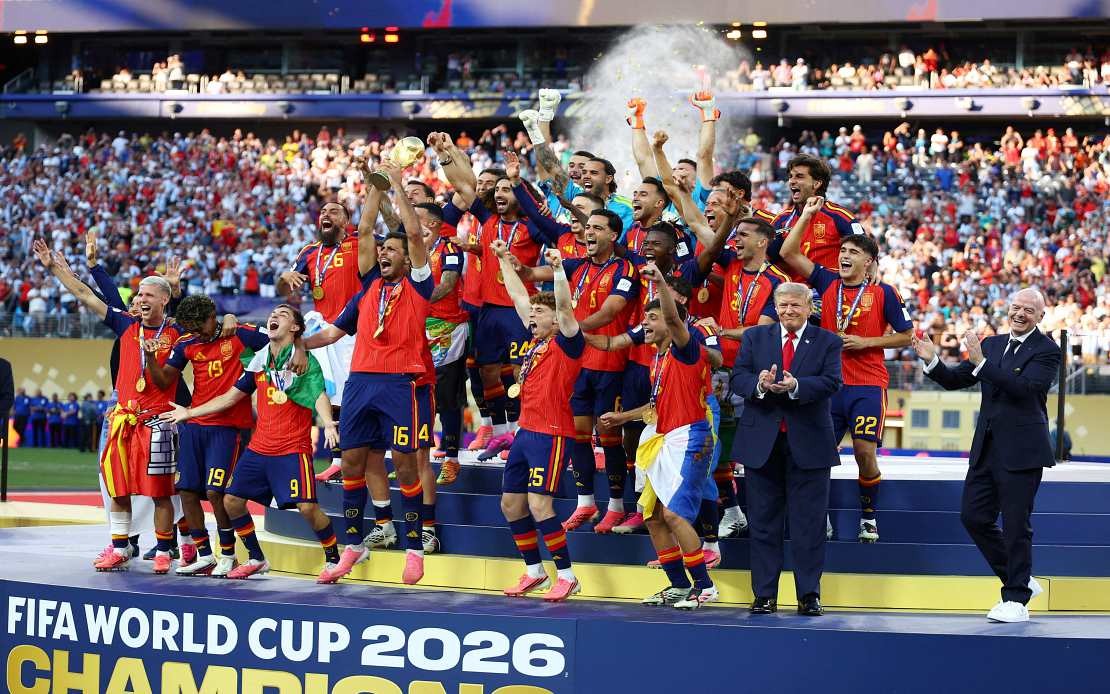
Spain's football team arrived in Madrid on Monday afternoon to begin what organizers anticipate will be one of the capital's largest celebrations in recent memory, following the nation's second men's World Cup title triumph. Captain Rodri led the squad to the airport at 12.50 pm local time, marking the beginning of a day-long programme designed to honour the players' achievement in the United States where they defeated Argentina in extra time.
The victory, secured through Ferran Torres' decisive goal during additional play, represents a landmark moment for Spanish football and the country more broadly. The achievement caps a remarkable tournament run and restores Spain to the pinnacle of international football competition. The nation's previous World Cup success came decades earlier, underscoring the significance of this latest triumph for Spanish pride and sporting identity.
Estimates suggest hundreds of thousands of supporters will gather across Madrid to express their appreciation for the team's performances. The scale of anticipated attendance reflects the deep connection between the Spanish public and their national football side, demonstrating how sporting achievement can unite a diverse population. Officials have prepared extensive security and crowd management arrangements to accommodate the expected volume of celebrants.
Royal Palace officials arranged a formal reception hosted by King Felipe VI scheduled for the afternoon following the team's arrival, underscoring the ceremonial importance granted to the victory within Spanish political and social structures. The presence of the monarchy at such celebrations reinforces the symbolic weight these sporting achievements carry within Spanish national consciousness and institutional frameworks.
Following the palace reception, an open-top bus parade through Madrid's principal thoroughfares will allow the team to travel among the crowds in direct view of supporters lining the streets. This public procession represents a traditional Spanish method of honouring athletic accomplishment, creating an atmosphere of shared celebration that extends beyond stadium environments into the broader urban landscape.
The day's festivities will culminate at Cibales Square, where organizers scheduled a major public gathering commencing at 6 pm, with team members expected to make their appearance at approximately 9 pm. The choice of this significant central location reflects Madrid's importance as the nation's capital and cultural heart, ensuring maximum visibility and accessibility for the anticipated crowds.
Defender Marc Cucurella articulated the players' enthusiasm regarding the homecoming arrangements, emphasizing their desire to include all supporters in the celebration. Cucurella's remarks acknowledged that not all followers could attend the World Cup final in the United States, positioning the Madrid celebrations as an opportunity to extend gratitude to the broader fan base that supported the team throughout the tournament.
The Royal Palace and the King's participation demonstrated the highest levels of state recognition for the squad's accomplishment. Prime Minister Pedro Sánchez posted on social media platform X expressing national pride, stating "We Are World Champions" and commending the team's performance. Such high-level political endorsement reflects how sporting victories transcend athletic domains to become national achievements celebrated across governmental and institutional hierarchies.
The participation of senior government officials, including the Prime Minister's attendance at the New Jersey stadium during the final, highlighted how the World Cup commanded significant political attention and resources. The presence of Spain's leadership at the match itself signified the importance placed on this competition within governmental circles and demonstrated the intersection between sports and national representation at the highest levels.
For Malaysia and Southeast Asian observers, Spain's celebrations offer insights into how nations commemorate major sporting achievements and mobilize public participation in national triumphs. The comprehensive planning visible in Madrid's arrangements—from royal receptions to carefully choreographed public gatherings—illustrates approaches to crowd management and celebration coordination that extend beyond football into broader questions of national identity expression and public ceremony.
The victory also reinforces Spain's position as a sustained force in international football, maintaining competitive excellence across multiple tournament cycles. This consistency challenges the notion that World Cup success depends primarily on individual tournaments, instead suggesting that institutional development, player cultivation, and strategic depth contribute significantly to sustained performance at the highest competitive levels of global sport.

