Spain has announced a tit-for-tat response to Italy's unilateral border crackdown, reinstating temporary controls on travellers arriving from Italian ports and airports beginning Saturday, August 9. The measure will remain in place until September 7 unless the situation changes, according to a statement from the Spanish government released on Friday. The decision marks an escalation of tensions between two major EU member states over how to manage the movement of migrants within Europe's borderless Schengen zone, a dispute that threatens to undermine decades of European integration.
The Spanish action directly challenges Italy's August 1 decision to reintroduce border checks on all third-country nationals arriving from Spain, a move Rome implemented without advance consultation or agreement. Madrid characterised Italy's measures as "unjustified, discriminatory and contrary to the interests of the European Union," arguing that unilateral action of this nature violates the spirit of Schengen cooperation and free movement principles that underpin the bloc. The Spanish government has formally called on Italy to withdraw the controls immediately, though the Italian government has shown no indication it intends to comply.
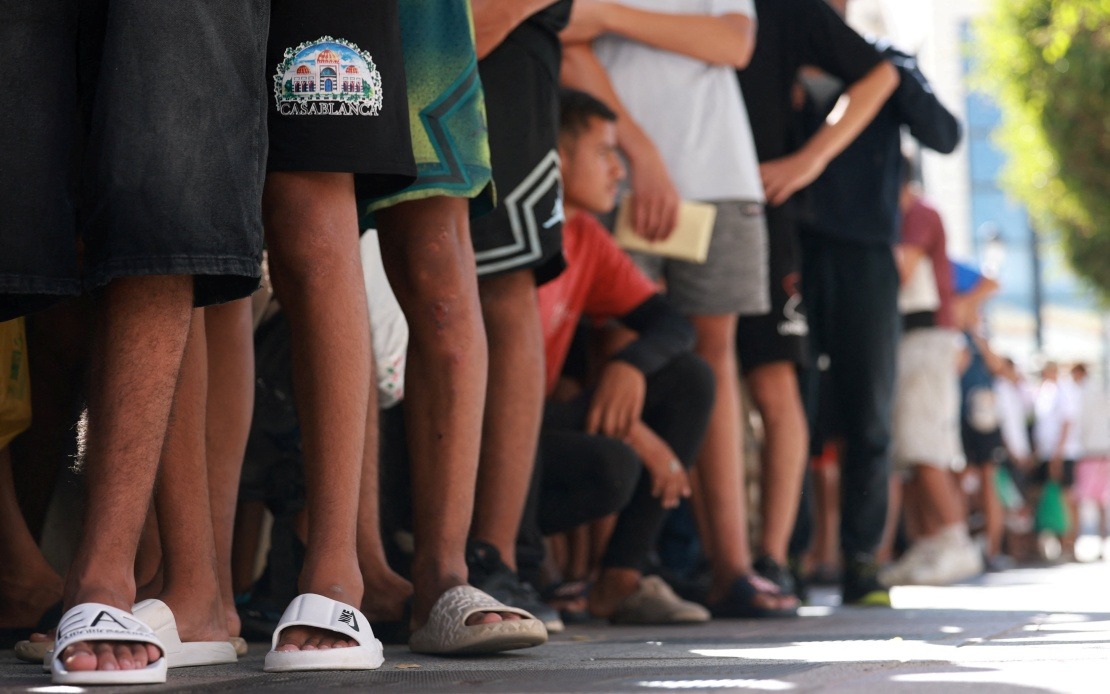
The migration spike that triggered this diplomatic conflict began at the end of July when approximately 80,000 people—mostly from sub-Saharan Africa and the Maghreb—entered the Spanish North African enclave of Ceuta in what officials describe as an unprecedented rush. The sudden surge overwhelmed the enclave's reception and processing facilities within hours. While nearly 75,000 of those who arrived subsequently returned voluntarily to Morocco, between 3,000 and 5,000 migrants remain stranded in Ceuta, creating what local officials have labelled a severe humanitarian emergency. Ceuta President Juan Jesus Vivas warned on Thursday that the remaining population has created an untenable situation, with insufficient shelter, sanitation, and food resources.
Italian Prime Minister Giorgia Meloni announced Italy's border control measures on July 31, citing concerns that Spain's inability to manage the migrant influx could result in uncontrolled secondary movement northward through the Schengen zone. Italy's government contends that the controls are a proportionate response to genuine security challenges and border-management necessities, not discriminatory actions. Rome has maintained that the checks apply only to third-country nationals and do not affect Spanish or other EU citizens travelling by air or sea, a distinction the government emphasises demonstrates that the measures target migrants rather than legitimate European travellers.
However, Italy has explicitly rejected suggestions that external pressure should influence its border policy. A statement from Rome declared that the country "does not accept ultimatums or external pressure" regarding national security and border management matters. This defiant tone reflects the hard-line stance adopted by Meloni's right-wing government, which has made restrictive immigration policy a cornerstone of its political platform since taking office. The Italian government also announced it intends to maintain its border checks until at least August 15, indicating that the standoff is unlikely to resolve quickly despite Spain's retaliatory measures.
The escalating row between Madrid and Rome exposes fundamental divisions within the EU over how member states should balance individual sovereignty with collective commitments to free movement. Spain, as the entry point for many migrant routes into Europe, has long argued that burden-sharing on immigration should be more equitable across the bloc. The fact that Italy, which itself has faced massive migrant arrivals in recent years via Mediterranean sea crossings, is now adopting restrictive measures at its northern border illustrates how immigration pressures create a domino effect across European countries.
For Southeast Asian observers, this European dispute offers instructive lessons about how migration crises can strain regional partnerships even among wealthy, institutionally developed nations. The Schengen area, often presented as a model of regional integration, proves vulnerable to unilateral actions when member states perceive threats to border security. Similar tensions simmer in Southeast Asia, where cross-border migration, particularly from Myanmar, creates friction between Thailand, Malaysia, and other neighbours. The European experience suggests that without binding mechanisms for burden-sharing and dispute resolution, bilateral tensions over migration can quickly undermine multilateral cooperation frameworks.
Spain's decision to impose reciprocal border checks signals that it will not accept what it views as Italy's overreach without consequence. The random identity and document checks now being implemented on Italian arrivals mirror Italy's own measures, creating a symmetrical escalation. Yet this tactic carries risks: if both nations maintain borders checks and the dispute spreads to other EU members, the Schengen system itself could suffer significant operational disruption, affecting millions of legitimate travellers and commerce.
The underlying issue remains the inadequate capacity of European reception systems and member states' differing tolerance for accepting migrants. Ceuta's crisis occurred partly because Morocco experienced a temporary collapse in border enforcement during negotiations with Spain, allowing a rare window for migrants to cross. The humanitarian dimension cannot be ignored: thousands of vulnerable people remain in difficult conditions in Ceuta, awaiting processing or voluntary return. Yet member states' responses prioritise border control over immediate humanitarian relief, reflecting the political salience of immigration across European electorates.
For Malaysia and other regional players monitoring international migration governance, the Spain-Italy standoff demonstrates how quickly diplomatic relationships can deteriorate when nations pursue unilateral responses to shared challenges. The EU's inability to present a unified response to the Ceuta crisis, instead witnessing a rapid escalation into border confrontation between member states, weakens Europe's broader credibility on multilateral cooperation. This weakness could embolden other nations to pursue nationalist approaches to transnational problems, ultimately making regional migration management more chaotic and unpredictable across the globe.

