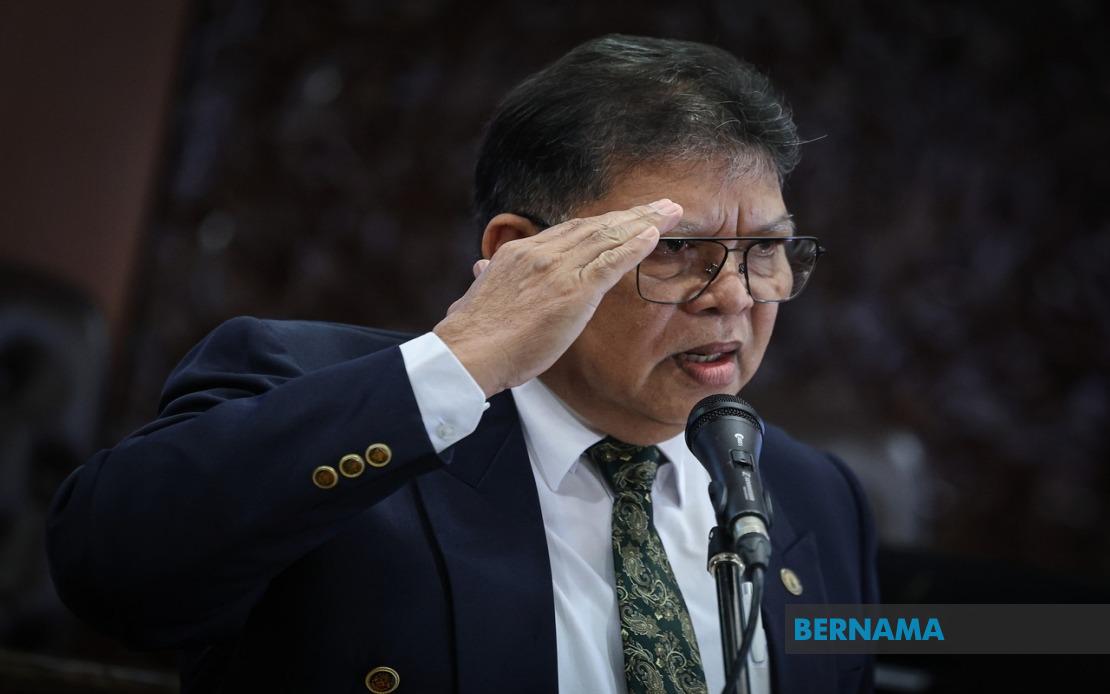
Dewan Rakyat Speaker Tan Sri Johari Abdul has put forward the adoption of proportional representation as a mechanism to nurture a more inclusive crop of young political leaders capable of truly representing Malaysia's diverse ethnic and cultural landscape. Speaking at the Harmony Symposium held at the Parliament building on June 26, Johari articulated concerns about the future viability of minority political participation under the current electoral framework, particularly as demographic projections indicate substantial population changes ahead.
At the heart of Johari's argument lies a demographic reality that appears to be shaping his long-term vision for parliamentary composition. He cited forecasts showing that Bumiputera Malays are projected to comprise 77 per cent of Malaysia's population by 2050, a shift with profound implications for how electoral constituencies are drawn and which communities might find themselves politically marginalised. The Speaker's concerns extend beyond academic observation—he identifies a practical governance problem that could undermine social cohesion if minority perspectives become systematically excluded from legislative deliberations.
Johari framed his proposal as a proactive measure to safeguard minority representation before demographic pressures render current electoral arrangements structurally disadvantageous to non-Malay communities. Under the existing first-past-the-post system, which requires winning a constituency outright, minority groups concentrated in specific geographical areas may indeed face declining electoral viability as their proportion of the overall population diminishes. The Speaker stressed that a proportional system would allow political voices to be heard proportionate to their actual demographic weight across the nation, rather than being locked into majoritarian constituencies where they lack numerical strength.
The broader context for this proposal reflects Malaysia's acknowledged complexity as a nation encompassing 77 distinct ethnic groups, a fact Johari emphasized during his address. This ethnic heterogeneity, while central to the nation's identity, creates ongoing tensions between majority empowerment and minority protection—a balancing act that has animated Malaysian politics since independence. Johari's intervention suggests that the Speaker views electoral system reform as an essential tool for managing these tensions across extended timeframes, moving beyond immediate political concerns to address structural sustainability.
Johari articulated a temporal philosophy distinct from conventional political discourse, urging participants to transcend present grievances and yesterday's disputes to focus instead on Malaysia's challenges across the next five to 100 years. This forward-looking stance positions electoral reform not as a response to current political demands but as prudent institutional engineering for generational stability. He characterised obsessive focus on immediate issues as potentially counterproductive, advocating instead for deliberate investment in democratic structures capable of accommodating Malaysia's evolving demographic reality while maintaining representative integrity.
Present at the symposium was Syahredzan Johan, chairman of the Malaysia Cross-Party Parliamentary Group on Racial and Religious Harmony (KRPPM-KKA), an organization established to facilitate legislative cooperation on communal cohesion issues. Syahredzan, who represents Bangi in Parliament, outlined the symposium's strategic purpose: transplanting discussions on racial and religious harmony from academic or civil society spaces directly into Parliament, thereby creating formal mechanisms for converting such discussions into actionable policy recommendations and implementable institutional changes.
The KRPPM-KKA's stated objective reflects a recognition among parliamentary leadership that sustainable solutions to communal challenges require systematic policy reform rather than ad-hoc political compromises. The organization aims to construct a more inclusive Malaysia through deliberate legal and policy restructuring while simultaneously fostering cooperation networks spanning Parliament, government ministries, civil society organizations, and educational institutions. This multi-institutional approach suggests that Johari and Syahredzan view electoral system change as part of a broader reform agenda rather than an isolated measure.
Proportional representation remains contentious globally, carrying both theoretical advantages and documented implementation challenges. Advocates emphasize its capacity to reflect voter preferences more accurately and reduce the systemic exclusion of smaller parties and minority communities. Critics identify potential fragmentation risks, arguing that proportional systems can produce coalition instability or empower fringe constituencies with disproportionate kingmaker power. For Malaysian policymakers, these international experiences must be weighed against the nation's specific institutional heritage, federal structure, and the constitutional guarantees underpinning the bargains struck at independence.
The proposal carries particular significance for Malaysia's long-term political stability given the country's experience navigating ethnic and religious sensitivities. Johari's emphasis on protecting minority parliamentary voices indirectly addresses anxieties among non-Malay communities about their political diminishment as demographic percentages shift. Conversely, any electoral system change would require majority-community consent and would need to preserve constitutional provisions protecting Bumiputera interests—a delicate political calibration that explains why systemic electoral reform has remained largely untouched since independence.
The timing of Johari's proposal merits consideration against Malaysia's current political trajectory. Parliamentary institutions have recently reasserted their institutional independence and deliberative capacity following years of executive dominance and constitutional instability. A Speaker willing to publicly champion electoral reform signals a Parliament confident enough to initiate debate on foundational democratic questions, even when such discussions might challenge entrenched interests or constitutional assumptions. This institutional assertiveness itself may constitute a precondition for serious consideration of systemic electoral change.
For Southeast Asian observers, Malaysia's potential engagement with proportional representation carries broader regional implications. Most regional democracies employ first-past-the-post or mixed systems inherited from colonial legacies, and few have substantially reformed their electoral architectures to address minority representation challenges. Should Malaysia move toward proportional representation, it would offer a regional case study in how established democracies can undertake fundamental institutional reform while managing majority-minority tensions and preserving political stability—lessons potentially valuable across the region.
Implementing proportional representation would require constitutional amendment given its entrenchment in Malaysia's electoral framework, an undertaking demanding supermajority parliamentary support and, realistically, broader political consensus. Johari's current proposal functions as an opening intervention in what could become an extended deliberative process. Whether this initiative gains traction depends on subsequent political developments, the receptiveness of other parliamentary and executive figures, and ultimately the Malaysian public's appetite for electoral system change—factors that will emerge through extended parliamentary discussion and broader national conversation.

