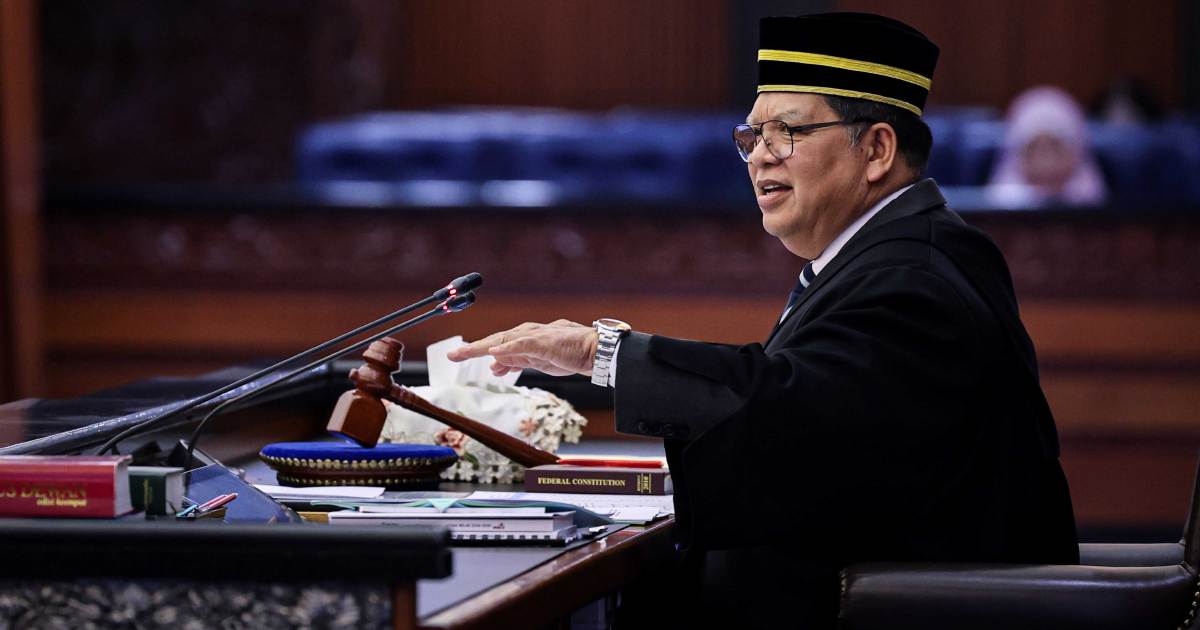
Dewan Rakyat Speaker Tan Sri Johari Abdul has issued a formal reminder to Members of Parliament regarding their obligation to maintain consistent attendance at parliamentary sittings, cautioning against the practice of skipping sessions without legitimate justification.
The Speaker's directive underscores a persistent challenge within Malaysia's legislative chamber—balancing parliamentary commitments with the competing demands on MPs' time. As representatives elected to serve their constituencies, MPs bear a fundamental responsibility to participate in debates, voting, and scrutiny of government policies. When members fail to show up without valid reasons, it undermines the legitimacy of parliamentary proceedings and raises questions about their dedication to their constituents.
Parliamentary attendance records have historically reflected varying levels of commitment among legislators. Some members maintain pristine attendance records, while others accumulate notable absences. These gaps in participation can be particularly problematic during critical votes on legislation or when important government bills are tabled for debate. The Speaker's admonition suggests that current absence patterns warrant intervention from the chamber's leadership.
Valid reasons for non-attendance typically include illness, family emergencies, official duties outside Kuala Lumpur, or other compelling personal circumstances. However, the distinction between legitimate absences and unexplained non-attendance remains crucial. MPs who consistently miss sittings without proper notification or explanation may face questions from constituents about their commitment to legislative work. The Speaker's reminder establishes clear expectations: members should either attend or provide documented justification.
This emphasis on accountability reflects broader governance concerns in Malaysia. Parliamentary democracy functions most effectively when elected representatives engage actively in their legislative roles. When attendance falters, the quality of debate suffers, and minority voices may struggle to be heard. Furthermore, critical legislation may proceed with less rigorous scrutiny if quorum and participation levels decline precipitously.
The Speaker's authority extends to maintaining order and discipline within the chamber. Johari Abdul's statement carries the implicit weight of potential consequences for those who ignore the directive. While MPs cannot be physically compelled to attend, prolonged or repeated absences without valid explanation could invite formal questions, loss of speaking privileges, or reputational damage within their parties and constituencies.
For Malaysian voters concerned about parliamentary effectiveness, this reminder serves as a useful benchmark. Citizens can now monitor their representatives' attendance records and seek explanations for frequent absences. Many legislatures worldwide publish attendance statistics, providing transparency and enabling constituents to hold MPs accountable at election time. The Speaker's intervention may indirectly encourage greater public awareness and scrutiny of parliamentary participation.
Regional perspectives on parliamentary attendance vary considerably. Some Southeast Asian legislatures have implemented stricter penalties for chronic absenteeism, while others rely more heavily on party discipline and public pressure. Malaysia's approach appears to emphasise the Speaker's moral authority and the culture of parliamentary respect, suggesting that reminders from leadership can meaningfully influence behaviour without resorting to punitive measures.
The timing of Johari Abdul's statement may reflect specific attendance concerns during recent sittings. Whether responding to isolated incidents or broader patterns, the Speaker's public reminder signals that the issue warrants attention. This can motivate individual MPs to self-assess their participation levels and potentially prompt whips from political parties to emphasise attendance expectations to their members.
For MPs balancing multiple responsibilities—constituency work, party politics, family obligations, and legislative duties—the Speaker's directive reinforces that parliamentary attendance cannot be indefinitely deprioritised. The legislature is the fundamental institution through which MPs exercise their constitutional mandate. Treating attendance as optional undermines the separation of powers and weakens parliamentary oversight of the executive branch.
Moving forward, the Speaker's reminder may catalyse broader discussions about parliamentary scheduling, workload management, and support systems for MPs. If attendance remains problematic despite warnings, the leadership might eventually consider structural reforms, such as adjusting sitting calendars or providing better facilities and support services to enable participation.
Ultimately, Johari Abdul's statement represents a call to institutional integrity. Elected representatives bear a sacred trust from voters who placed them in office. Meeting that trust requires showing up, engaging with colleagues, and contributing to the nation's legislative business. The Speaker's reminder, though seemingly straightforward, encapsulates this fundamental principle of democratic accountability.

