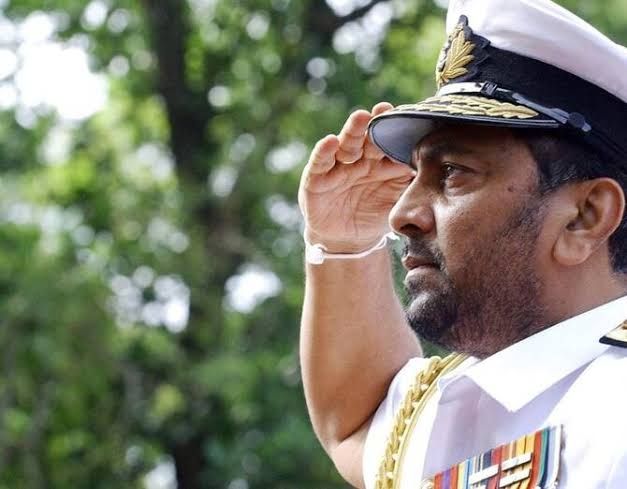
Sri Lanka has arrested Admiral of the Fleet Wasantha Karannagoda, a 73-year-old retired naval officer, following accusations that he illegally enabled the enlistment and overseas training of Yoshitha Rajapaksa, the son of former president Mahinda Rajapaksa who governed the island from 2005 to 2015. The Bribery Commission took Karannagoda into custody on July 3 in connection with the 2006 recruitment of the younger Rajapaksa, who allegedly lacked the necessary qualifications for naval service. This development marks another significant step in the current administration's intensifying campaign against corruption within the Rajapaksa family and their associates, a cornerstone of President Anura Kumara Dissanayake's mandate since his election in September 2024.
Karannagoda held the position of navy commander during the final phase and immediate aftermath of Sri Lanka's protracted civil conflict with Tamil separatist forces, which formally concluded in 2009 after nearly three decades of warfare. His leadership during this critical period established him as a prominent military figure in the island's recent history. He subsequently received promotion to the rank of admiral of the fleet in 2019, though he currently maintains no active operational role within the naval hierarchy. The charges against him carry substantial weight given his seniority and the public nature of his former position, signalling the government's willingness to pursue senior military figures implicated in wrongdoing regardless of their previous standing.
The case involving Yoshitha Rajapaksa has expanded considerably in recent months, exposing potential layers of institutional abuse within state structures. The younger Rajapaksa faces separate criminal charges relating to his receipt of public funds for advanced training at the Royal Naval College Dartmouth, an elite British naval institution. He was arrested last month and subsequently released on bail while judicial proceedings continue. The prosecution's case rests on evidence suggesting that public resources were improperly diverted to finance his overseas education, a form of corruption that strikes at the heart of equitable access to state benefits and opportunities.
These legal actions against Karannagoda must be understood within the broader context of renewed accountability efforts following the Dissanayake government's ascent to power. The president campaigned explicitly on a platform promising decisive action against corruption and unresolved high-profile crimes, positioning anti-corruption prosecutions as a central element of his administration's legitimacy and reform agenda. This shift represents a departure from the previous political climate, during which numerous cases against Rajapaksa associates were shelved or suspended, particularly under the presidency of Gotabaya Rajapaksa, the former president's younger brother, who served until 2022.
Karannagoda's arrest carries the additional weight of unresolved allegations concerning his potential involvement in serious human rights violations. In March 2025, Britain imposed sanctions against him, citing accusations of extrajudicial killings and grave breaches of human rights law. These allegations relate to his tenure as naval commander during the final stages of the civil conflict, a period marked by intense military operations and numerous contested incidents. The intersection of these human rights allegations with the current corruption charges creates a complex legal landscape in which historical accountability and contemporary prosecutorial efforts overlap.
Further complicating his legal position are charges related to conspiracy to murder connected to the deaths of eleven young men killed between 2008 and 2009, years immediately following the conflict's conclusion. These charges possess particular significance because they were originally discontinued in October 2021 under Gotabaya Rajapaksa's presidency, only to be reinstated following the change of government. The decision to revive these charges under the Dissanayake administration demonstrates the political dimensions of Sri Lankan justice, where prosecutorial momentum fluctuates according to prevailing political winds and the composition of the executive branch.
Yoshitha Rajapaksa's individual legal difficulties extend well beyond the naval training allegations. He currently faces prosecution related to his acquisition of residential property during his father's presidency, circumstances under which his income sources remain inadequately explained. During questioning by investigators, he claimed to have raised funds through the sale of gemstones allegedly given to him by his paternal grandaunt, an explanation that collapsed under scrutiny when the elderly relative stated she could not account for how she had originally obtained the precious stones. This implausible narrative underscores the broader pattern of questionable financial transactions characterised by weak documentation and circular explanations that has marked the Rajapaksa family's dealings.
The accumulating legal pressure on the Rajapaksa family has broadened beyond Yoshitha, extending to other prominent members and associates. Gotabaya Rajapaksa, who served as president immediately before the current administration, has been subjected to a ban on foreign travel following revelations concerning his alleged involvement in connections to the 2019 Easter Sunday bombings, coordinated terrorist attacks that killed 279 people. This travel restriction, imposed last month, effectively restricts his movements while investigations proceed. Multiple family members and close political allies face various charges spanning corruption, financial crimes, and alleged violations of public trust, all pending determination before the courts.
For Malaysian observers and the broader Southeast Asian region, these developments in Sri Lanka carry important implications regarding accountability mechanisms and the treatment of former political elites. The case demonstrates how changes in political administration can catalyse investigation into previously dormant corruption allegations and human rights violations. The willingness of Sri Lankan institutions to pursue senior military officers and former political families, once they lose electoral favour, provides a cautionary example of how political fortunes can shift dramatically and expose former powerholders to legal jeopardy. This pattern resonates within the regional context, where questions of accountability, the rule of law, and the appropriate treatment of ousted political figures remain contested and evolving.
The reinvigoration of prosecutions against the Rajapaksa network also raises important questions about institutional independence and the politicisation of law enforcement. While stronger accountability for corruption represents a democratic imperative, the selective revival of charges based on political transitions can undermine the consistency and credibility of judicial processes. For developing democracies throughout Southeast Asia grappling with similar tensions between accountability and institutional stability, the Sri Lankan precedent offers both inspiration and caution regarding how anti-corruption campaigns should be structured and executed to maintain legitimacy and prevent the weaponisation of legal systems for partisan advantage.

