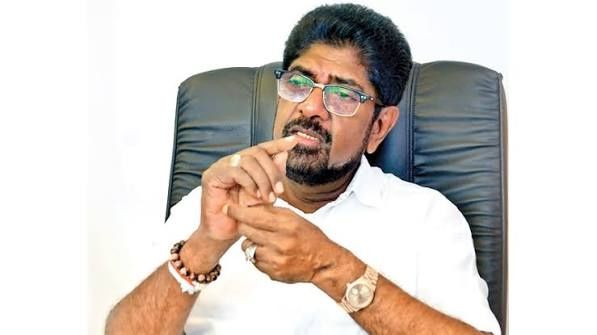
A former Sri Lankan minister has been taken into custody by the country's anti-corruption authorities on suspicion of orchestrating the removal of a historically significant carved stone from a centuries-old palace complex. Keheliya Rambukwella was detained on Tuesday following allegations that he played a central role in the theft of the moonstone, an ornate granite artefact that once formed part of the symbolic entranceway to the royal residence of Veera Parakrama Narendrasinghe, who ruled the island until 1739.
The Commission to Investigate Allegations of Bribery or Corruption, Sri Lanka's principal graft-fighting body, has formally charged Rambukwella with conspiracy and abetting in the removal of the valuable heritage object, which took place in December 2022. Beyond his alleged involvement in the theft itself, investigators contend that the former minister actively hindered police inquiries at the time of the incident. The dual nature of these charges—both the conspiracy and the obstruction—underscores authorities' assessment that Rambukwella did not merely tolerate the crime but took deliberate steps to shield those responsible from accountability.
The arrest represents a significant escalation in Sri Lanka's ongoing crackdown on high-level corruption, which has intensified since the nation's economic crisis in 2022. The theft of the moonstone, occurring amid broader institutional chaos during the country's acute foreign currency shortage and debt default, raises troubling questions about governance and the protection of national heritage during periods of state dysfunction. The timing of the theft—just months before Sri Lanka formally defaulted on its US$46 billion foreign debt in April 2022—suggests that institutional capacities to safeguard cultural treasures were severely compromised during the crisis period.
Rambukwella's legal troubles extend far beyond the moonstone case. Separately, the anti-corruption commission has charged him with misappropriating state funds by employing six individuals for his private business venture while serving in ministerial office. This charge illustrates a pattern of alleged misconduct spanning multiple domains of public administration, suggesting systemic failures in oversight and accountability mechanisms within Sri Lanka's government apparatus during the period he held office.
The former minister faces even more serious allegations relating to his tenure as health minister, a position he occupied during Sri Lanka's most acute phase of the medicines shortage crisis. Court proceedings have revealed that Rambukwella authorised the procurement of what was marketed as a life-saving cancer medication that was discovered to be merely water. This revelations has sent shockwaves through Sri Lankan civil society, as it represents a betrayal of public trust at the most fundamental level—the provision of essential healthcare during a national emergency.
The gravity of the counterfeit medicines scandal extends well beyond Rambukwella's individual culpability. Multiple senior officials within the health ministry have been implicated in the procurement irregularities, suggesting an institutional failure rather than isolated malfeasance. The involvement of numerous high-ranking bureaucrats indicates that the scheme either operated with systemic knowledge or exposed dangerous gaps in procurement oversight and quality control protocols. For patients and their families who may have relied upon or been harmed by counterfeit medications during this period, the scandal represents a profound breach of state responsibility.
The context of these offences is critical to understanding their severity. When Rambukwella held the health ministry portfolio, Sri Lanka was gripped by an unprecedented shortage of genuine medicines following the country's April 2022 default on its massive external debt. The combination of capital controls, depleted foreign reserves, and international credit constraints meant that the island struggled to secure hard currency needed to import essential pharmaceutical supplies. Within this environment of scarcity and desperation, the decision to purchase counterfeit cancer drugs rather than genuine medications—or to leave patients without treatment altogether—represents a catastrophic failure of public duty.
The interconnected nature of the various charges against Rambukwella—ranging from heritage theft to misappropriation of public funds to the medicines scandal—suggests that anti-corruption investigators are adopting a comprehensive approach to dismantling networks of misconduct that flourished during the crisis years. This multi-pronged strategy may prove more effective than prosecuting individual isolated incidents, as it builds a composite picture of systemic dysfunction and personal profiteering amid national suffering.
The moonstone theft itself carries symbolic weight beyond its material or historical value. The artefact's removal from a royal palace during a period when Sri Lanka's state institutions were collapsing under economic pressure symbolizes the broader erosion of institutional integrity and national stewardship. The palace and its ceremonial elements represent continuity with Sri Lanka's pre-colonial heritage and identity; their desecration during the crisis period compounds the national trauma of economic collapse.
Sri Lanka's determination to prosecute these cases, despite the considerable resource constraints the nation faces, signals a commitment to accountability that observers hope will help restore institutional credibility. However, the sheer scale of alleged misconduct—encompassing heritage protection, public health, procurement integrity, and financial stewardship—raises uncomfortable questions about how deeply corruption penetrated state structures during the crisis period. For other Southeast Asian nations watching Sri Lanka's post-crisis reconstruction efforts, the Rambukwella cases offer cautionary lessons about the vulnerability of public institutions during economic emergencies and the importance of maintaining robust oversight mechanisms even when governments face extraordinary pressures.

