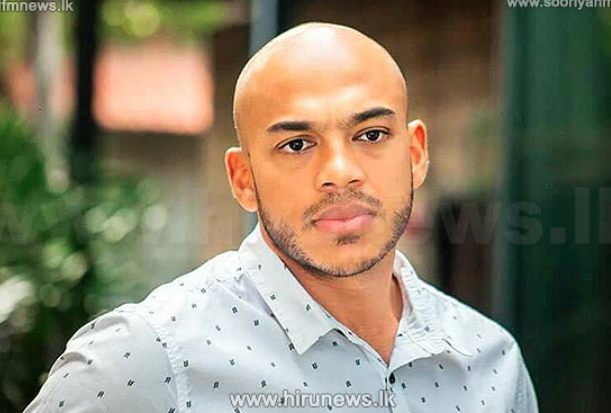
Sri Lanka's anti-corruption drive has claimed another member of the Rajapaksa family, with authorities detaining Yoshitha Rajapaksa on June 17 on charges of abusing public resources and advancing his naval career through irregular means. The 38-year-old's arrest represents a significant moment in the island nation's efforts to hold accountable the once-untouchable political dynasty that dominated governance for nearly two decades.
The Bribery Commission's investigation centres on Yoshitha's progression through military ranks despite lacking the mandatory qualifications required for his position. Allegations reveal that he obtained government-funded officer training in Britain, a placement that critics and investigators argue he obtained improperly and at public expense. The formal charge against him encompasses aiding and abetting in connection with his recruitment irregularities and the subsequent misappropriation of state funds for his overseas training programme.
A particular focus of the inquiry is Yoshitha's attendance at Dartmouth, the prestigious naval training college in Britain. During his father Mahinda Rajapaksa's presidency from 2005 to 2015, the younger Rajapaksa's admission to this competitive institution raised eyebrows among observers who questioned whether his place had been secured through merit or political privilege. The concern extends beyond mere impropriety—critics contended that a qualified naval cadet had lost an opportunity due to Yoshitha's political connections.
The arrest builds on existing legal troubles facing the naval officer. He remains subject to restrictions on foreign travel and had been released on bail pending earlier investigations into money-laundering allegations. These parallel cases suggest a pattern of financial irregularities requiring judicial scrutiny. The multiple fronts of investigation underscore the complexity of the allegations ranged against him and the determination of Sri Lankan authorities to pursue comprehensive accountability.
Another significant element of the prosecution involves Yoshitha's property acquisition during his father's presidential tenure. He purchased a residence whose price he struggled to justify through legitimate income, subsequently claiming that gemstones gifted by his grandaunt had provided the necessary funds. The implausibility of this explanation—the elderly relative could not herself account for how she obtained the valuable stones—prompted authorities to classify the property transaction as suspicious and worthy of criminal prosecution. This line of inquiry exemplifies how investigators are examining the family's financial activities for signs of corruption or unexplained wealth.
The younger Rajapaksa also faces separate criminal charges relating to his acquisition of a television network, suggesting that authorities have identified potentially problematic financial dealings across multiple business ventures. The breadth of cases against him demonstrates that the investigation extends beyond his military career into his broader commercial and personal conduct.
The intensification of cases against the Rajapaksa family coincides directly with President Anura Kumara Dissanayake's election victory in 2024 on an explicitly anti-corruption platform. The new administration has prioritised holding the previous political establishment accountable, and Yoshitha's arrest reflects this renewed momentum in pursuing previously stalled investigations. The shift in political leadership has therefore created space for justice mechanisms that faced obstacles under administrations sympathetic to the Rajapaksa family's interests.
Mahinda Rajapaksa's tenure as president from 2005 to 2015 proved consequential for Sri Lanka's political trajectory, but his family's subsequent grip on power weakened considerably. His younger brother Gotabaya Rajapaksa ascended to the presidency in 2019 but was compelled to flee the country in 2022 following civil unrest triggered by severe economic collapse. This dramatic fall from power transformed the family from seemingly untouchable political elites to targets of serious criminal investigations. Gotabaya himself has recently been subjected to a foreign travel ban, and he has sought court protection against potential arrest related to the 2019 Easter Sunday bombings that resulted in 279 deaths.
The cascade of prosecutions targeting multiple family members and close associates reflects the depth of concerns about governance during the Rajapaksa era. Charges encompass corruption, money laundering, and in some instances murder, with numerous cases still pending resolution in the courts. This legal reckoning represents a significant departure from the period when the family's political dominance shielded them from meaningful accountability, and it signals Sri Lanka's determination to address historical grievances through its judicial system.
For Malaysia and other Southeast Asian nations observing Sri Lanka's anti-corruption efforts, the case illustrates both the possibilities and complexities of dismantling entrenched political patronage networks. The Rajapaksa prosecutions demonstrate that domestic institutions can eventually challenge powerful elites, particularly when electoral shifts bring administrations committed to accountability. However, the protracted nature of these investigations—some spanning years before arrests—also highlights the institutional challenges facing anti-corruption initiatives in the region, especially when they target historically dominant families with deep institutional connections.