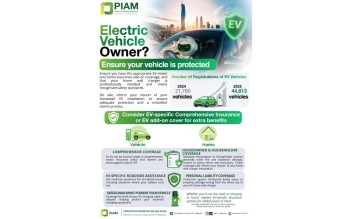
The General Insurance Association of Malaysia (PIAM) has moved to clarify public concerns about insurance coverage for electric vehicle-related fire incidents, confirming that standard residential fire policies in the country provide protection against fire damage regardless of its origin. The reassurance comes following a recent incident in Cheras where an EV home charger sparked a significant fire, prompting questions about the extent to which homeowners are financially protected against such emerging risks associated with the rapid adoption of electric vehicles across urban Malaysia.
According to PIAM Chief Executive Officer Chua Kim Soon, the coverage framework for fire-related claims remains straightforward in principle. Standard house owner and fire insurance policies cover specified perils, including fire damage stemming from any ignition source, provided the claim does not involve fraud, intentional damage, or a breach of policy conditions. This broad principle extends to EV charging incidents, meaning homeowners who maintain compliant policies should not face blanket exclusions simply because the fire originated from electrical charging equipment. However, the actual outcome of any claim will depend heavily on the specific terms, conditions, and exclusions contained within each individual policy document.
The distinction between different types of EV charging installations is proving critical to understanding coverage boundaries. Permanently installed, hard-wired EV chargers—those professionally mounted to a home's electrical system—are typically classified as fixtures and fittings within the buildings section of a standard home insurance policy. This integration into the property structure generally means they fall under standard fire coverage. Conversely, portable or unattached charging cables and removable charging equipment are more likely to be treated as separate items, requiring either specialised electric vehicle insurance add-ons or dedicated motor insurance packages that some providers now offer. This distinction matters significantly for homeowners planning EV installations, as it affects both coverage scope and the premium structures they will encounter.
Insurers are expected to conduct rigorous investigations before settling claims involving fires from electrical sources. PIAM has outlined that insurers will request official investigation reports, typically from the fire department, to eliminate potential fraud, deliberate damage, or non-compliance with building regulations. Of particular concern are instances involving illegal electrical modifications or uncertified installations, which would breach standard safety requirements and potentially invalidate coverage. Homeowners who attempt to save money through unlicensed electricians or who deviate from manufacturer specifications for their charging equipment risk undermining their insurance protection entirely. This underscores the importance of adhering to proper installation standards and keeping detailed documentation of all work performed.
Chua has strongly advised homeowners to proactively declare any permanent EV charger installation to their insurer. This notification requirement is not merely a bureaucratic formality but serves several practical purposes. Declaring the upgrade ensures that the sum insured—the amount the insurer will pay to rebuild the property—accurately reflects current rebuilding costs incorporating the new electrical infrastructure and modern fixtures. Without such notification, homeowners may find their coverage inadequate in the event of a major fire, with the insurer only obligated to pay based on an outdated assessment that did not account for the enhanced property value. The declaration process also creates a clear paper trail that can streamline claims processing if an incident occurs, as both parties will have already agreed on the relevant details of the installation.
Beyond the primary coverage for the home itself, homeowners with EV chargers should carefully review their public liability limits. In densely populated residential settings—particularly in terrace homes, semi-detached houses, or high-rise apartment buildings common throughout Malaysian urban areas—a fire originating from one property can rapidly spread to neighbouring units, resulting in extensive damage to adjacent properties and potential personal injury claims. Standard house owner policies typically offer a public liability limit of RM50,000, which may prove inadequate if a fire spreads and causes significant damage across multiple units or injures neighbours. PIAM has highlighted that homeowners can purchase optional extensions to increase this liability ceiling, providing crucial financial protection against claims from affected neighbours and their insurers. Given the cascading risk potential in Malaysian residential configurations, this is not an area where cost-cutting is prudent.
The insurance industry's response to the EV revolution reflects broader challenges facing insurers globally as new technologies enter mainstream use. Electric vehicle adoption in Malaysia has accelerated notably in recent years, driven by government incentives and growing environmental consciousness, yet the insurance infrastructure was not designed with home charging in mind. As a result, coverage gaps have emerged, and standard policies may not adequately address all scenarios associated with EV ownership. Insurers have begun offering specialised add-on packages and extended coverage options, but uptake remains limited, suggesting many EV owners remain unaware of potential exposure.
For EV owners navigating this evolving landscape, a comprehensive approach is essential. Rather than assuming standard policies provide complete protection, owners should request specific clarification from their insurers about how EV chargers are classified, what coverage applies, and what exclusions might limit payment. Owners should obtain written confirmation of coverage before proceeding with installation, avoiding costly disputes later. Motor insurance policies covering the vehicle itself should also be reviewed, as some insurers now offer coverage for charging equipment damage and related losses that might fall outside traditional home policy scope. The goal is to ensure that the vehicle, the charging installation, and the residential structure are all comprehensively protected.
The Cheras fire incident, while unfortunate, has served a constructive purpose by prompting insurers and industry bodies to provide clearer guidance. As Malaysia's EV fleet grows and more homeowners install charging infrastructure, the insurance sector will likely continue refining its offerings and standardising coverage frameworks. For now, homeowners must take responsibility for understanding their existing coverage, making necessary declarations, and purchasing additional protection where gaps are identified. The combination of proper installation standards, clear communication with insurers, and appropriate coverage limits can substantially mitigate the financial and safety risks associated with home EV charging.

