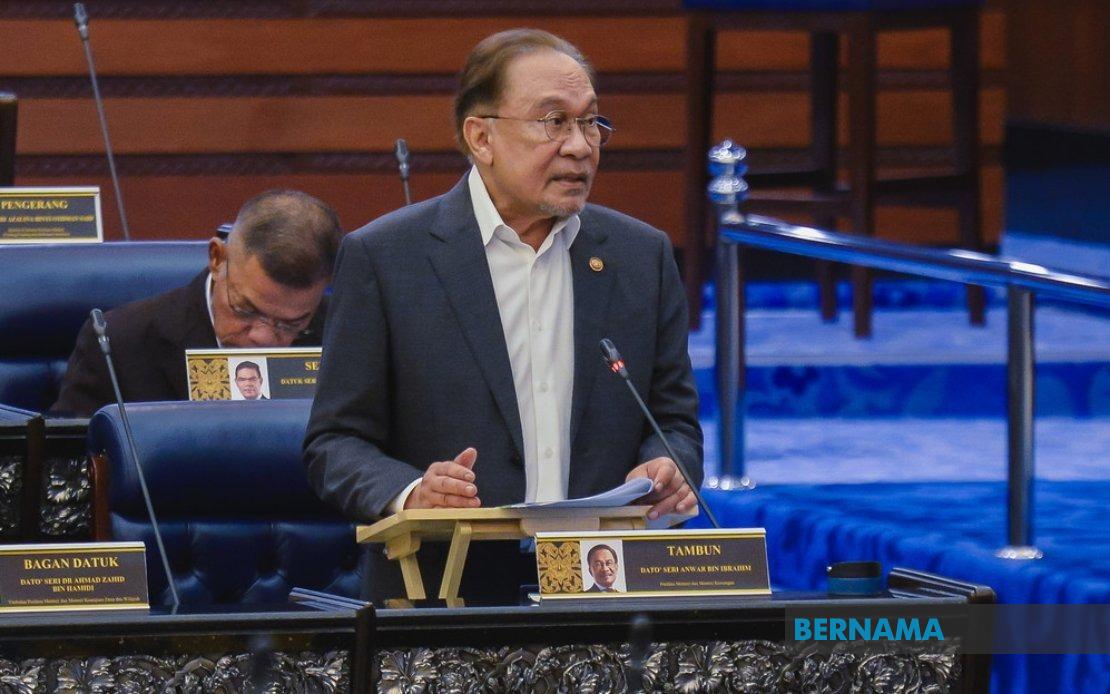
Prime Minister Datuk Seri Anwar Ibrahim has drawn a firm line on how the Federal Government will handle requests for additional project funding from state administrations, particularly when development schemes require a Notice of Change. Speaking in Parliament on June 30, Anwar underscored that any escalation in project costs cannot be treated as an automatic trigger for federal disbursements, signalling a more cautious approach to managing infrastructure spending across Malaysia's 13 states and three federal territories.
The crux of Anwar's position centres on the distinction between state-level decisions and federal financial obligations. When a Notice of Change is issued for a development project—essentially a formal amendment to project specifications or scope—it automatically generates cost implications that cannot remain confined to state budgets. The Prime Minister stressed that this is not merely a procedural technicality but a matter requiring comprehensive reassessment before any fresh commitment of federal resources takes place. This reflects growing concerns within the federal administration about cost discipline and accountability in large-scale infrastructure undertakings.
An NOC, in the context of construction and development projects, represents a contractual variation that modifies the original agreement between a state authority and its contractor. Such variations frequently emerge when unforeseen conditions surface during project implementation, or when project scopes are expanded beyond initial parameters. However, the financial consequences ripple outward, necessitating examination of multiple causative factors. Anwar emphasised that identifying whether cost increases stem from contractor inefficiency, design changes, or legitimate environmental and technical challenges becomes essential before the Federal Government commits additional resources.
The Prime Minister's remarks were prompted by a parliamentary question from Datuk Awang Hashim, who sought clarification regarding Kedah's application for supplementary funding for the Pulau Bunting Water Treatment Plant project. This scheme, a critical infrastructure initiative for the northern state, requires formal NOC approval to proceed with enhanced specifications or expanded capacity. Kedah's request exemplifies the type of situation that has become increasingly common as infrastructure costs have risen across the region due to inflation, supply chain disruptions, and evolving technical requirements.
Anwar articulated a two-pronged assessment framework that the Federal Government intends to apply going forward. First, authorities must establish the contractor's accountability and determine the fundamental cause of any cost escalation. Whether the increase results from the contractor's inefficiency, design modifications demanded by state authorities, or genuine exogenous factors such as material price volatility and labour shortages will determine how the Federal Government responds. This diagnostic step prevents the federal treasury from effectively subsidising poor project management or contractor underperformance at the state level.
Second, and equally significant, the Prime Minister stressed that federal involvement cannot operate on an automatic reimbursement basis. State governments, while possessing considerable autonomy over their development portfolios, cannot unilaterally bind the Federal Government to cost escalations through contractual decisions. This principle reflects a broader governance challenge in Malaysia's federal system, where coordination between state and federal authorities on major infrastructure projects has periodically generated disputes over funding responsibility and cost-sharing arrangements.
Anwar's intervention signals a recalibration in how Putrajaya will scrutinise requests for additional allocations or loans linked to NOCs. Rather than accepting such requests as administrative formalities, the Federal Government is establishing that renegotiation must precede approval. This approach aims to instil greater fiscal discipline at the state level while protecting the federal budget from unforeseen contingencies. For state governments, the message is clear: project planning and contractor selection must be more rigorous to avoid subsequent cost overruns that necessitate federal intervention.
The statement carries implications for Malaysia's infrastructure development trajectory. Water treatment facilities, like the Pulau Bunting project in Kedah, are essential for public health and economic development, yet escalating costs threaten project viability. By establishing a structured renegotiation process, the Federal Government seeks to ensure that such critical undertakings proceed without undue delay while maintaining fiscal accountability. States must now engage the Federal Government proactively rather than treating cost increases as inevitable developments requiring automatic federal response.
This approach also reflects international best practices in project finance and governance. Many federal systems employ similar mechanisms to distinguish between legitimate project needs and inefficient cost management. By requiring fresh assessment and renegotiation, the Federal Government can allocate resources more strategically across competing state priorities and ensure that funds are deployed where they generate the greatest public value. For Southeast Asia more broadly, Malaysia's experience demonstrates how structural frameworks for managing federal-state financial relationships can enhance accountability without undermining development momentum.
Deputy Prime Minister and Energy Transition and Water Transformation Minister Datuk Seri Fadillah Yusof was assigned to provide technical elaboration on the matter, suggesting that the water infrastructure sector faces particular scrutiny. Water security remains a pressing concern across Malaysia, and projects like those in Kedah address genuine public needs. However, the Federal Government's tougher stance on cost overruns reflects recognition that infrastructure delivery must balance urgency with fiscal responsibility.
The Prime Minister's comments also underscore the evolving expectations for financial transparency and project discipline during Malaysia's economic recovery phase. As the nation navigates post-pandemic fiscal pressures and inflation concerns, federal authorities are rightly attuned to how project cost escalations can multiply across multiple initiatives, potentially straining national finances. Requiring states to renegotiate rather than automatically approving additional funds represents a more mature approach to managing collective development ambitions within constrained budgetary realities.

