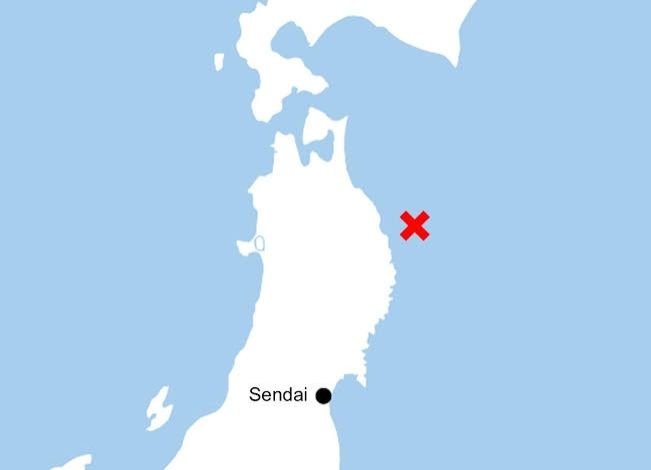
A 7.2-magnitude earthquake jolted northern Japan on Thursday morning, sending tremors across a vast swathe of the country but leaving no deaths or critical infrastructure damage in its wake. The undersea quake occurred off Iwate prefecture on Honshu, the nation's main island, at 7:30 am local time, with its epicentre situated 44 kilometres below the seabed. The Japan Meteorological Agency initially measured the tremor at 6.9 magnitude before revising the figure upwards, while residents hundreds of kilometres away in Tokyo distinctly felt the ground shake. The absence of a tsunami warning provided immediate relief to coastal communities, though the powerful shaking across the Aomori and Iwate regions left a trail of everyday domestic disruptions.
The human toll remained minimal despite the quake's considerable force. Prime Minister Sanae Takaichi's office confirmed through government spokesman Minoru Kihara that there were no verified casualties from the event, a statement that reflected both Japan's robust building codes and the fortunate timing and location of the tremor. However, the infrastructure and services sector experienced noticeable disruptions that underscored the quake's intensity. Emergency services in the affected municipalities fielded approximately four calls related to the earthquake, including at least one report of individuals trapped inside a lift. The incident demonstrated how even well-maintained systems can falter when subjected to sudden and violent ground motion, though the overall response by authorities and emergency personnel appeared swift and effective.
Personal accounts from residents highlighted the visceral experience of surviving a substantial seismic event. Mutsumi Shimohata, a 61-year-old food processing worker in Hashikami, described how her smartphone's earthquake early warning alarm activated almost instantaneously as the tremor began, providing critical seconds of notice. While her own home suffered only minor cosmetic damage—a picture frame that tumbled from its position—her workplace experienced more significant disruption, with automatic doors malfunctioning and sections of the ceiling collapsing. Her employer subsequently instructed staff to remain home and maintain standby readiness, illustrating how businesses must often halt operations in the immediate aftermath of substantial earthquakes to assess damage and ensure worker safety. The collective narrative from ordinary Japanese citizens revealed a population accustomed to seismic activity yet still unnerved by the violence of natural forces.
Commercial and transportation networks felt the reverberations across northern Honshu. Television news footage captured the chaos inside retail establishments, with kitchen cupboards disgorging their contents and merchandise tumbling from shelves onto floors. Some shinkansen bullet train services suspended operations as a precautionary measure, a decision reflecting Japan's stringent safety protocols for high-speed rail during seismic events. At Hashikami primary school, administrators made the conservative choice to close the facility temporarily, ensuring that children and staff could be accounted for and the building inspected before resuming normal operations. A tanker truck overturned on the roads, though specific details about the cargo and any environmental implications remained unreported. These incidents, while noteworthy, represented the kinds of disruptions that Japan's well-prepared infrastructure and emergency management systems are designed to withstand and quickly remediate.
The intensity of shaking in Aomori prefecture registered at the upper level of Japan's seven-tier Shindo scale, a measurement system that captures the actual physical effects of earthquakes on people and structures rather than merely the energy released. At this level, the ground motion becomes sufficiently violent that unsecured individuals struggle to maintain their footing without assistance, furniture topples without restraint, and windows face genuine risk of shattering. The Japan Meteorological Agency's scale provides critical information to disaster response coordinators and structural engineers assessing whether buildings require inspection or closure. In Hachinohe city, despite the quake's severity, public infrastructure demonstrated resilience—traffic lights continued functioning normally and vehicles navigated the streets with minimal impediment, a testament to the redundancy built into critical systems.
Nuclear safety authorities moved swiftly to verify the integrity of regional power stations following the tremor. The Nuclear Regulation Authority reported no abnormalities at any reactors in the affected region, according to Kyodo News, providing reassurance to a nation whose relationship with nuclear energy remains complicated by the catastrophic consequences of the 2011 Fukushima disaster. This rapid assessment and transparent communication represent essential elements of Japan's post-Fukushima regulatory framework, which subjects nuclear facilities to intensive monitoring and triggers automatic responses to seismic activity. The absence of any safety concerns underscored both the technological improvements implemented since 2011 and the benefits of Japan's updated seismic monitoring and facility standards.
Prime Minister Takaichi's immediate directive to ministries and government agencies reflected the established protocols for coordinating governmental response to seismic events. Through her statement posted on social media platform X, the prime minister urged residents in heavily affected areas to remain vigilant for potential aftershocks of comparable intensity. Japan's governmental structure facilitates rapid communication between national authorities and local governments in earthquake scenarios, enabling resource deployment and damage assessment to proceed with minimal delay. The coordination between Takaichi's office and local administrators in Aomori and Iwate prefectures exemplified the hierarchical yet responsive nature of Japanese disaster management.
Japan's extreme vulnerability to earthquakes stems from its geographical position atop four major tectonic plates converging along the western boundary of the Pacific Ocean's Ring of Fire. The archipelago's location in one of Earth's most seismically active zones means the nation's approximately 125 million inhabitants experience hundreds of earthquakes annually, accounting for roughly 18 percent of the world's total seismic activity. The vast majority of these tremors cause negligible damage, though occasionally magnitude levels surge beyond expectations, transforming communities with little warning. Japan's century-long experience with devastating earthquakes, including the catastrophic 1995 Kobe event and the 2011 Great East Japan earthquake and tsunami, has driven continuous refinement of building standards, early warning systems, and public education initiatives.
The memory of the 2011 disaster casts a long shadow over Japan's approach to seismic preparedness. That magnitude 9.0 undersea earthquake triggered a tsunami of unprecedented scale, claiming approximately 18,500 lives and leaving thousands more missing. The tsunami simultaneously breached the defences protecting the Fukushima Daiichi Nuclear Power Station, precipitating the worst nuclear accident since Chernobyl and displacing over 150,000 residents from the surrounding region. The combination of natural disaster and technological failure fundamentally altered Japan's regulatory framework, emergency protocols, and public consciousness regarding seismic risk. Every subsequent earthquake now carries implicit reference to 2011's devastating consequences, shaping official responses and public behaviour in ways that prioritise caution.
Just two months prior, in April 2024, a 7.7-magnitude tremor had struck northern Japan, injuring at least 10 people and generating sufficient shaking in Tokyo to rattle large buildings hundreds of kilometres distant. That event prompted authorities to issue a special advisory warning of elevated seismic risk, suggesting that the region might experience additional earthquakes of magnitude 8.0 or stronger in the near term. The advisory remained in effect for one week before authorities lifted it following the passage of time without additional major events. The April earthquake and subsequent advisory demonstrated how Japanese authorities employ probabilistic seismic forecasting to guide public safety recommendations, though the inherent uncertainty of earthquake prediction means such advisories sometimes terminate without subsequent major activity. The June 25 earthquake occurred within the extended aftermath period of the April event, raising questions among seismologists about potential clustering of seismic activity in the region.
The Thursday earthquake's relatively minor human and structural consequences reflected decades of sustained investment in earthquake-resistant construction, early warning systems, and public education. Japan's building codes require structures to withstand the lateral forces generated by severe ground motion, while modern buildings incorporate features such as shock absorbers and flexible frameworks that allow swaying rather than brittle failure. The earthquake early warning system, which broadcasts alerts seconds after an earthquake begins but before strong ground motion arrives at distant locations, provides critical time for people to seek shelter, transit systems to halt trains safely, and industrial facilities to execute emergency shutdown procedures. These technological and regulatory achievements, accumulated through generations of experience and tragic lessons, have progressively reduced the human and economic cost of Japan's inevitable seismic activity, though the risk can never be entirely eliminated.

