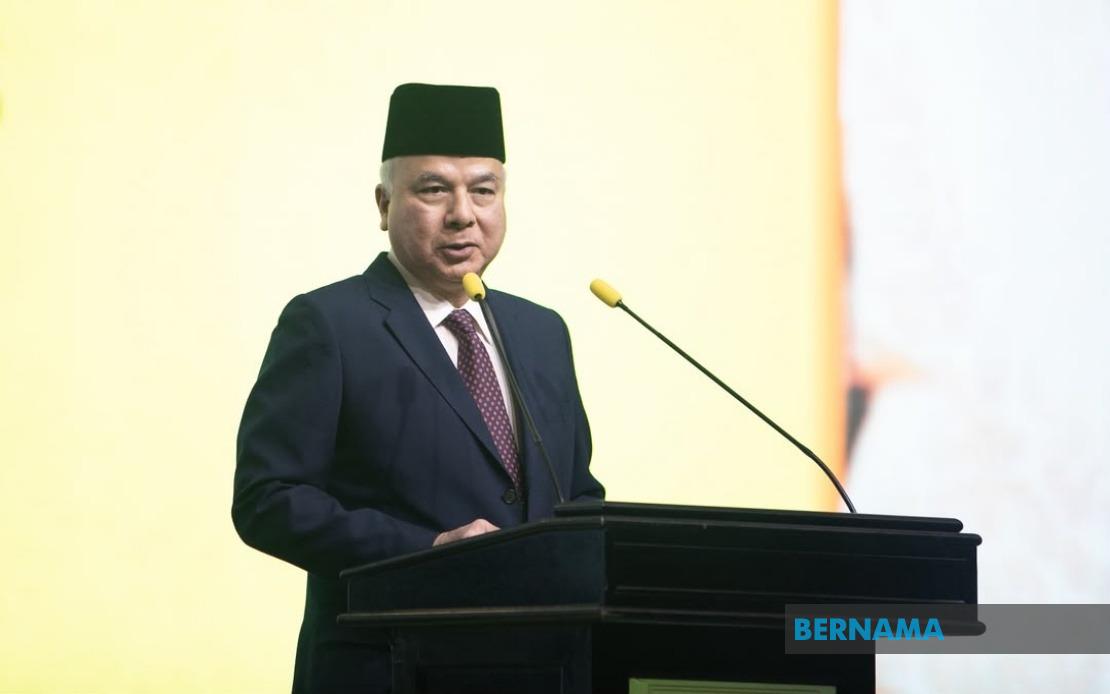
At the 8th World Conference on Islamic Thought and Civilisation in Ipoh, Sultan Nazrin Shah delivered a comprehensive address on the foundations of successful governance, arguing that institutional strength matters far more than superficial indicators of national capacity. The Sultan of Perak warned that even countries blessed with natural wealth, skilled workforces and cultural richness can disappoint their citizens if governance structures fail to function properly or if political interests eclipse public service.
The essence of good governance, according to Sultan Nazrin, rests on the successful orchestration of several interconnected elements that function independent of individual leaders or specific administrations. This resilience is fundamental because it ensures continuity and prevents the concentration of power in any single person or faction. Without such durability, institutional memory fades and hard-won improvements can evaporate when leadership changes occur, leaving citizens vulnerable to arbitrary decision-making.
Transparency in public financial management emerged as a cornerstone of the Sultan's framework. When governments openly account for how revenue is collected and allocated, citizens develop justified confidence that their tax contributions genuinely advance community welfare rather than enriching connected elites. This visibility also deters corruption and misappropriation, as officials know their decisions face public scrutiny. The principle extends beyond simple accounting; it represents a moral contract between state and society.
Equally critical is the impartial administration of justice and the rule of law, ensuring that no individual—regardless of wealth, status or political connections—escapes accountability while simultaneously protecting the vulnerable from capricious persecution. This balance is notoriously difficult to achieve in practice, particularly in developing democracies where family networks and patron-client relationships often trump formal legal procedures. Malaysia's ongoing struggles with judicial independence and institutional autonomy underscore how fragile such protections remain.
Sultan Nazrin characterised true political stability not as the absence of disagreement, but as the channelling of disputes through established institutions rather than through violence or extrajudicial means. Paradoxically, many of the world's most politically stable nations are intensely argumentative, with robust opposition voices and vigorous public debate. The difference lies in whether competing factions respect shared rules for resolving their conflicts and accept electoral outcomes even when disappointed. When citizens lose faith in election integrity, judicial independence or the integrity of public officials, the entire state structure begins degrading, with the poorest and most marginalised suffering first.
The Sultan's observation that budgets function as moral documents carries particular weight for Southeast Asian governments often caught between development spending demands and social welfare commitments. How governments allocate limited resources reveals their genuine priorities more honestly than any political rhetoric. When defence or infrastructure projects favored by connected businesses receive lavish funding while basic services deteriorate in poor districts, citizens rightly perceive that government priorities do not align with stated values of equity or national unity.
A professional civil service operating without regard to ethnicity, religion or partisan affiliation represents the institutional embodiment of state unity, Sultan Nazrin suggested. This ideal remains distant in many Malaysian contexts, where allegations of patronage and communal considerations in bureaucratic appointments persist. Leaders who govern with humility, consult stakeholders before implementing decisions and recognise their authority as delegated rather than personal tend to secure stronger public loyalty than those relying on propaganda or coercion.
On economic development, the Sultan rejected isolationism as counterproductive, noting that modern prosperity flows through channels of international trade, investment, knowledge transfer and technological exchange. No nation thrives by sealing itself off, yet cooperation need not mean subservience or surrendering autonomous decision-making capacity. The challenge involves welcoming foreign capital and expertise while simultaneously building domestic institutional capacity and ensuring nations retain strategic control over their trajectories. This balance requires sophisticated policymaking and avoiding both xenophobic protectionism and naive dependency.
Malaysia's established position as a global Islamic finance hub provided Sultan Nazrin a concrete platform for discussing cooperation within the Organisation of Islamic Cooperation framework. He highlighted that Islamic finance extends far beyond mere compliance with prohibitions on interest-based transactions, offering instead a distinctive philosophical approach emphasising risk-sharing, asset-backing and equitable distribution of economic returns. Properly deployed, this framework could mobilise capital across OIC nations for infrastructure development, small and medium enterprise financing and long-term patient capital addressing challenges including water security and renewable energy transition—precisely the patient, values-aligned investment that many Southeast Asian economies desperately require.

