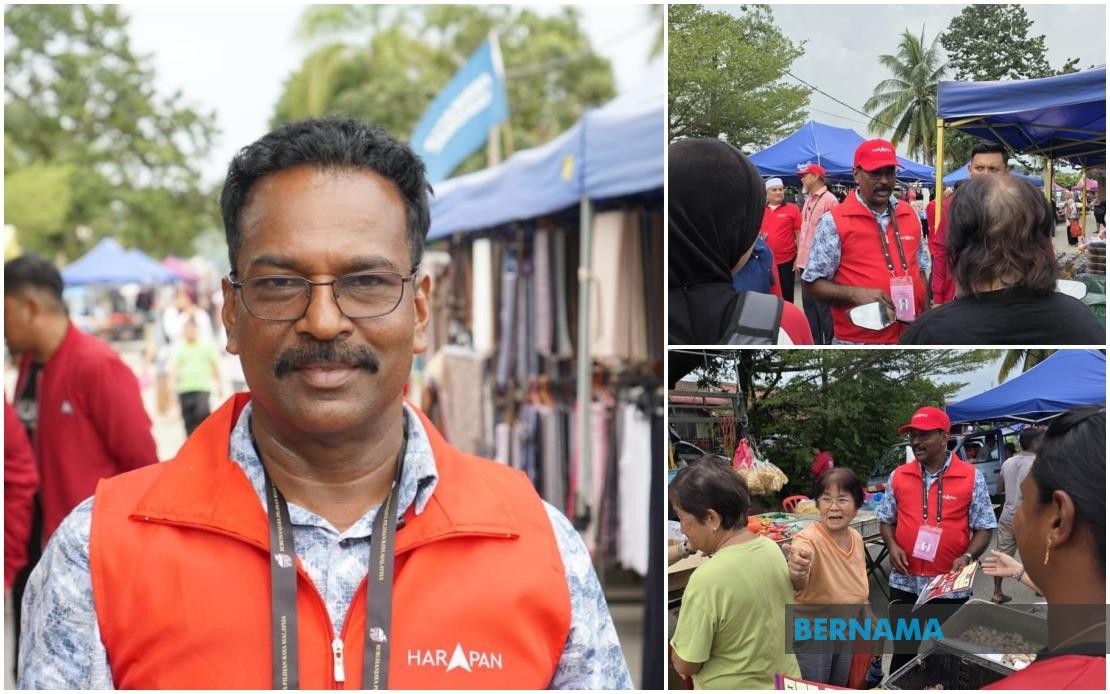
In a high-stakes three-way contest for the Bukit Kepong seat, Pakatan Harapan candidate C. Subramani is gambling on a groundswell of voter discontent to pull off a surprise victory in Saturday's 16th Johor state election. The PKR politician, who represents the Pagoh division, has been energised by what he describes as encouraging responses during his campaign trail, particularly from residents seeking a new direction for their community.
Subramani's pitch centres on bridging the disconnect between state and federal governance that has historically impeded development in the constituency. He argues that closer alignment between administrations in Kuala Lumpur and Johor Bahru would unlock faster resolution of pressing local issues, particularly those requiring intervention from federal agencies. This governance argument could resonate with voters in a state where coordination failures between different levels of government have frequently become flashpoints for public frustration.
The candidate's extensive ground engagement has formed the foundation of his campaign strategy. Rather than relying solely on party machinery, Subramani has undertaken deliberate outreach to marginalised communities, including visits to four Orang Asli settlements in the constituency. These encounters have exposed stark gaps in basic infrastructure and revealed socioeconomic vulnerabilities that previous administrations appear to have overlooked. His willingness to document these conditions publicly suggests a campaign focused on concrete grievances rather than abstract political messaging.
Education represents one policy pillar of his platform, alongside irrigation and drainage improvements that affect agricultural productivity across the constituency. By elevating these technical issues to campaign prominence, Subramani is attempting to shift the conversation away from broader partisan narratives toward functional governance concerns that transcend party lines. Such an approach may appeal particularly to rural voters who have grown weary of political posturing divorced from their immediate material circumstances.
The Bukit Kepong Gallery redevelopment proposal exemplifies Subramani's attempt to marry heritage preservation with economic revitalisation. Converting the gallery into a historical tourism destination could generate local employment while positioning Bukit Kepong within Malaysia's broader cultural tourism circuit. For a rural constituency historically overshadowed by more prominent urban centres, such initiatives address not merely nostalgia but economic opportunity for residents seeking stable livelihoods.
Infrastructure deficiencies mentioned in his campaign—poor street lighting and inadequate bridge infrastructure—highlight the unglamorous governance challenges that determine quality of life in rural Malaysia. These issues are not the stuff of election-night sound bites, yet they accumulate into voter resentment when left unaddressed across election cycles. Subramani's specificity suggests a candidate anchored to local concerns rather than distant party headquarters imperatives.
Affordable housing for the B40 income bracket represents his third major policy commitment. Johor's rapid urbanisation has created housing affordability crises even in smaller towns, pricing out younger residents and workers from remaining in their communities. This pledge directly addresses demographic trends threatening the constituency's long-term stability, indicating a candidate thinking beyond the immediate electoral cycle.
Subramani's prior contest in the 2022 Johor state election, when he stood for Buloh Kasap, provides a baseline for assessing his campaign momentum. That experience granted him organisational familiarity with state-level electoral mechanics while building name recognition within the broader region. His progression to contesting Bukit Kepong suggests either strategic advancement by his party or genuine grassroots demand for his candidacy—a distinction worth examining as results emerge.
The three-cornered contest features Barisan Nasional and Perikatan Nasional alongside PH, fragmenting the anti-incumbency vote. The 2022 result—when PN's Datuk Dr Sahruddin Jamal won with a majority of just 710 votes—indicates an extraordinarily tight race where marginal movements in voter sentiment produce dramatic consequences. Subramani's optimism appears grounded in recognition that a relatively modest swing toward PH could displace the sitting representative, particularly if PN's coalition partners fail to mobilise their 2022 supporters.
With 172 candidates competing across 56 state assembly seats and approximately 2.7 million eligible voters, the Johor election represents a substantial test of political sentiment in Malaysia's southern heartland. Bukit Kepong's outcome will offer insights into whether rural communities prioritise continuity or genuinely embrace change, and whether governance competence messaging can overcome ingrained partisan loyalties. Subramani's campaign represents a calculated wager that voter appetite for functional change now outweighs traditional political attachments.

