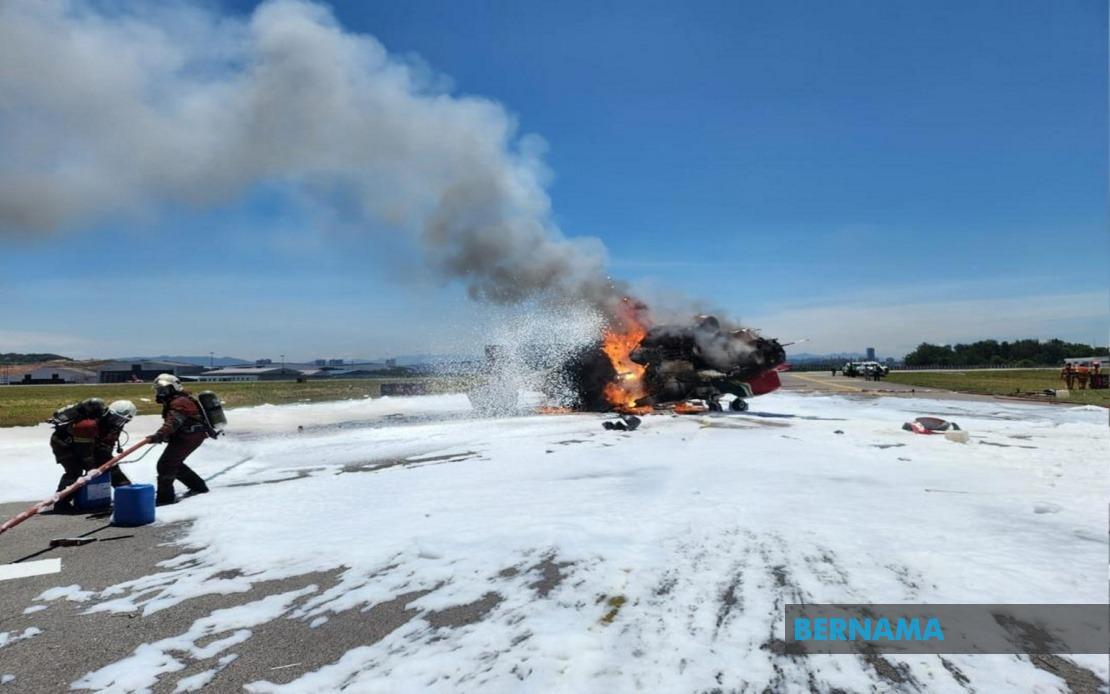
Sultan Abdul Aziz Shah Airport in Subang returned to full operational status on Thursday afternoon following a brief but significant disruption caused by a helicopter fire during routine maintenance activities. The Malaysian Civil Aviation Authority (CAAM) confirmed that the runway reopened for air traffic at 2.57 pm, allowing normal flight schedules to resume after an explosive incident that occurred during the morning hours.
The incident unfolded at 12.28 pm when a Kamov KaV-32S helicopter, registered to a Ukraine-based company, caught fire while undergoing an engine run-up test at Taxiway Victor. Engine run-up tests form a critical component of aircraft maintenance protocols, where engines are tested at ground level to diagnose mechanical issues and verify proper functioning before returning the aircraft to service. The explosion and subsequent fire during this routine procedure prompted immediate airport authorities to suspend all flight operations as a precautionary measure.
According to Capt Datuk Norazman Mahmud, chief executive officer of CAAM, the temporary closure was necessary to ensure passenger safety and allow emergency personnel to manage the situation effectively. The decision to ground flights, while disruptive, reflects standard aviation safety protocols that prioritize protecting people and infrastructure at busy commercial airports. Norazman advised passengers to remain in contact with their respective airlines for the most current information regarding flight status and any schedule adjustments.
The operational impact of the closure, though contained, demonstrated the delicate balance commercial airports must maintain between incident response and schedule continuity. During the period when the runway was unavailable, eight inbound flights destined for Subang were redirected to alternative airports in the region, allowing these aircraft to continue their journeys despite being unable to land at their intended destination. Simultaneously, three departing flights experienced delays as they awaited clearance to use the runway once maintenance and safety inspections were completed.
Sultan Abdul Aziz Shah Airport, located in the Klang Valley region serving the greater Kuala Lumpur metropolitan area, handles a significant volume of both commercial and general aviation traffic daily. The facility's role as a major aviation hub for Malaysia means that even brief operational disruptions can have cascading effects across regional flight networks. The quick resolution of this incident underscores the efficiency of airport management systems and the coordinated response capabilities between CAAM, airport authorities, and airline operators.
The helicopter involved in the incident carried four Ukrainian crew members—a pilot, co-pilot, and two additional crew members—who were conducting the maintenance operations. One of these personnel sustained minor injuries from flying debris generated during the explosion, though the injuries did not require hospitalization. The relatively contained nature of injuries reflects both the safety protocols in place during engine testing and the rapid response of emergency services stationed at the airport.
The Kamov KaV-32S is a transport and rescue helicopter model that has seen service in various countries, primarily for civilian and military applications. The specific helicopter involved appears to have been undergoing periodic maintenance activities, a routine requirement for all aircraft operating commercially. Such maintenance checks are essential for identifying wear and tear, preventing mechanical failures, and ensuring aircraft continue to meet stringent safety standards set by aviation authorities.
The incident raises important questions about maintenance procedures and safety protocols for aircraft operating at busy commercial airports. While engine run-up tests are standard practice across the aviation industry, this incident demonstrates the potential risks involved when conducting such tests, particularly at facilities where other aircraft operations are ongoing. The coordination between maintenance operators and airport traffic control becomes crucial in managing these activities safely.
For Malaysian aviation stakeholders, the incident serves as a reminder of the intricate safety systems underlying modern air transportation. CAAM's swift response in reopening the runway and the coordination displayed by various airport stakeholders illustrate the maturity of Malaysia's aviation infrastructure. The diversionary capacity of other airports in the region also underscores the interconnected nature of Southeast Asian aviation networks, where disruptions at major hubs can be managed through rapid rerouting.
The smooth resumption of operations suggests that no structural damage to airport facilities occurred and that the incident was contained to the immediate vicinity of the helicopter. Flight information displays at the terminal were updated throughout the afternoon to reflect revised schedules, keeping passengers informed of developments. This transparent communication approach helps maintain passenger confidence in airport operations and demonstrates professional crisis management.
Moving forward, this incident may prompt reviews of maintenance procedures for aircraft at Subang, particularly regarding coordination between maintenance crews and air traffic control, and the optimal timing and location for conducting engine tests at busy facilities. Lessons learned from such incidents contribute to the continuous improvement of safety standards across the aviation sector. For Malaysian travelers, the rapid resolution provides assurance that the airport's operational resilience and safety systems function as designed when incidents occur.

