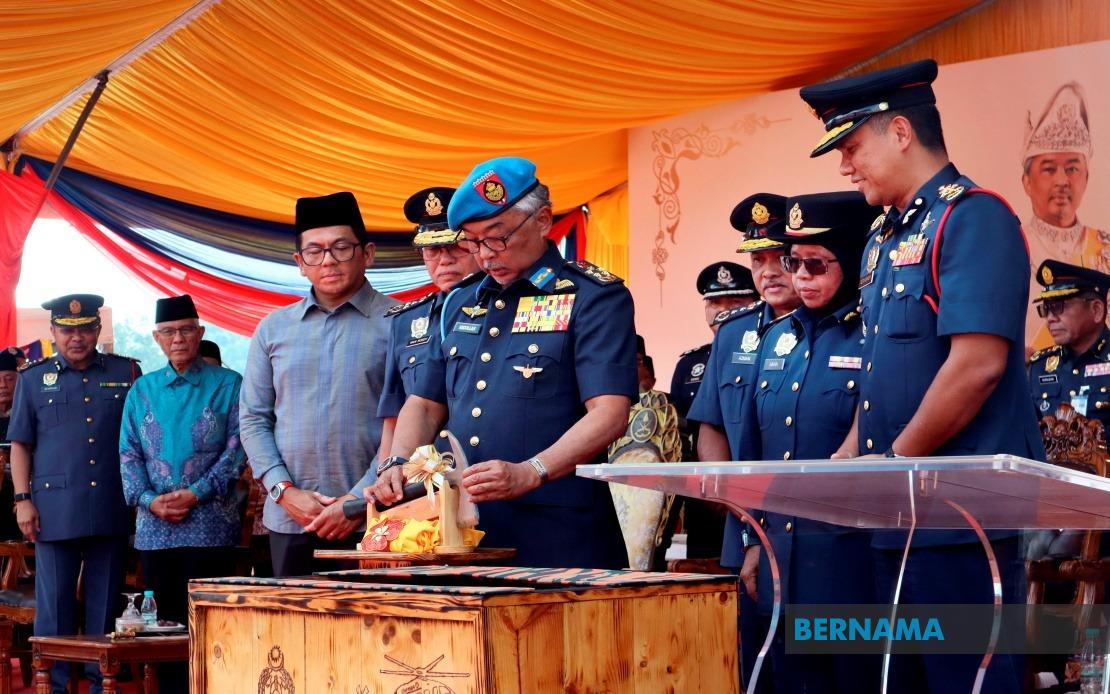
The Sultan of Pahang, Al-Sultan Abdullah Ri'ayatuddin Al-Mustafa Billah Shah, publicly acknowledged the substantial investments made by both federal and state administrations in development initiatives aimed at strengthening public safety and resilience. Speaking during the official launch of the Sungai Lembing Fire and Rescue Station in Kuantan on July 2, His Royal Highness highlighted the critical importance of these allocations in addressing infrastructure deficits that have long challenged the state's flood-prone regions.
Flood management emerged as a central focus of the Sultan's remarks, reflecting the persistent vulnerability of Pahang communities to seasonal inundation. The monarch specifically referenced Sungai Lembing, a locality that repeatedly experiences flooding during monsoon periods and functions as a bellwether for broader flood risks affecting the Kuantan district. The strategic positioning of this settlement, coupled with its early susceptibility to rising waters, has made it a priority area for mitigation efforts. By singling out this community, Al-Sultan Abdullah underscored the targeted approach required to address flooding in geographically diverse and economically varied regions.
The appreciation extended to both tiers of government reflects the collaborative framework necessary for managing infrastructure projects of significant scale and cost. Large-scale flood mitigation systems, including levees, drainage improvements, and retention facilities, require sustained financial commitment and coordinated planning that only multistakeholder governance structures can deliver. For Malaysian readers, this acknowledgment highlights the ongoing tension between centralised budgeting mechanisms and localised development needs, a challenge particularly acute in states like Pahang where geographic complexity and demographic dispersion complicate infrastructure planning.
Beyond expressing gratitude, the Sultan issued a directive that warrants immediate attention from state authorities: the deepening of river channels in proximity to populated areas. This intervention reflects an understanding that infrastructure investment must address not only reactive emergency response but also proactive hazard reduction. Deeper waterways would theoretically reduce overflow risks during heavy precipitation events, potentially mitigating losses and displacement. The issuance of such a directive by the state's constitutional ruler carries significant symbolic and practical weight, as it galvanises bureaucratic machinery toward implementation.
The Fire and Rescue personnel themselves received substantial commendation from the Sultan, who acknowledged their multifaceted role in disaster response ranging from structural fires to vehicular accidents and broader calamities. His Royal Highness noted the frequency with which reports of their operational activities crossed his desk, indicating both the volume of emergencies requiring response and the constancy of professional engagement. This recognition serves a dual purpose: validating the critical nature of these roles within the public sector and reinforcing societal appreciation for hazard workers whose labour often occurs outside public consciousness.
The Sultan's personal commitment to visiting disaster sites and engaging with affected communities demonstrates a hands-on approach to constitutional monarchy that distinguishes his tenure. By making field visits to fire scenes and calamity locations, he grounds the monarchy in lived experience rather than ceremonial distance. For Malaysian governance contexts, where traditional institutions retain symbolic authority, such engagement reinforces public confidence in leadership structures and establishes accountability channels that transcend bureaucratic hierarchies.
A noteworthy initiative flagged during the address concerned the establishment of a volunteer fire brigade in Kampung Bantal, Ulu Tembeling within Jerantut. The remote geography of this settlement, combined with sparse emergency service infrastructure, creates response time delays that could prove catastrophic during acute incidents. The Sultan's proposal to formalise volunteer structures reflects pragmatic recognition that professional service provision alone cannot achieve universal coverage in territories characterised by dispersed populations and challenging terrain. For Southeast Asian countries navigating comparable geographic challenges, volunteer integration into formal emergency hierarchies offers a cost-effective pathway to expanded service provision.
The gathering itself brought together multiple tiers of governance, including Pahang Menteri Besar Datuk Seri Wan Rosdy Wan Ismail, Deputy Housing and Local Government Minister Datuk Aiman Athirah Sabu, and Deputy Economy Minister Datuk Mohd Shahar Abdullah who simultaneously serves as Paya Besar Member of Parliament. The convergence of these officials underscores the institutional significance attributed to emergency services and infrastructure development within contemporary Malaysian governance structures. The presence of federal deputies alongside state leadership suggests coordinated policy alignment on disaster management and public safety investment.
Contextualising these developments within broader regional patterns reveals Pahang's evolving approach to climate-related vulnerability. As Southeast Asia confronts intensifying weather patterns and increased precipitation variability, states across the region are recalibrating their infrastructure strategies. Pahang's emphasis on flood mitigation places it within a cohort of progressive administrations prioritising anticipatory rather than purely reactive disaster management. However, the effectiveness of such initiatives depends substantially on sustained implementation beyond ceremonial announcements.
The economic dimensions of these investments merit consideration for Malaysian stakeholders and observers. Infrastructure projects supporting public safety generate multiplier effects throughout local economies, creating employment during construction phases and reducing future disaster-related economic losses. In rural districts like those within Ulu Tembeling, such initiatives also signal government commitment to equitable development distribution, potentially strengthening social cohesion and institutional legitimacy. The volunteer fire brigade proposal particularly resonates with contemporary governance trends emphasising community participation in public administration.
Moving forward, the articulation of these commitments by the Sultan provides both opportunity and accountability framework. His public acknowledgment of government expenditure establishes expectation for continued investment and effective implementation. For Malaysian citizens residing in Pahang's vulnerable zones, these statements represent tangible policy signals warranting monitoring as fiscal cycles progress and actual resource allocation becomes visible through project completion rates.

