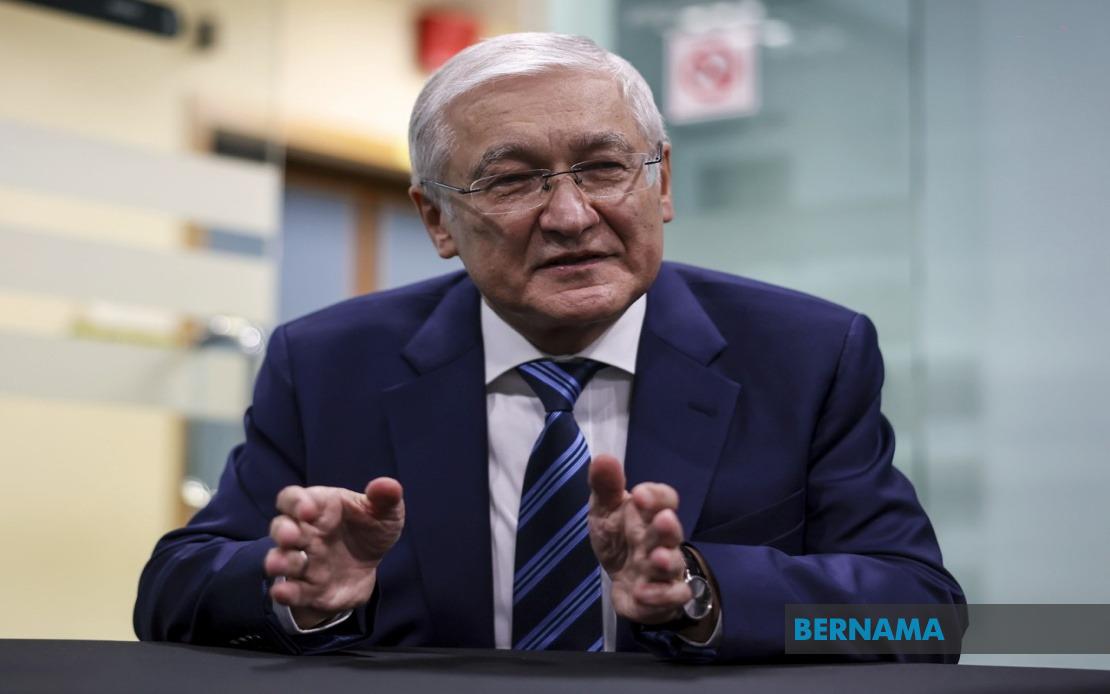
The strategic partnership between Malaysia and Russia has entered uncharted territory, driven primarily by the personal diplomatic engagement of Malaysia's King Sultan Ibrahim, according to Russian Ambassador Naiyl Latypov. Speaking to Bernama in a recent interview, the envoy attributed the warming of bilateral ties to His Majesty's direct involvement and unique approach to statecraft, which he characterised as fundamentally different from conventional diplomatic mechanics. This shift represents a deliberate pivot from the historical pattern of formal, protocol-driven interactions between the two nations toward a relationship animated by genuine warmth and personal commitment at the highest level.
The ambassador's remarks come as the two countries prepare to commemorate their 60th anniversary of diplomatic relations in 2027, a milestone that carries increasing strategic significance for both nations. Latypov emphasised that Sultan Ibrahim's royal diplomacy has opened doors and created possibilities that traditional channels alone could not achieve. The King's willingness to engage directly with Russian leadership has fundamentally altered the trajectory of Malaysia-Russia relations, creating momentum that appears set to accelerate in the coming years. This personal dimension of statecraft, rarely witnessed in contemporary international relations, has surprised Russian officials accustomed to more transactional diplomatic engagements.
Making history in August of last year, Sultan Ibrahim became the first Malaysian monarch to undertake a state visit to Russia since the two countries established formal ties in 1967. This groundbreaking journey signalled Malaysia's commitment to strengthening its bond with Moscow and demonstrated the King's willingness to personally champion deepened engagement. The ambassador noted that the significance of this visit extended beyond ceremonial protocols; it represented a fundamental shift in how Malaysia positioned itself within the broader regional and global context. The visit set the tone for what would become an unprecedented period of high-level royal engagement between the two nations.
Following this historic inaugural visit, Sultan Ibrahim returned to Russia in January this year for a special visit, during which he accompanied President Vladimir Putin through the renowned Hermitage Museum in St Petersburg. This intimate engagement underscored the growing personal rapport between Malaysian and Russian leadership, moving beyond the formal state dinner circuits into genuine cultural and intellectual exchange. The King's demonstrated interest in Russian cultural heritage reflected a deeper appreciation for the Russian people and civilisation, sending symbolic messages about Malaysia's genuine desire to understand and engage with its distant neighbour. Such cultural dimensions of diplomacy often prove more enduring than purely economic or political transactions.
The momentum built through these visits culminated in Sultan Ibrahim's attendance at Russia's Victory Day celebrations in May this year, a particularly significant gesture given the profound importance this occasion holds within Russian national consciousness. Victory Day commemorates the sacrifices made during the Great Patriotic War, a foundational moment in Russian historical memory. By honouring this occasion and paying tribute to those who died in defence of Russian freedom, the King demonstrated respect for Russian values and history, gestures that resonated powerfully within the Russian establishment. During this visit, Sultan Ibrahim held substantive discussions with President Putin, resulting in bilateral agreements designed to strengthen cooperation across multiple sectors. The agreements reached during these talks are anticipated to inject fresh momentum into the development of broader Russia-Malaysia relations.
In a particularly noteworthy development, Sultan Ibrahim reportedly extended an invitation to President Putin to undertake a state visit to Malaysia in 2027, coinciding precisely with the 60th anniversary of the countries' diplomatic relationship. This invitation, if accepted, would represent an extraordinary achievement in Malaysian statecraft, bringing one of the world's most significant geopolitical figures to Malaysia at a moment of heightened bilateral significance. Such a visit would inevitably elevate Malaysia's international profile and demonstrate the country's capacity to maintain meaningful relationships with major powers outside traditional Western alignments. The proposed timing suggests deliberate strategic calculation, linking Putin's visit to a symbolic milestone that would reinforce the narrative of renewed partnership.
Tangible measures supporting this diplomatic warming have begun materialising across multiple fronts. In June, Russia signalled its intention to abolish visa requirements for Malaysian citizens, a practical step that would facilitate people-to-people exchange and strengthen cultural ties. Simultaneously, Russia agreed to guarantee long-term supplies of petroleum, oil and gas to Malaysia, addressing one of the nation's most critical infrastructure concerns. Prime Minister Datuk Seri Anwar Ibrahim's participation in the ASEAN-Russia Commemorative Summit in Kazan in June further underscored Malaysia's commitment to deepening ties with Moscow. During his meeting with President Putin, the Russian leader highlighted bilateral trade growth of 12.9 per cent in the previous year, characterising the development as highly encouraging and signalling Russian satisfaction with the commercial trajectory of the relationship.
The economic dimensions of this renewed engagement merit careful analysis. In 2025, Russia ranked as Malaysia's ninth-largest European trading partner, with bilateral trade valued at RM8.72 billion. Malaysia exports primarily electrical and electronic products, machinery, equipment and parts alongside processed food items, while importing petroleum products, minerals, and chemical-based materials from Russia. These trade patterns suggest complementary economic structures, with Russia supplying raw materials and energy resources precisely aligned with Malaysia's industrial and consumption requirements. The long-term supply guarantees for petroleum and energy products represent significant achievements for Malaysian energy security planners, reducing dependence on traditional suppliers and diversifying the nation's energy portfolio across geographically dispersed sources.
Prof Dr Azmi Hassan, a geostrategist and senior fellow at the Nusantara Academy for Strategic Research, contextualises Sultan Ibrahim's diplomatic initiatives within broader strategic frameworks. According to Hassan, royal diplomacy carries inherent prestige that transcends conventional diplomatic channels, opening what he terms crucial "windows of opportunity" otherwise inaccessible through standard government-to-government interactions. The King's personal involvement has expanded cooperation significantly beyond the diplomatic sphere into tangible areas including energy security, Hassan observed, pointing specifically to Malaysia's achievement in securing long-term fuel supply assurances from Russia. Hassan emphasises that royal diplomacy plays a distinctly critical role in strengthening substantive negotiations between Malaysia's Prime Minister and Russia's President, functioning as a trust-building mechanism that facilitates deeper engagement.
Looking toward President Putin's anticipated 2027 visit, Hassan advocates for Malaysia to approach negotiations strategically, prioritising access to advanced Russian science and technology beyond traditional trade considerations. Russia's technological capabilities and scientific advancements rival those of Western nations, Hassan contends, yet come available at substantially more competitive pricing structures. This cost advantage represents a crucial opportunity for Malaysia to upgrade its technological infrastructure and scientific capacity whilst maintaining budget discipline. Hassan argues that acquiring advanced science and technology should constitute a primary agenda item during Putin's state visit, transforming the 60th anniversary commemoration into a concrete opportunity for Malaysia to achieve meaningful technological advancement.
The historical context grounding this modern diplomatic renewal extends back to April 3, 1967, when the two nations formally established diplomatic relations and signed their initial trade agreement. Russia subsequently opened a Trade Office in Kuala Lumpur in November 1967 and its embassy in April 1968, whilst Malaysia established its embassy in Moscow in November 1968. These institutional foundations, laid more than half a century ago, provided the structural basis upon which Sultan Ibrahim's contemporary diplomatic initiative builds. The six-decade journey from formal establishment to the current period of heightened engagement reflects both the persistence of institutional relationships and the transformative potential of personal political commitment at the highest levels.
For Malaysian policymakers and strategic planners, the implications of this diplomatic realignment deserve careful consideration. The deliberate cultivation of meaningful ties with Russia, regardless of Western perspectives, reflects Malaysia's commitment to authentic non-alignment and strategic autonomy. By leveraging the King's unique diplomatic standing and prestige, Malaysia has managed to access both energy security guarantees and expanding trade opportunities whilst simultaneously positioning itself as a serious interlocutor within Russian strategic calculations. The approaching 60th anniversary and Putin's mooted 2027 visit represent not merely ceremonial milestones but pivotal opportunities to translate diplomatic warmth into concrete partnerships spanning energy, technology, and long-term strategic cooperation, potentially reshaping Malaysia's geopolitical positioning throughout the coming decade.

