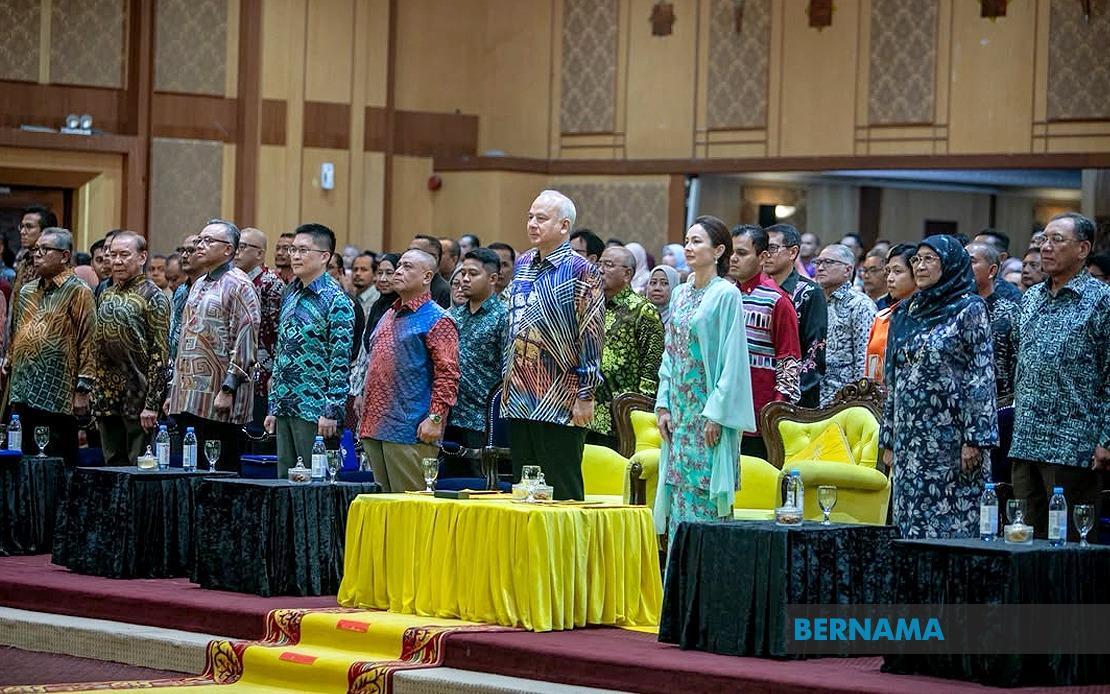
The Sultan of Perak, Sultan Nazrin Shah, officially opened Perak's Merdeka Month programme for 2026 at Bangunan Perak Darul Ridzuan in Ipoh, marking a significant occasion to reinforce national pride and loyalty among the state's younger generation. The event brought together prominent state figures including Raja Permaisuri Tuanku Zara Salim, Menteri Besar Datuk Seri Saarani Mohamad, and Deputy Education Minister Wong Kah Woh, underscoring the government's commitment to nurturing patriotism through structured educational initiatives during the Independence anniversary month.
This year's edition of the programme demonstrated exceptional momentum in student engagement. According to Perak Education Department director Zulkafli Mohamed Mokhtar, the initiative attracted 214,095 entries from across the state's primary and secondary schools, encompassing 83.6 per cent of the total student population. The scale of this participation reflects growing interest in competitive platforms designed to channel youthful energy towards constructive pursuits and creative expression. The sheer numbers involved suggest that schools throughout Perak have increasingly integrated these annual celebrations into their academic calendars as integral components of the broader educational experience.
The expansion in participation carries particular significance when viewed against historical trends. Organizers recorded a 15 per cent increase in entries compared to the previous year, indicating that the programme has successfully transcended its role as a routine calendar event to become a genuinely anticipated platform among students. This upward trajectory suggests improved marketing and school-level promotion of the various competitions, as well as growing awareness among families about the opportunities available. For Malaysian educators and policymakers, such metrics provide tangible evidence that well-structured, culturally resonant initiatives can capture student interest without relying on mandatory participation policies.
Beyond raw participation figures, the programme's strategic value lies in its comprehensive approach to student development. The competition framework encompasses multiple disciplines including Malay and English public speaking, choral speaking and recitation, choir performance, essay writing, poetry composition, and visual arts categories spanning caricature and poster design. This breadth ensures that students with diverse talents and interests can locate avenues through which to contribute and potentially excel. Rather than concentrating on academic subjects alone, the programme acknowledges that patriotism and national consciousness can be cultivated through artistic expression, linguistic proficiency, and creative thinking across multiple media.
The educational philosophy underpinning these initiatives aligns closely with Malaysia's broader reform agenda as articulated in the Malaysia Education Plan 2026-2035. Zulkafli emphasized that the programme contributes to developing a generation that demonstrates academic excellence alongside moral integrity, critical thinking capacity, historical awareness, and heritage appreciation. These objectives reflect contemporary understanding that national development requires citizens who combine technical competence with ethical grounding and cultural literacy. For Southeast Asian nations grappling with rapid modernization, such integrated approaches to character and capability development are increasingly recognized as essential components of sustainable human capital formation.
The recognition mechanisms embedded within the programme further reinforce its developmental objectives. At the Ipoh event, Sultan Nazrin presented the Best Achievement award to Kinta Utara District Education Office, accompanied by a RM20,000 cash prize that acknowledges superior organizational performance and student mobilization efforts. Individual prize ceremonies for competition winners in categories ranging from public speaking to artistic disciplines created multiple moments of public recognition, validating diverse forms of achievement and ensuring that excellence in non-academic domains receives formal acknowledgment comparable to traditional academic accolades.
The participation of royal patrons in these ceremonies carries symbolic weight that extends beyond ceremonial courtesy. The presence of both Sultan Nazrin and Tuanku Zara Salim, coupled with their direct involvement in presenting awards, communicated explicit messaging about the importance state leadership attaches to youth development and cultural transmission. For Malaysian students, particularly in Perak, such visible royal engagement provides powerful reinforcement that the values being promoted through these programmes enjoy institutional endorsement at the highest levels of state governance. This integration of monarchy with educational programming reflects Malaysia's constitutional framework while leveraging traditional respect hierarchies to strengthen programme legitimacy and student motivation.
For competitive participants themselves, the prizes and recognition offered through such programmes serve functions beyond simple material reward. In the case of secondary-level public speaking champions Ifwat Arrafi Mohd Amin and E Johnnes Abysia, public acknowledgment by the state ruler creates memorable touchstones that validate their efforts and potentially influence educational or career trajectories. Within the Malaysian context, where formal recognition from authority figures carries substantial cultural currency, such moments contribute to shaping students' self-perception and confidence in their capabilities. These individual success narratives, aggregated across hundreds of participants, collectively reinforce the broader message that achievement and excellence are valued and recognized by society.
The exhibition component of the programme, where participants' artwork was displayed for royal viewing and public appreciation, extended the impact of the initiative beyond competition mechanics alone. By creating opportunities for audiences to encounter diverse student creative work, the programme functioned as a public platform for showcasing youthful talent and fostering community awareness of the caliber of student achievement within Perak. Such exhibitions also serve pedagogical functions for participating students, who gain experience in formally presenting their work to large audiences and distinguished evaluators, thereby developing presentation skills and confidence applicable to future endeavors.
From a regional perspective, Perak's approach to Merdeka Month celebrations offers insights relevant to broader Southeast Asian conversations about maintaining national identity and social cohesion amid globalization pressures. Malaysia's federal structure means that state-level initiatives like Perak's programme can be tailored to local cultural contexts and priorities while remaining aligned with national education frameworks. This flexibility allows programmes to retain relevance and authenticity while contributing to overarching national objectives. For other Southeast Asian nations managing diverse populations and competing regional identities, such decentralized yet coordinated approaches to patriotic education merit consideration as potential models.
The sustainability of such programmes depends upon continuous innovation in maintaining student interest over time. The 15 per cent year-on-year growth in Perak's programme suggests that organizers have successfully adapted competition categories and evaluation criteria to remain attractive to successive cohorts of students. As younger Malaysians increasingly navigate digital environments and global cultural influences, educational initiatives designed to foster national consciousness must compete effectively for attention and participation. The Perak programme's documented success in achieving substantial engagement indicates that culturally grounded, creatively oriented approaches can succeed in capturing youth participation without requiring coercive mechanisms.
Looking ahead, the comprehensive data generated through these large-scale participation programmes provides valuable intelligence for educational policymakers and curriculum developers. The identification of high-performing districts and individual schools offers opportunities for replicating successful practices across underperforming areas. Similarly, the range and sophistication of student creative work emerging from these competitions provides empirical evidence of student capabilities and interests that should inform decisions about resource allocation and programme development. In the Malaysian context, where education remains a central element of national development strategy, such detailed participatory data represents an underutilized resource for evidence-based policy refinement.

