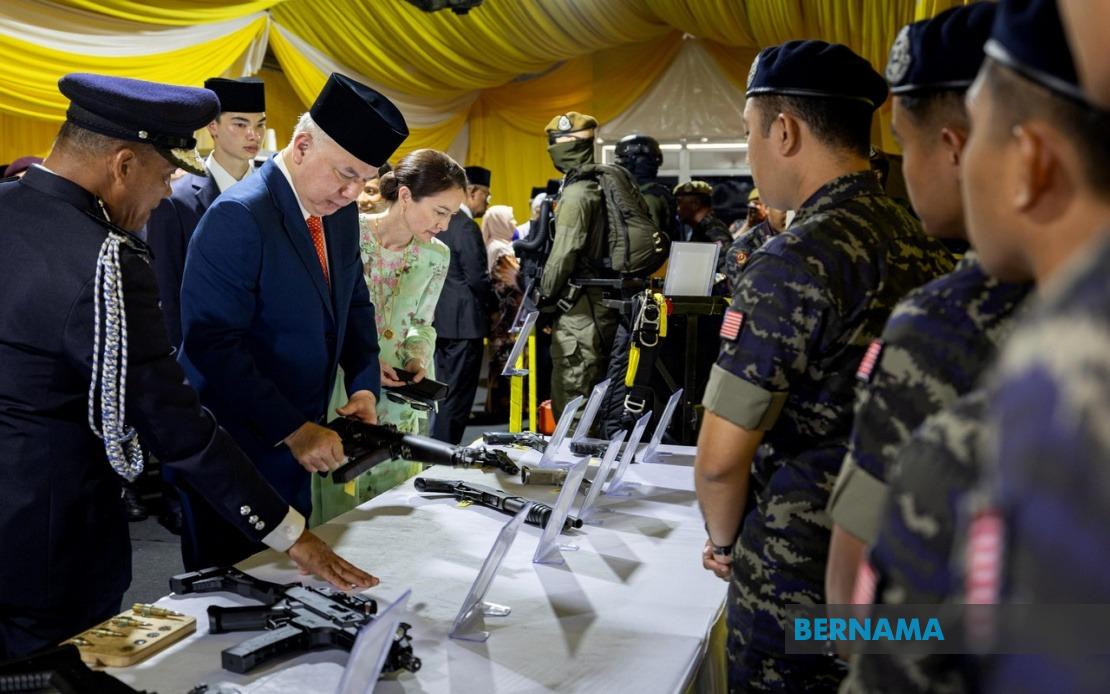
Sultan Nazrin Shah, the reigning Sultan of Perak, has officially inaugurated the Sultan Nazrin Shah 69 Commando Camp in Ulu Kinta, marking a significant milestone in Malaysia's security infrastructure development. The ceremony, held in July, was attended by members of the royal household including Tuanku Zara Salim, Raja Jaafar Raja Muda Musa, and Raja Iskandar Dzurkarnain Sultan Idris Shah, underscoring the state-level importance of the facility. Senior government officials including Home Minister Datuk Seri Saifuddin Nasution Ismail, Perak Menteri Besar Datuk Seri Saarani Mohamad, and Inspector-General of Police Tan Sri Mohd Khalid Ismail were also present to witness the opening.
The establishment of this dedicated facility represents a substantial government investment in strengthening the operational capacity of one of Malaysia's most specialised security units. The camp was constructed at a cost exceeding RM206 million across a sprawling 338-hectare site in Ulu Kinta, creating what officials describe as a comprehensive complex designed specifically to meet the rigorous operational demands of the 69 Commando unit. The facility was meticulously planned and subsequently handed over to the Royal Malaysia Police in 2024, positioning it as the primary operational base for this elite formation.
The 69 Commando unit, established in 1969, has accumulated more than five decades of operational experience across some of Malaysia's most challenging security situations. During his remarks at the opening ceremony, Home Minister Saifuddin Nasution emphasised that the new camp exemplifies the government's commitment to equipping national security forces with modern infrastructure and training capabilities. He highlighted that the facility reflects broader efforts to ensure Malaysia's security apparatus can effectively respond to the increasingly sophisticated and multifaceted threats facing the nation in contemporary times.
Malaysia's standing on the global security stage provides important context for this investment. The nation currently ranks 12th among 163 countries in the Global Peace Index, a ranking that Home Minister Saifuddin Nasution identified as a source of considerable national pride. This achievement, however, is not accidental but rather the result of sustained effort by security forces such as the 69 Commando. The new camp is positioned as essential infrastructure to maintain and enhance this competitive advantage in regional stability.
The historical operational record of the 69 Commando demonstrates why such investment is warranted. The unit has been engaged in numerous critical missions spanning decades of Malaysia's security history. These include extensive operations against communist insurgency movements, the response to the Al-Maunah incident in 2000, operations in Lahad Datu, Sabah, in 2013 that became known as Ops Daulat, and Malaysia's specialised deployment relating to the MH17 tragedy in 2014. Beyond these headline operations, the unit has maintained ongoing involvement in counter-terrorism activities, hostage rescue scenarios, and responses to high-risk security threats.
The scope of the 69 Commando's responsibilities places particular emphasis on their counter-terrorism capabilities. Malaysia's geographical position in Southeast Asia, with extensive maritime boundaries and diverse population centres, creates unique security challenges that demand highly trained and well-equipped personnel. The new camp is designed to facilitate the advanced training and operational readiness necessary to address these evolving threats. Saifuddin Nasution specifically acknowledged that whenever Malaysia has faced existential threats to national sovereignty and security, the 69 Commando has consistently positioned itself at the forefront of the response.
The naming of the facility after Sultan Nazrin Shah carries both symbolic and practical significance. By dedicating the camp to the reigning Sultan of Perak, the government acknowledges the traditional role of state rulers in security matters while also honouring the Perak connection to this crucial national asset. The facility serves as a tangible expression of government appreciation for the sacrifices made by multiple generations of 69 Commando officers and enlisted personnel who have served the nation since the unit's founding.
For Malaysian security professionals and defence analysts, the new camp represents a modernisation opportunity for one of the region's most respected special operations units. The comprehensive facilities are intended to serve multiple functions simultaneously: advanced operational planning, rigorous personnel training, administrative coordination, and strategic decision-making. This integrated approach differs from previous arrangements and is designed to enhance organisational cohesion and operational effectiveness across all dimensions of the unit's work.
The investment also carries implications for Malaysia's regional security posture. Southeast Asia continues to face diverse transnational security challenges including terrorism, maritime piracy, and organised crime networks that transcend national borders. A well-equipped and professionally trained 69 Commando unit contributes not only to domestic security but also to Malaysia's ability to participate in regional security cooperation initiatives. The facility therefore serves broader regional stability objectives beyond immediate national defence concerns.
Looking forward, Home Minister Saifuddin Nasution identified the camp as instrumental in nurturing successive generations of 69 Commando personnel who will maintain the unit's operational legacy. The facility is conceived as a centre for developing expertise, cultivating fighting spirit among personnel, and facilitating strategic partnerships with allied nations and international security organisations. This developmental focus acknowledges that security capabilities require continuous renewal and adaptation to remain effective.
The broader narrative surrounding this facility opening reflects the MADANI Government's stated commitment to strengthening national security infrastructure across multiple dimensions. The substantial RM206 million investment demonstrates concrete resource allocation rather than rhetorical support for security force modernisation. Within Perak specifically, the facility positions the state as hosting a critical national security asset, with potential downstream benefits for local economic development and employment opportunities.
For observers of Malaysian defence and security policy, the Sultan Nazrin Shah 69 Commando Camp exemplifies how state-level cooperation with federal authorities can advance national security objectives. The participation of Perak's royal household and state government alongside federal ministers indicates alignment across multiple layers of governance. This institutional coherence is essential for effective implementation of security operations and strategic planning that extends beyond individual electoral cycles or political fluctuations.
The opening of this facility ultimately represents a recognition that Malaysia's security environment demands continuous investment in human capital, physical infrastructure, and operational sophistication. The 69 Commando's proven track record across multiple decades and challenging circumstances justified the substantial financial commitment. As the unit enters its sixth decade of operation from this new, purpose-built facility, Malaysian security officials will monitor whether the enhanced infrastructure translates into improved operational outcomes and sustained regional security stability.

