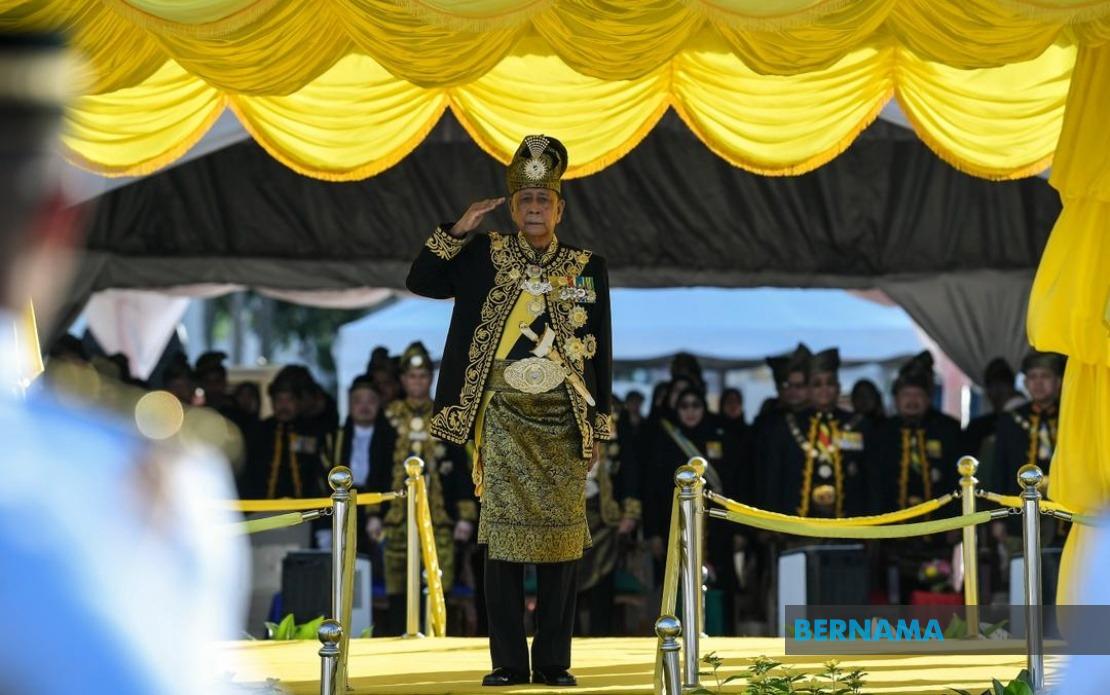
The Sultan of Kedah, Al Aminul Karim Sultan Sallehuddin Sultan Badlishah, was accorded the ceremonial recognition befitting his status when state officials and military units gathered at Dataran Medan Bandar in Alor Setar to mark his 84th birthday. The formal parade, held on July 5, brought together senior state dignitaries and members of Malaysia's armed forces to pay tribute to the reigning monarch of Kedah, one of the northern peninsula's most historically significant states.
Joining the Sultan for the occasion was his heir, the Raja Muda of Kedah, Tengku Sarafudin Badlishah Sultan Sallehuddin, underscoring the importance placed on the succession within the state's royal household. The presence of both the reigning Sultan and his designated successor demonstrated the continuity of Kedah's leadership and the state's commitment to honouring its royal family. Their joint appearance at the ceremony reflected the formal protocols surrounding major celebrations within Malaysia's constitutional monarchy framework.
The state government was represented at the highest levels, with Kedah Menteri Besar Datuk Seri Muhammad Sanusi Md Nor attending alongside State Secretary Datuk Seri Norizan Khazali and members of the State Executive Council. This broad representation of the state's administrative apparatus underscored the official nature of the celebration and the significance accorded to the Sultan's milestone birthday within Kedah's governance structure. The attendance of senior bureaucrats alongside elected representatives highlighted how such ceremonies serve to reinforce bonds between the monarchy and the state administration.
The military contingent forming the core of the parade consisted of 103 members and three officers drawn from the 6th Battalion of the Royal Malay Regiment (RAMD), who executed the formal guard of honour under the command of Major Muhammad Nasrullah Abdullah. The meticulous nature of such military parades reflects Malaysia's longstanding traditions of ceremonial discipline, with specific personnel assigned to key roles: Lieutenant Mohamad Aiman Hanif Samsudin carried the colours while Warrant Officer 1 Mohd Fairuz Ramli bore the regiment standard, positions of considerable honour within military protocol.
Accompanying the marching contingent was the RAMD Central Band, directed by Captain Muhamad Fauzee Japar with support from Sergeant Mohd Shahrilaizad Bakhtiar, adding musical grandeur to the proceedings. The inclusion of a ceremonial band is a hallmark of official state functions in Malaysia, transforming what might otherwise be a simple military assembly into a pageant befitting a royal personage. The coordination required between the marching troops and the musical ensemble demonstrates the careful planning that characterises such state-level ceremonies.
The celebration incorporated a striking aerial component when two EC120B aircraft from the Flying Training Institute (INSPEN) 2 and three PC-7 MK II aircraft from INSPEN 1 executed a ceremonial flypast overhead. This modern element of military display adds visual spectacle to traditional ground-based ceremonial formations and serves to demonstrate Malaysia's military aviation capabilities. The coordination between ground forces and air units required for such displays underscores the level of precision and planning involved in staging state ceremonies of this magnitude.
The ceremony culminated with a 21-gun salute fired by the 41st Battery of the Royal Artillery Regiment (Ceremonial), positioned at their base in Sungai Buloh Camp, Selangor, and under the direction of Major Hafizan Md Ghani. The 21-gun salute represents one of the most formal elements of royal protocol in Commonwealth nations and former Commonwealth territories, carried forward in Malaysia's ceremonial traditions. This gunfire salute provided an audible component to the visual spectacle and underscored the constitutional importance of the Sultan as a ceremonial head of state.
Birthday celebrations for Malaysia's sultans and royal family members carry particular significance within the country's federal system, as these monarchs serve crucial roles both as cultural symbols and as constitutional figures with defined legal powers. In Kedah specifically, the Sultan holds historical importance as the state has maintained its royal lineage through various eras of Malaysian history. Public recognition of royal birthdays through formal state ceremonies reinforces the legitimacy of the institution of monarchy and its place within Malaysia's political structure.
The staging of such ceremonies in major state venues ensures public awareness and acknowledgement of the royal occasion, strengthening the connection between the monarchy and the broader population. For Kedah, a state that has experienced considerable political transitions in recent years, the hosting of such formal military pageantry demonstrates institutional stability and continuity. The participation of serving military and civilian officials in honouring the Sultan reinforces the hierarchical nature of Malaysian statecraft and the ceremonial protocols that govern interactions between different branches of government.
For Malaysian readers, particularly those from northern states, such ceremonies provide a window into how tradition and formal state protocol continue to function in the modern era. The birthday parade format, though steeped in historical tradition, remains an active part of how Malaysia's constitutional monarchy is publicly expressed and celebrated across the federation's constituent states.

