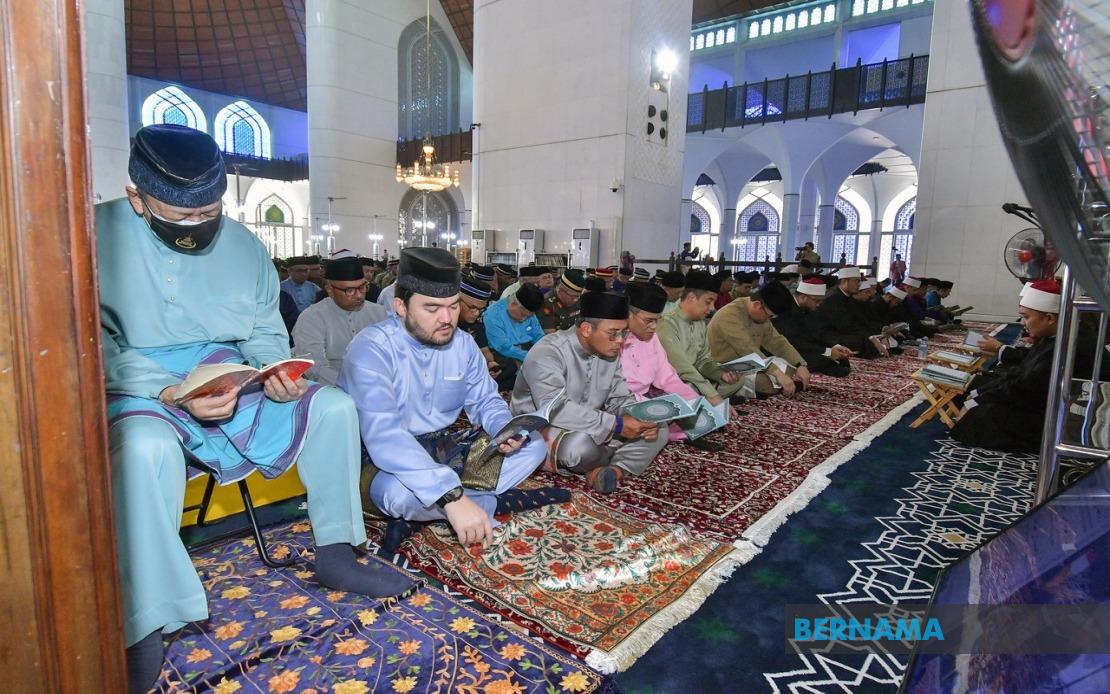
The Sultan of Selangor, Sultan Sharafuddin Idris Shah, led a significant religious observance on Wednesday at one of the state's most prominent mosques, joining hundreds of worshippers in Surah Yassin recitation and Friday prayers ahead of Malaysia's National Day celebrations. The ceremony at Masjid Sultan Salahuddin Abdul Aziz Shah in Shah Alam served as a spiritual prelude to the state-level festivities scheduled for the weekend, underscoring the integration of religious and patriotic observances that characterise Malaysia's approach to national celebrations.
The Raja Muda of Selangor, Tengku Amir Shah Sultan Sharafuddin Idris Shah, accompanied the Sultan throughout the proceedings, signifying the royal family's collective commitment to leading the state's commemoration efforts. Upon arrival at the mosque, Sultan Sharafuddin was welcomed by Selangor Menteri Besar Datuk Seri Amirudin Shari and State Islamic Affairs and Innovation Culture Committee chairman Dr Mohammad Fahmi Ngah, reflecting the collaborative nature of the event bridging religious and governmental leadership.
The gathering attracted approximately 1,000 participants, a substantial turnout that encompassed security force personnel stationed throughout Selangor, demonstrating broad-based support for the observance. The participation of uniformed services carried particular symbolic weight, positioning the military and police as integral to the state's spiritual and national identity. This inclusion underscores the Malaysian convention of incorporating all segments of society, including security agencies, into public expressions of national solidarity.
Among the dignitaries present were Selangor Islamic Religious Department (JAIS) director Datuk Mohd Shahzihan Ahmad and Selangor Islamic Religious Council (MAIS) chairman Datuk Salehuddin Saidin. Their attendance reflected the institutional support of the state's Islamic administrative apparatus for the event, lending formal religious legitimacy to the proceedings and demonstrating coordinated engagement from multiple tiers of Islamic governance in Selangor.
Following the Surah Yassin recitation, Sultan Sharafuddin led congregational Friday prayers, with the mosque's Grand Imam Muhammad Farhan Wijaya delivering the sermon and conducting the prayer leadership. The sermon's title, "Merdeka Daripada Belenggu Kerakusan" (Freedom from the Shackles of Greed), carries thematic resonance with contemporary discourse on governance and ethical leadership, connecting spiritual principles to socioeconomic concerns that resonate with Malaysian audiences grappling with rising costs of living and economic pressures.
The sermon's focus on freedom from unbridled avarice offers implicit commentary on material excess and consumption patterns, subjects of increasing concern across Southeast Asia as the region experiences rapid economic development. By anchoring this message within the framework of Merdeka celebrations, the religious leadership framed national independence not merely as political autonomy but as spiritual liberation from moral degradation—a layered interpretation that appeals to diverse segments of the population seeking deeper meaning in national observances.
The timing of this event reflects careful coordination with Selangor's official National Day programme. The state-level celebrations will culminate at Kajang Stadium on Sunday, August 30, beginning at 8 pm and adopting the national theme "Malaysia MADANI: Kesejahteraan Dinikmati," which emphasises welfare and prosperity enjoyed collectively. The preliminary religious observance thus serves as foundational spiritual groundwork for the more expansive civic festivities to follow, establishing a continuum from prayer to public celebration.
The "Malaysia MADANI" framework itself represents the government's current conceptual apparatus for national development, emphasising prosperity that extends across society rather than concentrating in elite quarters. The Yassin recitation's focus on freedom from greed thus aligns thematically with this broader developmental philosophy, suggesting that spiritual discipline and ethical consumption patterns constitute prerequisites for achieving the shared prosperity that MADANI envisions.
For Malaysian observers, particularly those in Selangor, such royal-led religious observances carry constitutional and symbolic significance. The Sultan's active participation in public prayer and spiritual leadership reaffirms the monarchy's role as custodian of Islamic and cultural traditions, a function enshrined in Malaysia's constitutional framework. In Selangor specifically, the Sultan's prominence in religious matters reflects the state's historical emphasis on Islamic observance and the Sultan's particular responsibility for Islamic affairs within his jurisdiction.
The gathering also carries broader implications for understanding how Malaysia integrates religious observance into national identity formation. Unlike secular nation-states that strictly separate religious and patriotic expression, Malaysia institutionalises their connection through events like this, where prayers for spiritual rectitude accompany celebrations of political independence. This integration reflects the constitutional and social reality that Islam holds a special position in Malaysian public life, while multireligious harmony remains a foundational principle.
The presence of security personnel participating alongside civilian worshippers further illustrates Malaysia's approach to inclusive nationhood, positioning security forces not as external enforcement mechanisms but as members of the national community sharing common spiritual and patriotic reference points. This inclusive framing proves particularly significant in a region where civil-military relations sometimes carry tensions; the voluntary participation of uniformed personnel in religious gatherings suggests their integration into civilian society rather than separation as a distinct military caste.
Looking ahead to the Kajang Stadium event, the Selangor celebration will serve as a important marker of how Malaysia's largest metropolitan state articulates its identity within the national framework. The official theme's emphasis on collective welfare provision and the earlier sermon's caution against excessive materialism suggest coordinated messaging around responsible consumption and equitable development—concerns that extend beyond ceremonial significance to touch on policy orientations and resource distribution in a state experiencing rapid urbanisation and demographic change.

