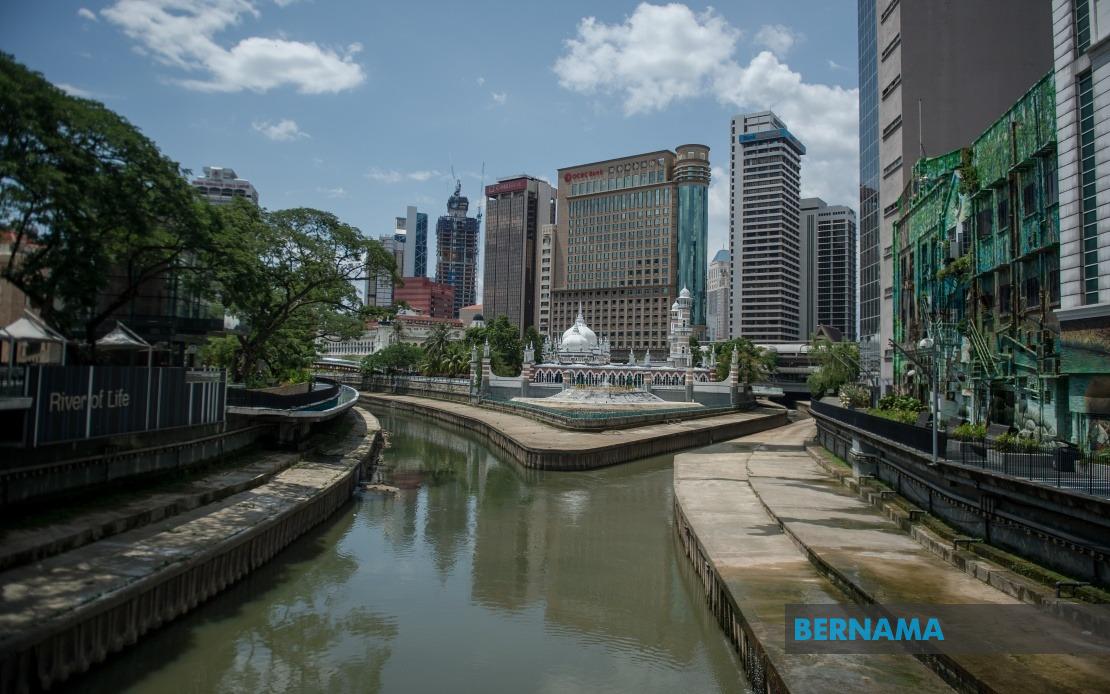
Selangor's critical flood mitigation infrastructure has undergone a significant transformation, with Sungai Klang now capable of holding 22 per cent more water than before the commencement of major remedial works—a substantial leap from its previous capacity of less than five per cent. This advancement represents a crucial step in reducing the vulnerability of densely populated areas along the river corridor to inundation events that have historically devastated communities across the state.
The improvement stems from an ambitious 56-kilometre river widening and deepening initiative currently standing at 68 per cent completion. According to Syaiful Azmen Nordin, managing director of Landasan Lumayan Sdn Bhd (LLSB), the contractor overseeing the work, the project has fundamentally altered the river's hydraulic properties through systematic dredging and riverbank reinforcement. The most critically vulnerable zones, including areas such as Taman Sri Muda, have seen particularly intensive attention, where the combination of widening and deepening has dramatically curtailed the risk of catastrophic overflow scenarios.
Since launching this initiative in 2017, authorities have extracted approximately 1.2 million cubic metres of accumulated sediment and debris from the river channel. This immense volume of material removal has not merely increased the cross-sectional area available for water flow; it has also restored the river's natural carrying potential that had been progressively compromised by years of sedimentation, encroachment, and inadequate maintenance. The scale of this remediation underscores the severity of the degradation that had occurred prior to intervention.
While the project's physical infrastructure improvements capture headlines, an equally significant component of the effort involves comprehensive river-cleaning operations that have yielded measurable gains in water quality and flow efficiency. Over the past seven years, cleaning drives have hauled away more than 98,000 tonnes of accumulated waste—ranging from domestic rubbish to industrial discharge—at an expenditure of RM19.6 million. This sustained commitment has dramatically reduced the annual influx of waste into the river system, dropping from 16,000 tonnes to between 5,000 and 6,000 tonnes per annum, a reduction that enhances both water quality classification and public health outcomes.
The water quality improvements document this operational success. Sungai Klang's classification has improved from Class 5, which denotes heavily polluted water unsuitable for most uses, to Class 3 and 4 status, indicating water suitable for recreational activities and certain industrial applications respectively. This trajectory reflects not only dredging efficacy but also the cumulative impact of public awareness campaigns and waste management interventions that have altered community behaviour around the river.
Managing director Syaiful Azmen took particular care to contextualise recent flooding incidents within Selangor, emphasising that current inundation events are not attributable to Sungai Klang overflow but rather to failures within internal stormwater drainage infrastructure. This distinction carries significant policy implications, as it directs attention to municipal drainage systems and their inadequate capacity during extreme rainfall events—a separate but interconnected challenge requiring parallel intervention. The clarification also validates the dredging programme's effectiveness, as the river has successfully accommodated increased water volumes without breaching its banks.
The project timeline indicates completion by the end of 2025, at which point the dredging phase will conclude. However, the full vision extends beyond LLSB's current scope, with the Federal government assuming responsibility for widening and deepening the river stretch between Shah Alam and Mid Valley. This geographical division of labour reflects the complexity of coordinating large-scale infrastructure projects across state and federal jurisdictions while maintaining project momentum and technical consistency.
Upon final completion of all dredging works, Sungai Klang's water-holding capacity is projected to reach 40 per cent—a doubling of the current 22 per cent achievement. This incremental progression underscores that the project operates as a phased intervention, with each stage building upon previous accomplishments. The 40 per cent target represents a substantially enhanced flood resilience profile, though engineers acknowledge that no infrastructure can entirely eliminate flood risk, particularly during unprecedented rainfall events or in conjunction with poor urban drainage.
For Malaysian readers across the Klang Valley and beyond, this initiative carries direct relevance to residential security, property values, and insurance considerations. The historical pattern of flooding in densely settled areas like Taman Sri Muda has devastated households and disrupted economic activity, making incremental improvements to flood defences a matter of genuine community concern. The 68 per cent completion milestone suggests sustained momentum, though infrastructure projects in Malaysia frequently encounter delays; transparent progress reporting from LLSB helps maintain public confidence in eventual delivery.
The broader Southeast Asian context amplifies the significance of these works. As climate science increasingly documents intensified precipitation patterns across the region, river systems throughout Thailand, Indonesia, and the Philippines face comparable pressures. Selangor's methodical approach—combining physical infrastructure expansion, sediment removal, and waste management—offers a replicable model for other jurisdictions grappling with urban flooding in confined river corridors. The integration of environmental remediation with flood mitigation demonstrates that singular engineering solutions prove insufficient; comprehensive watershed management demands multifaceted intervention.
Looking forward, the convergence of the LLSB project completion timeline with Federal involvement in the Shah Alam to Mid Valley stretch will test coordination between state and national authorities. Seamless integration of these separate undertakings remains essential for maximising the cumulative flood-reduction benefit. Additionally, the demonstrated capacity to remove thousands of tonnes of waste annually signals potential opportunities for resource recovery and circular economy applications—transforming a costly environmental problem into potential economic value streams, an angle that policymakers in the region may increasingly explore as climate adaptation imperatives intensify.

