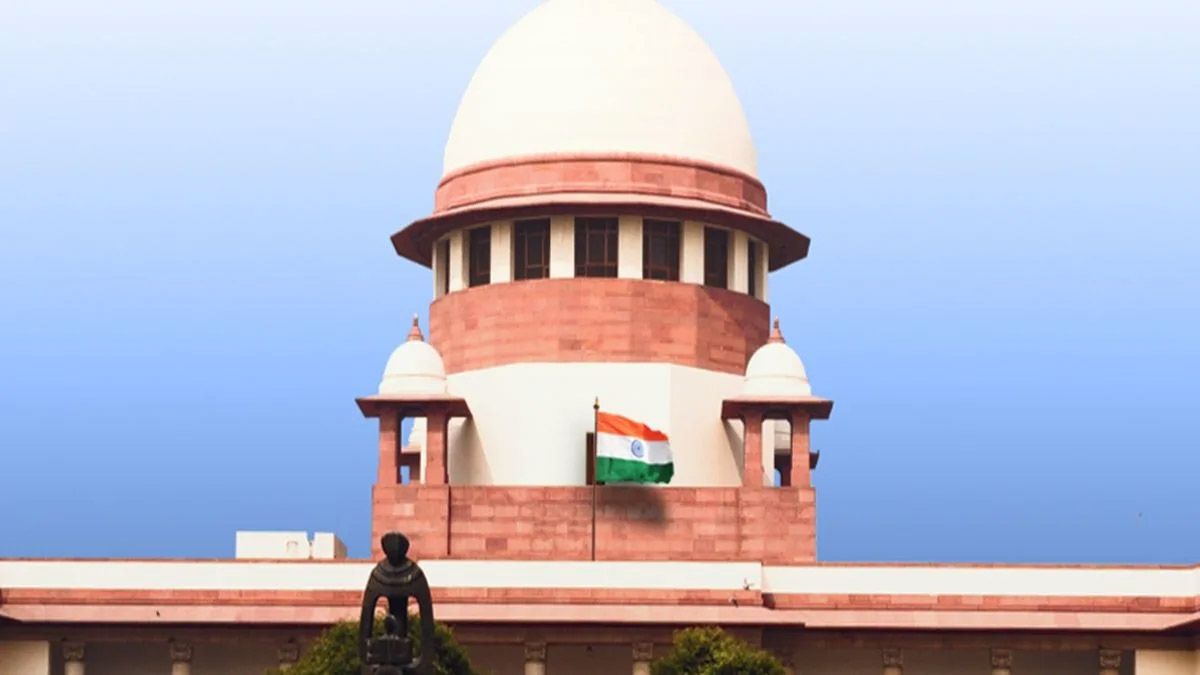
India's Supreme Court has intervened in a contentious animal welfare dispute by temporarily blocking a blanket prohibition on cow and calf slaughter in Tamil Nadu that a lower court had imposed. A bench comprising Justices Vikram Nath and Sandeep Mehta granted an interim stay on the Madras High Court's May 27 judgment while accepting the Tamil Nadu government's special petition challenging the order. The move pauses implementation of what the state argues is an overreach by the High Court into matters of legislative authority and regulatory governance.
The underlying tension reflects a broader jurisprudential question about the proper limits of judicial intervention in matters involving animal welfare, religious practice, and food security. The Madras High Court had issued sweeping directions prohibiting the slaughter of cattle across Tamil Nadu entirely, without exception for authorised slaughterhouses or religious observances. This reasoning drew from Article 48 of the Constitution, which frames animal protection as a state concern, and a 1976 government order that restricted the slaughter of cows and heifers in designated facilities. However, the Tamil Nadu government successfully convinced the Supreme Court that such an absolute prohibition departed from the statutory framework actually governing animal slaughter in the state.
The original case that sparked the High Court's expansive ruling began more narrowly. K Surya Prasanth, General Secretary of the Hindu Makkal Katchi, filed public interest litigation objecting to temporary sheds erected in Coimbatore for cow slaughter during Bakrid, the Muslim festival of sacrifice. His complaint targeted the use of unauthorised locations and the specific timing around a religious occasion. The petitioner sought judicial directions ensuring that cattle slaughter remained confined to authorised facilities and did not occur in temporary or public venues. This focused complaint was the legitimate scope of the case.
The High Court, however, transformed the petition into an instrument for imposing a comprehensive ban. Rather than restricting slaughter to designated slaughterhouses and preventing use of temporary structures, the bench directed that no cow or calf be slaughtered anywhere in Tamil Nadu on Bakrid or any other day. It instructed the state's Chief Secretary and the Additional Director General of Police to enforce strict compliance. The distinction between regulating slaughter and prohibiting it entirely proved crucial to the Supreme Court's assessment, with Justice Nath indicating that the original order required "correction" before interim relief could be granted.
Tamil Nadu's appeal rested on a substantial legal foundation. The state cited the Tamil Nadu Animal Preservation Act of 1958, which establishes regulatory conditions for cattle slaughter rather than an absolute prohibition. The government additionally invoked the Prevention of Cruelty to Animals Act of 1960, the Prevention of Cruelty to Animals (Slaughter House) Rules of 2001, the Tamil Nadu Urban Local Bodies Act of 1998 with its 2023 rules, and applicable food safety regulations. Each of these instruments contemplates a framework where slaughter is permissible under specified conditions designed to prevent animal suffering and maintain public health. The High Court's order effectively annulled this entire regulatory structure by declaring slaughter impermissible in any location, including designated slaughterhouses.
The implications of this case extend beyond Tamil Nadu's borders and touch upon sensitive intersections in Indian governance. Religious minorities, particularly Muslims and some Christian and Sikh communities, depend on cattle slaughter for their dietary and ritual practices. A blanket prohibition enforced uniformly across a state would substantially constrain the free exercise of religion and impose the dietary preferences associated with Hindu vegetarianism through judicial decree rather than democratic process. Simultaneously, Hindu nationalist groups view cattle protection as a constitutional and moral imperative, positioning themselves as guardians of the values embedded in Article 48. The Supreme Court's intervention preserves space for legislative solutions that might balance these competing perspectives rather than allowing judicial overreach to settle the question unilaterally.
The interim stay also addresses the proper allocation of constitutional authority. India's legislatures, both national and state, possess the responsibility for crafting animal welfare policy, food security frameworks, and the regulation of slaughter facilities. Courts serve as guardians of constitutionality and individual rights, not as bodies empowered to substitute their policy preferences for those of elected representatives. By pausing the High Court's order, the Supreme Court reasserted the principle that sweeping prohibitions affecting millions of citizens and their livelihoods require legislative deliberation, not judicial diktat. The decision signals skepticism toward activist courts attempting to resolve contested social questions through expansive interpretation of limited petitions.
For Malaysian and Southeast Asian observers, this dispute illuminates how majoritarian impulses in pluralistic democracies can infiltrate judicial systems. India, like Malaysia, contains religious and ethnic diversity requiring constitutional protections for minority practices. The Madras High Court's approach—using a limited case as a vehicle for imposing sweeping restrictions—mirrors tactics occasionally observed in other democracies where courts become instruments for advancing particular communities' preferences. Malaysia's Federal Court has historically been attentive to protecting both secular governance and Islamic authority within their respective domains, a balance that this Indian case implicitly challenges.
The Supreme Court's decision preserves the existing regulatory framework pending full adjudication of the constitutional questions involved. The interim stay means that Tamil Nadu's legislated system governing slaughter—permitting it in authorised facilities under prescribed conditions—remains operationally valid. The court will eventually need to determine whether Article 48's reference to the state discouraging cow slaughter mandates an absolute prohibition or merely authorises states to regulate the practice. This fuller examination may address whether the 1976 government order cited by the High Court actually crystallised into binding constitutional practice or remains modifiable through legislative process.
The Supreme Court's actions also indicate the court's comfort with incremental approaches to contentious issues rather than categorical resolutions. By granting an interim stay rather than immediately dismissing the state's petition, the bench signalled that serious constitutional issues require careful deliberation. The observation that the High Court's order needed "correction" suggests the final judgment will articulate proper boundaries between judicial review and legislative authority, potentially offering guidance to other courts grappling with how to protect animals without erasing legal frameworks built through democratic processes.
For the Tamil Nadu government, this interim relief represents a substantial vindication of its position that the High Court departed from established law and constitutional principle. The state can continue operating slaughterhouses under the Animal Preservation Act and related legislation while the Supreme Court conducts its full hearing. However, the government recognises that the court's ultimate decision will substantially shape future regulation of cattle slaughter and the scope of judicial authority over sensitive matters touching religion, tradition, and sustenance. The pause in the High Court's blanket prohibition creates space for potentially seeking legislative solutions that might address animal welfare concerns while respecting religious and cultural diversity, though whether Tamil Nadu's political leadership will pursue such compromise remains uncertain given the polarised environment surrounding cattle protection.

