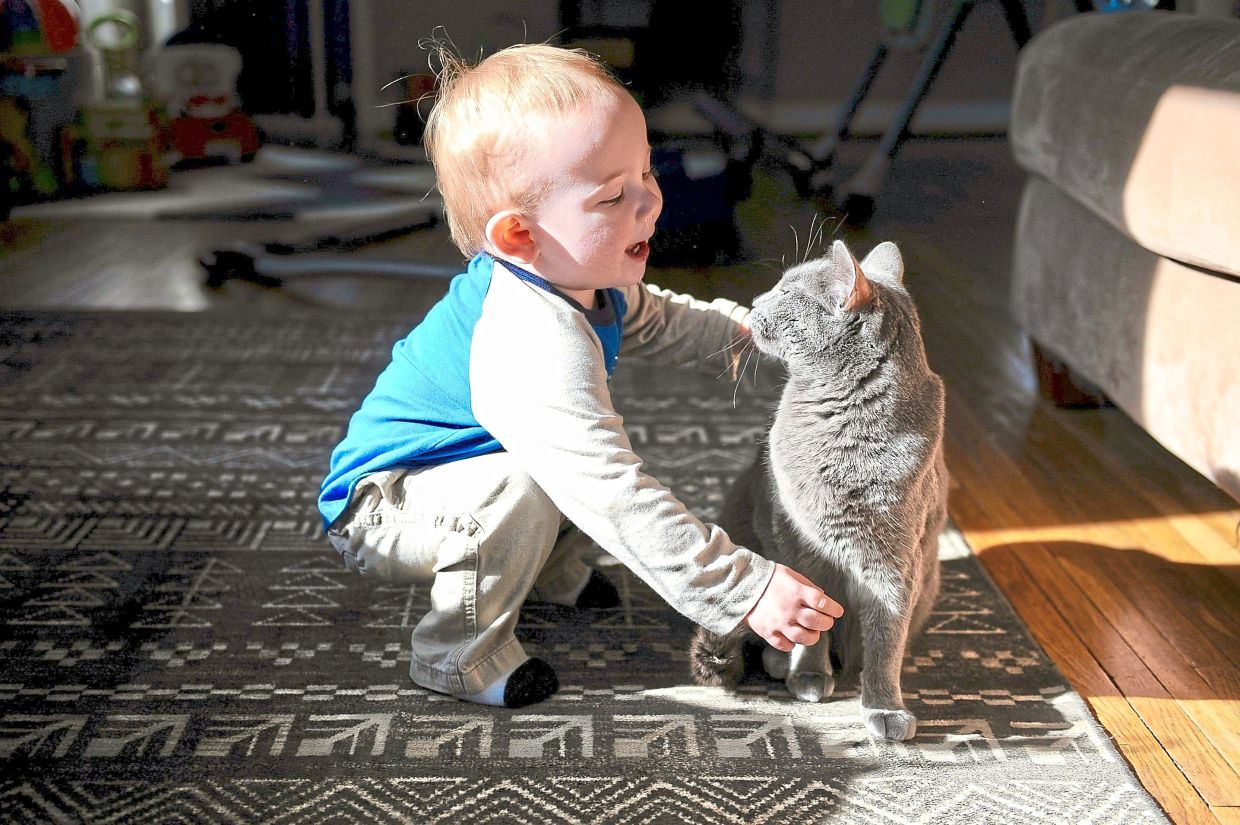
Cats have long carried an unfair reputation as asthma triggers for children, yet a comprehensive Swedish study now suggests this widely held assumption may not hold water. Researchers examining nearly 30,000 children with asthma over two years discovered that household cat ownership had no measurable impact on asthma severity, control, or lung function. The findings add significant weight to the growing body of evidence questioning whether pet cats are genuinely problematic for young asthma sufferers, potentially reshaping how families and doctors approach pet ownership decisions for children with respiratory conditions.
Asthma ranks as the most prevalent chronic disease affecting children globally, driving substantial hospitalisation rates and significantly limiting quality of life. The Global Asthma Network estimates that 9.1% of children and 11% of adolescents worldwide live with asthma, though prevalence fluctuates markedly between nations, regions, and specific environments. In Southeast Asia, where tropical climates and urban air pollution create distinct respiratory challenges, asthma prevalence varies considerably. Understanding what actually triggers asthma attacks versus what merely represents patient perception carries enormous practical importance for families deciding whether pet ownership is feasible.
The established risk factors triggering asthma development paint a complex picture. Air pollution exposure and secondhand smoke rank among the most serious environmental contributors, alongside childhood respiratory infections, childhood obesity, and pre-existing allergic conditions such as eczema or hay fever. Many patients report that contact with animal dander provokes asthma attacks, and these personal testimonies have solidified cats' reputation as respiratory hazards. However, scientific evidence examining this relationship has remained frustratingly inconsistent, predominantly comprising small studies on unrepresentative population subgroups that cannot be reliably generalised.
The Swedish research team, led by Dr Resthie R Putri at Karolinska Institutet in Stockholm, undertook a methodologically rigorous investigation addressing these limitations. Beginning in 2023, they assembled a nationwide cohort comprising 30,277 children aged four to seventeen years, all diagnosed with either asthma or airway allergies and born between 2006 and 2020. This substantially larger sample size and comprehensive national data access provided the statistical power needed to detect genuine associations that smaller studies might miss. The researchers followed participants over twenty-four months through 2024, utilising linked records from Sweden's National Patient Register, Prescribed Drug Register, and National Airway Register to objectively track asthma severity, medication requirements, emergency department visits, and lung function measurements.
Sweden's mandatory pet cat registration system, compulsory since 2023 for all cats born after 2008, enabled researchers to accurately identify which children lived with feline companions. Approximately 9.4% of the cohort had at least one registered cat in their household, providing a substantial comparison group while reflecting realistic pet ownership patterns. This registration infrastructure eliminated guesswork about pet exposure, a critical advantage over studies relying on parental recall or questionnaires prone to reporting errors.
The results proved remarkably consistent across multiple asthma outcome measures. Moderate-to-severe asthma, defined by prescribed medication intensity, affected 9.6% of cat-exposed children compared to 10.1% of unexposed children, a difference falling well within normal statistical variation. Asthma exacerbations, or acute attacks requiring intervention, occurred in 3.3% of cat-exposed children versus 3.5% among those without cats. For the subset of 1,428 children with available lung function data, researchers found no meaningful differences in spirometry readings between cat-owning and non-cat-owning households, directly contradicting the notion that feline presence compromises respiratory capacity.
Dr Putri proposed a plausible explanation for these surprising findings. Cat allergens circulate widely throughout shared public environments including schools, public transportation, and community centres, meaning children without household cats frequently encounter substantial allergen exposure anyway. This widespread environmental contamination effectively eliminates the distinction between cat-exposed and non-exposed groups, obscuring any genuine protective effect that living specifically with cats might hypothetically provide. The phenomenon reflects modern urban realities where complete allergen avoidance proves practically impossible regardless of personal pet ownership decisions.
These findings carry significant implications for Malaysian and Southeast Asian families weighing whether asthmatic children can safely live with pets. Many parents have reluctantly foregone cat ownership based on conventional medical wisdom, only to have that sacrifice potentially unnecessary. For healthcare providers across the region, the evidence suggests that blanket recommendations against cat ownership for asthmatic children lack empirical support. Instead, individualised assessment considering each child's specific sensitisation patterns and total allergen burden may better guide clinical counselling than categorical pet prohibitions.
Yet Dr Putri appropriately acknowledged important research limitations tempering enthusiasm for the conclusions. The study lacked individualised allergen sensitisation data, preventing researchers from identifying which children actually displayed immunological reactions to cat proteins versus those with documented asthma through unrelated mechanisms. Without knowing which participants were truly cat-allergic, distinguishing genuine non-associations from detection failures became impossible. Additionally, Sweden's relatively new registration requirement meant some cat-owning households may have escaped official registration, potentially misclassifying them as non-exposed families and biasing results toward null findings.
These methodological caveats highlight why translating Swedish findings directly to Malaysian contexts requires caution. Southeast Asian asthma epidemiology differs substantially from Scandinavian patterns, influenced by distinct air quality conditions, allergen profiles, infection rates, and genetic population characteristics. Tropical environments present different aeroallergen seasonality compared to temperate Sweden, and local dust mite exposure, mould proliferation, and urban pollution patterns create distinct asthma triggers. Nevertheless, the Swedish study's large scale and objective measurement approach provide stronger evidence than previous investigations, justifying reconsideration of categorical cat restrictions.
Moving forward, healthcare systems throughout Southeast Asia would benefit from prospective studies examining cat ownership and asthma outcomes within regional paediatric populations. Such research could clarify whether Swedish findings replicate across diverse genetic and environmental contexts, potentially liberalising cat ownership guidance for families with asthmatic children. For now, the Swedish evidence suggests that concerns about household cats triggering childhood asthma may reflect assumption rather than established fact, offering cautious encouragement to families previously discouraged from pet companionship.

