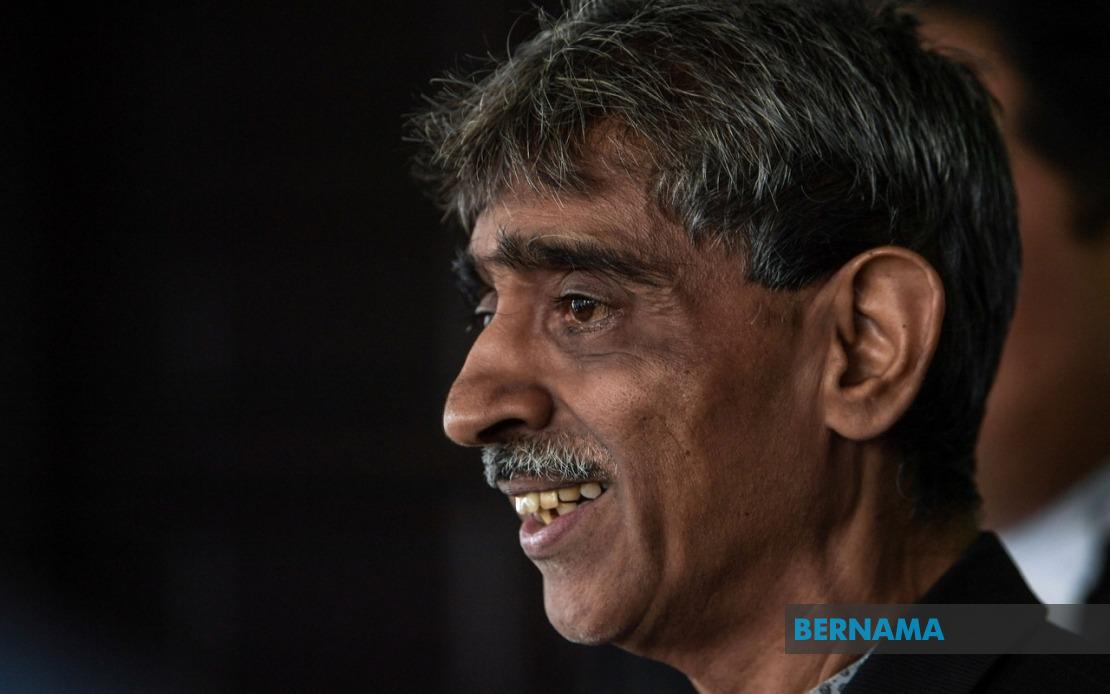
The push for swift criminal action against those implicated in Tabung Haji's affairs has intensified, with a lawyer closely connected to the Royal Commission of Inquiry recommending that authorities move decisively to court whenever evidence reaches the threshold required for prosecution. Mohamed Haniff Khatri Abdulla emphasised that expediting such cases is vital not merely as a matter of justice, but as a practical necessity to repair public trust in the institution that manages savings for Muslim pilgrims.
His comments reflect growing pressure on law enforcement and the Attorney General's office to translate the RCI's findings into concrete legal consequences. The stakes are particularly high because Tabung Haji's credibility as a savings vehicle depends on depositors believing the system works, that wrongdoing is punished, and that their money will be safeguarded going forward. Delays in prosecuting identifiable cases could deepen scepticism and prompt further withdrawals from an institution already battered by governance failures and investment losses that triggered the inquiry in the first place.
Yet Khatri also cautioned against expecting a quick resolution across the board. He disclosed that authorities have summoned nearly 200 individuals to provide statements to the Royal Malaysia Police and the Malaysian Anti-Corruption Commission—an indication of the probe's vast scope. The investigation spans multiple dimensions of Tabung Haji's operations: corporate governance structures, investment decision-making processes, and potential breaches of law that may involve individuals at various levels of the organisation. This complexity means that while some straightforward cases might proceed to court within months, others will require prolonged scrutiny.
A critical recommendation from Khatri addresses the procedural challenge facing prosecutors. He proposes that the Attorney General's Chambers establish a dedicated unit comprising three experienced Deputy Public Prosecutors to coordinate investigation papers from both PDRM and MACC. The rationale is sound: two law enforcement bodies operating under different protocols could produce overlapping or inconsistent work streams. A centralised review mechanism would ensure all evidence is evaluated holistically, reducing redundancy and strengthening the quality of prosecutions. This mirrors approaches used in large-scale white-collar crime investigations elsewhere in the region, where dedicated task forces have proven more effective than sequential handoffs between agencies.
Katri's emphasis on managing public perception deserves close attention. He warned against allowing a perception that prosecutions are politically motivated, a risk that looms whenever leadership changes occur. By issuing staged updates explaining which investigations have concluded, which remain active, and what evidence triggered decisions to prosecute, the government can build a narrative grounded in investigative progress rather than political calculation. This transparency is essential in Malaysia, where public cynicism about selective prosecution has deep historical roots. Without clear communication, even justified prosecutions risk being dismissed as vendetta.
The broader legal context underscores why this process cannot be rushed. Datuk Yaacob Md Sam, a former Court of Appeal judge with direct experience conducting multiple Royal Commissions of Inquiry, explained that RCI findings, while valuable, do not themselves constitute evidence admissible in criminal proceedings. Under the Commissions of Inquiry Act 1950, RCI reports are investigative tools that generate leads and recommendations—not legal instruments that bind prosecutors or courts. Enforcement agencies must therefore conduct parallel investigations, gathering testimony and physical evidence that meets the stringent standards required in criminal trials. This requirement means that the RCI's work essentially becomes the starting point for deeper investigation, not its conclusion.
Yaacob's point carries particular weight because it clarifies a common misconception among the public and media. An RCI's conclusions about what transpired do not automatically translate into proof of criminal culpability. An institution's governance may have been poor or decisions questionable without necessarily crossing into criminal territory. Conversely, behaviour that appears borderline during an RCI inquiry might reveal prosecutable offences once forensic investigators and prosecutors examine financial trails, communications, and contradictory statements. This distinction explains why months can elapse between an RCI's release and the first prosecutions.
For Malaysian depositors and the broader investing public, these procedural realities present a tension. The desire for swift justice clashes with the constitutional requirement that prosecutions be built on evidence capable of surviving courtroom scrutiny. A prosecution that collapses due to evidentiary weakness would damage confidence more severely than a delayed prosecution that results in conviction. The legal system's integrity—its perceived impartiality and competence—ultimately matters more to public confidence than speed alone.
The 3-to-6-month timeline that Khatri projected for completing major investigative threads assumes sustained, focused effort by both PDRM and MACC. Practical experience suggests this may prove optimistic given the volume of potential suspects and the need to coordinate between agencies. However, his suggestion that some cases might proceed to prosecution within this window indicates that courts could begin hearing TH-related charges by year-end or early 2025, assuming the Attorney General's office implements his recommendations for streamlined coordination.
The implications for Tabung Haji's future extend beyond the courtroom. Each prosecution will generate publicity that either reinforces or undermines confidence in the institution's reformation. If prosecutions are seen as comprehensive and impartial, covering wrongdoing at all organisational levels, confidence may stabilise. If prosecutions appear selective, favouring some accused over others despite similar evidence, scepticism will linger. Management changes, new governance protocols, and regulatory oversight announced alongside prosecutions will send a more convincing signal that Tabung Haji is fundamentally reformed.
Regionally, Malaysia's handling of the Tabung Haji investigation will influence how other countries approach similar governance failures in state-backed financial institutions. Singapore, Indonesia, and other regional economies have faced comparable issues in sovereign wealth funds and pilgrim savings schemes. How Malaysia balances thoroughness with timeliness, political pressure with judicial independence, and public appetite for accountability with the rule of law will offer lessons—positive or cautionary—to neighbouring regulators.
For now, the ball rests with law enforcement and the Attorney General's chambers. Implementing Khatri's proposal for a dedicated prosecution unit would signal seriousness and could materially accelerate progress. Simultaneously, issuing regular public updates—even simple statements that investigations into specific aspects have concluded or are ongoing—would manage expectations and counter misinformation. These complementary steps would honor both the demand for justice and the requirement for due process.

