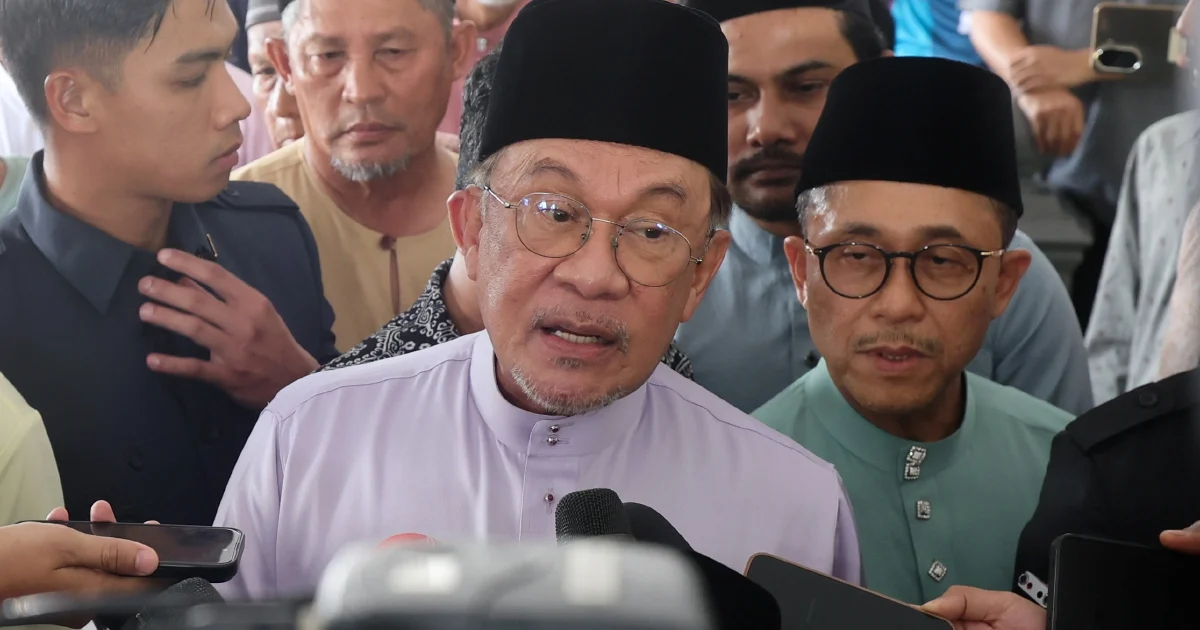
Prime Minister Datuk Seri Anwar Ibrahim has moved to allay concerns about the government's plans to elevate the status and capacity of Syariah courts, emphasizing that such institutional improvements are entirely compatible with the protection of non-Muslim religious liberties enshrined in the country's constitutional framework.
The Prime Minister's clarification addresses an undercurrent of anxiety within Malaysia's plural society, where any proposal touching upon Islamic institutional matters tends to generate scrutiny from communities beyond the Muslim majority. By frontally addressing these concerns from the nation's highest office, Anwar appears intent on building consensus around judicial reforms that his administration views as necessary for better serving the Muslim population.
Malaysia's dual legal system has long featured Syariah courts operating in parallel to civil courts, with jurisdiction over matters of personal law affecting Muslims—including marriage, divorce, inheritance, and religious offences. The structure reflects the constitutional settlement negotiated at independence, which recognizes Islam's special position while guaranteeing fundamental liberties to all citizens regardless of faith. This delicate constitutional balance has become increasingly complex as both systems have evolved and occasionally intersected in ways that generated controversy.
The effort to strengthen Syariah courts reflects broader administrative and legal thinking within the current government about improving institutional efficiency and judicial capacity. Proposals under consideration reportedly include expanding court infrastructure, enhancing the competence and training of judges and court officers, and potentially expanding the pecuniary jurisdiction of these courts—the maximum financial amounts they can handle in civil disputes. Such reforms might reduce backlogs and improve access to justice for Muslims navigating personal law matters.
Yet any discussion of expanding Syariah court authority inevitably triggers broader anxieties, particularly in religiously diverse Southeast Asia where plural states have sometimes witnessed the gradual expansion of religious jurisdiction into areas previously governed by secular law. Malaysia's own history includes instances where Syariah court rulings have touched upon the rights of non-Muslims indirectly—such as cases involving mixed-religion families or conversions—creating occasional friction between the two court systems.
Anwar's explicit assurance speaks to Malaysia's ongoing negotiation of its identity as both an Islamic state and a constitutional democracy with plural communities. The Prime Minister's message essentially reiterates that institutional strengthening of Syariah courts operates entirely within the existing constitutional framework, which explicitly protects the autonomy of non-Muslim communities to govern their own affairs through personal laws and to practise their religions without state interference. The constitutional provisions guaranteeing freedom of religion remain untouched by proposals to improve the efficiency and reach of Islamic courts.
For Malaysian business and civil society, clarity on this issue carries practical importance. Investors and entrepreneurs from non-Muslim backgrounds require assurance about legal predictability and the continued stability of secular commercial and property law. Questions about whether Syariah court expansion might eventually encroach upon civil law territory have occasionally deterred foreign investment or complicated commercial arrangements. The Prime Minister's statement attempts to provide this reassurance directly.
The timing of Anwar's remarks reflects the government's apparent intent to move forward with judicial modernization while managing the political sensitivities involved. Unlike some previous administrations that moved quietly on such matters, the current approach involves upfront communication designed to prevent misunderstandings from crystallizing into opposition. This consultative approach may reduce friction, though tensions between different communities' understandings of constitutional limits will likely persist.
Regionally, Malaysia's navigation of this balance between strengthening Islamic institutions while protecting pluralism holds lessons and complications for other Muslim-majority democracies in Southeast Asia with significant non-Muslim populations. How Malaysia manages these competing demands influences regional thinking about constitutional arrangements in diverse societies. Indonesia faces similar tensions between its civil law system and Islamic courts, while Thailand and Myanmar have grappled with questions of religious community autonomy.
For the non-Muslim communities in Malaysia—including significant Chinese and Indian populations alongside Christian, Buddhist, Hindu, and Sikh minorities—the Prime Minister's statement represents an important political signal about their continued place within the constitutional order. Such reassurances, periodically renewed from the highest political levels, serve to validate their sense of constitutional belonging even as other aspects of governance move in directions they may not control.
Moving forward, the concrete shape of Syariah court enhancement will determine whether these reassurances hold weight. Proposed reforms will likely proceed through parliamentary and administrative processes that will provide further opportunity for public scrutiny and the airing of concerns from all communities. The government's apparent willingness to engage directly with these sensitivities—as demonstrated by the Prime Minister's statement—suggests a commitment to ensuring that institutional improvements do not arrive as unwelcome surprises that strain social cohesion.

